Understanding Katsura Tree (Cercidiphyllum japonicum): Identification, Uses, and Growing Guide
Some trees earn their place in a garden through visual drama. Others earn it through rarity, or size, or historical significance.
The katsura tree earns its place through something altogether more unexpected: it smells like burnt sugar and caramel on a warm autumn day.
Walk past a katsura in October, when its heart-shaped leaves are falling, and the air around the tree carries a warm, sweet scent — like a confectionery kitchen, or freshly made toffee. It is disarming, charming, and completely unforgettable.
That fragrance alone would make the katsura worth growing. But it is also one of the most beautiful ornamental trees available for temperate gardens — with elegant foliage, exceptional multi-season colour, graceful form, and a surprisingly ancient lineage.
This guide covers everything you need to know about Cercidiphyllum japonicum — from its biology and botany to its cultivation, landscape use, and cultural significance.
| Common Name | Katsura Tree, Caramel Tree |
| Scientific Name | Cercidiphyllum japonicum Sieb. & Zucc. |
| Family | Cercidiphyllaceae (sole genus in its family) |
| Native Range | Japan and central China |
| Type | Deciduous broadleaf tree |
| Average Height | 10 – 30 metres (33 – 100 ft); varies by form |
| Crown Spread | 8 – 20 metres |
| Lifespan | 100 – 300+ years |
| USDA Hardiness Zones | 4 – 8 |
| Soil Preference | Moist, fertile, well-drained; slightly acidic to neutral |
| pH Range | 5.5 – 7.0 |
| Water Needs | Moderate to high; moisture-sensitive especially when young |
| Sun Requirement | Full sun to partial shade |
| Growth Rate | Moderate to fast — 30 – 60 cm/year when young |
| Foliage | Heart-shaped, glaucous blue-green; opposite pairs on branches |
| Spring Colour | Reddish-purple to bronze-pink on emergence |
| Summer Colour | Blue-green to mid-green |
| Autumn Colour | Yellow, apricot, orange, and pink — exceptional display |
| Autumn Fragrance | Distinctive caramel/burnt sugar scent from fallen leaves |
| Bark | Grey-brown; shaggy and furrowed on mature trees |
| Flowers | Small, inconspicuous; dioecious (male and female on separate trees) |
| Fruit | Small clusters of curved pods on female trees |
| Notable Cultivars | ‘Pendulum’, ‘Heronswood Globe’, ‘Rotfuchs’, ‘Amazing Grace’ |
| Conservation Status | Least Concern (IUCN) |
What Is the Katsura Tree?
The katsura tree is a large deciduous tree native to the moist, mountainous forests of Japan and central China. In Japan, it is known as katsura (カツラ) — a name with deep cultural resonance, associated with the moon in Japanese folklore.
It is the sole member of its own family, Cercidiphyllaceae — an isolated evolutionary lineage with no close living relatives among modern trees. Its nearest relatives are extinct, known only from fossils. This taxonomic isolation reflects a very ancient evolutionary origin.
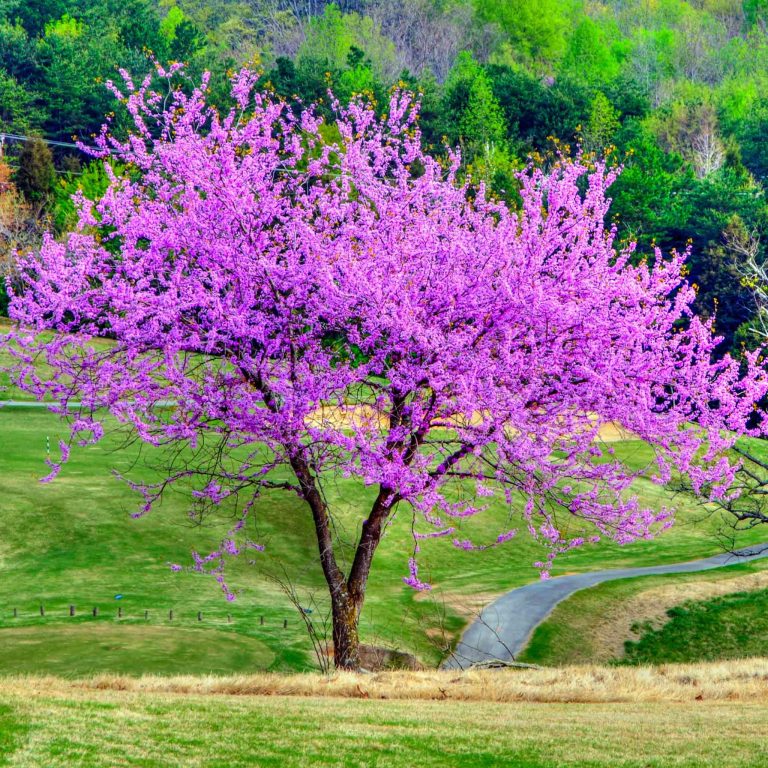
The genus Cercidiphyllum means “cercis-leaved” — a reference to the leaves’ resemblance to those of the Judas tree (Cercis). Despite this visual similarity, the two genera are not closely related. The resemblance is a case of convergent evolution, not shared ancestry.
A second species, Cercidiphyllum magnificum, is sometimes recognised — a smaller, rarer tree from the mountains of Honshu and Shikoku in Japan. Most horticultural references focus on C. japonicum, which is the widely cultivated species.
A Tree from Deep Time
One of the most remarkable facts about the katsura tree is its geological age.
Cercidiphyllum fossils have been found across the Northern Hemisphere — in North America, Europe, and Asia — dating back over 65 million years. Before the ice ages of the Pleistocene epoch, katsura trees grew across what is now Europe and North America.
The advancing glaciers extirpated them from these regions, leaving the genus confined to the refugia of Japan and China, where mountain ranges and maritime climates allowed survival.
In effect, the katsura tree is a living relic — a survivor from a warmer, wetter world before the ice ages remade the Northern Hemisphere’s forests. When you stand beneath a katsura, you are standing beneath a tree whose lineage predates the extinction of the non-avian dinosaurs.
That is a thought worth sitting with.
Physical Description: Identifying the Katsura Tree
Leaves — The Most Distinctive Feature
The leaves are heart-shaped (cordate), opposite in pairs on the stem, and small to medium in size — typically 3–8 cm long and about as wide. They have a neat, scalloped margin and a slightly glaucous (blue-green) tone on the upper surface in summer.
The leaf colouring changes dramatically through the seasons:
- Spring: New leaves emerge in a striking reddish-purple to bronze-pink — one of the most beautiful spring colour effects of any temperate tree
- Summer: Leaves settle into a pleasant blue-green to mid-green
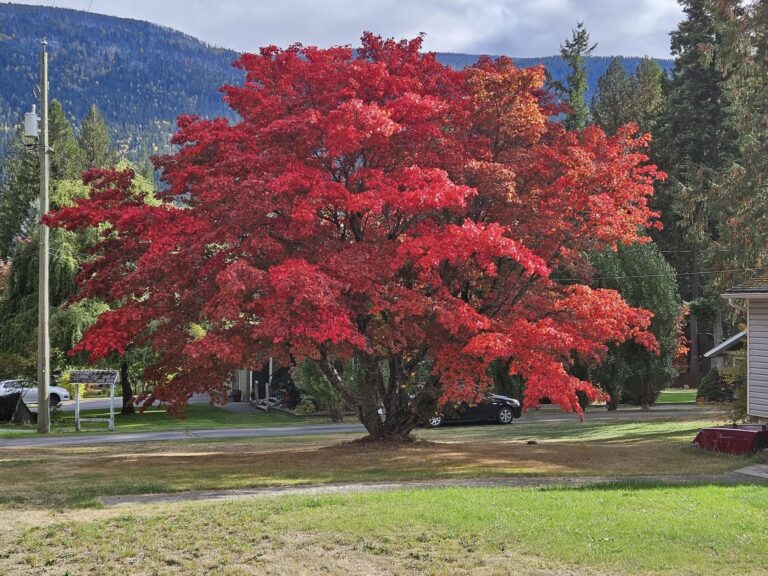
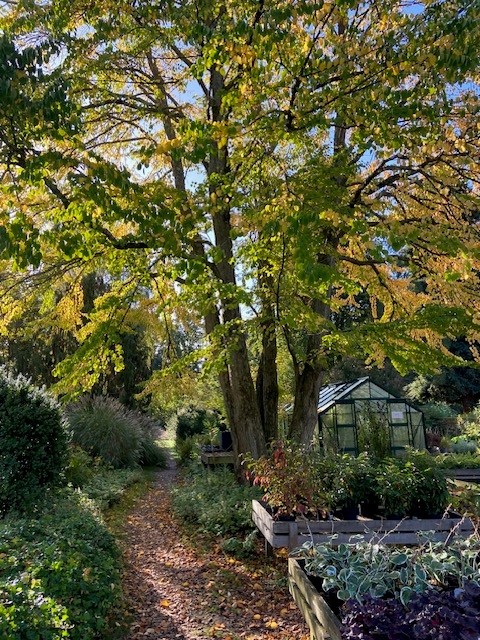
- Autumn: Foliage shifts through yellow, apricot, orange, and pink — the full palette varying by individual tree, climate, and year
The autumn colour is outstanding, and the caramel fragrance that accompanies it is produced by the compound maltol, released from the falling and decaying leaves. On a warm, still autumn day, the scent can be detected from 10 metres or more — a genuinely extraordinary sensory experience.
Form and Structure
The katsura tree typically grows with multiple ascending stems from near the base — a natural multi-stemmed habit that gives the tree a vase-like or broadly columnar form when young, broadening to a wide-domed canopy with age.
Some trees develop as single-stemmed specimens, particularly in forestry conditions, but the multi-stemmed form is common and arguably more beautiful in landscape settings.
In its native forest habitat, katsura trees can reach 30 metres or more. In cultivation in temperate gardens, 10–20 metres is more typical. Growth rate is moderate to fast in the early decades — trees can add 30–60 cm of height per year under good conditions.
Bark
Young trees have smooth, grey-brown bark. On mature specimens, the bark becomes more deeply furrowed and shaggy, with irregular vertical ridges and loose-edged plates. It has a warm, slightly reddish-brown undertone that gives the trunk a pleasant texture in winter.
Flowers and Fruit
The katsura tree is dioecious — male and female flowers occur on separate individual trees. Both are small and inconspicuous, emerging before or alongside the new leaves in early spring. They are not ornamentally significant and would easily be overlooked.
Female trees produce small clusters of curved, bean-like pods in autumn, each containing a small number of winged seeds. Seed production is reliable, and the tree self-seeds freely in ideal conditions.
Native Habitat and Ecology
In its native range, the katsura tree grows in moist, sheltered mountain valleys and ravines, typically alongside streams and rivers, from sea level to about 2,000 metres elevation.
It naturally occupies a “gap species” ecological role — establishing itself in forest openings and stream margins where light reaches the ground. It is not a deep-shade species, but in its native forest it grows in partial shade beneath taller emergent trees.
Japan’s katsura forests — particularly in the mountains of Honshu, Shikoku, and Hokkaido — often include other East Asian temperate associates such as Japanese magnolia (Magnolia obovata), Japanese beech (Fagus crenata), and various maples (Acer spp.).
In China, the tree is native to the central provinces — Sichuan, Hubei, Yunnan — in similar montane, moist conditions.
The tree’s ecological value in its native range includes provision of habitat and food for insects and birds. Its copious annual leaf fall contributes substantially to soil organic matter in the forest floor. In cultivation, it supports moderate insect diversity.
Cultural Significance
In Japan, the katsura tree holds a special place in folklore and literature. In Japanese tradition, the moon contains a katsura tree — a motif that appears in classical poetry, folktales, and visual art. The phrase tsuki no katsura (moon’s katsura) is a poetic image for the moon’s light.
This association gives the tree a certain romantic, melancholy quality in Japanese cultural consciousness — something distant, luminous, and slightly beyond reach.
The wood of the katsura tree — light, straight-grained, and easy to work — has been prized in Japan for centuries for woodblock printing blocks, lacquerware bases, furniture, and interior woodwork. The fine grain holds detail well, making it a traditional choice for craft applications requiring precise carving.
In China, the tree is less mythologically prominent but equally valued for its timber and as an ornamental plant in classical garden design.
In the West, the katsura was introduced to cultivation in the second half of the 19th century, following the opening of Japan to Western plant exploration. It rapidly gained recognition among horticulturists for its exceptional ornamental qualities and has been widely planted in parks and arboreta across Europe and North America since the early 20th century.
Cultivation Guide: Growing the Katsura Tree Successfully
Climate and Hardiness
The katsura tree is hardy in USDA Zones 4 through 8, tolerating winter temperatures as low as approximately -35°C. This makes it suitable for much of the cool and cold temperate world.
It performs best in climates with warm, moist summers and cold winters — conditions similar to its native mountain forests. It is less well-suited to hot, dry summers or areas with very mild, wet winters.
Late spring frosts can damage the emerging new foliage, which is frost-sensitive in its early stages. Avoid planting in frost pockets where cold air settles, as this can cause significant annual frost damage to new growth.
Site Selection
Choose a sheltered, moist site for the katsura. It is more moisture-demanding than many ornamental trees, particularly in its early years. In exposed, dry, or wind-swept positions, it will struggle — leaves may scorch at the margins in summer and growth will be slow.
Full sun to partial shade both work well. In hotter climates — the warmer end of Zone 8 — some afternoon shade helps prevent leaf scorch. In cooler climates, full sun encourages the best autumn colour.
Avoid exposed, wind-swept positions. The large, thin leaves are vulnerable to wind damage and desiccation, and a sheltered position significantly improves both growth and ornamental quality.
Soil Requirements
The katsura tree prefers moist, fertile, well-drained soil with a slightly acidic to neutral pH (5.5–7.0). It does not tolerate waterlogging, but equally suffers on thin, dry, or drought-prone soils.
Organic matter in the soil is particularly beneficial — it improves moisture retention, moderates soil temperature, and sustains the fungal and biological communities that support root health. Incorporate well-rotted compost or leaf mould into the planting hole and surrounding soil at planting.
Clay-based soils are generally suitable provided they are not compacted and drain reasonably well. Sandy, free-draining soils require supplemental irrigation and organic matter to retain sufficient moisture.
Planting
Plant in autumn or early spring before bud break. Dig a wide, shallow planting hole rather than a deep one — the majority of feeder roots will develop in the upper 30–60 cm of soil, and a wide planting zone benefits establishment more than a deep hole.
Firm the tree in carefully, eliminating air pockets. Water thoroughly at planting. Apply a generous mulch — 8–10 cm of composted bark, wood chip, or leaf mould — in a circle extending well beyond the planting hole, keeping the mulch clear of the trunk. This single action is arguably the most impactful thing you can do for a newly planted katsura.
Stake the tree for the first two to three years in exposed or windy positions.
Watering
Watering during establishment is critical. The katsura is more drought-sensitive than many comparably sized trees, and a dry first summer can set back development significantly — or kill a young tree entirely in severe cases.
Water deeply once or twice weekly during dry spells in the first two to three years. Once established, the tree develops a more resilient root system, though it never becomes truly drought-tolerant in the way that, for example, a larch or an oak does. In dry climates or on free-draining soils, supplemental irrigation in summer remains beneficial throughout the tree’s life.
Fertilisation
Annual application of a balanced, slow-release fertiliser in early spring benefits katsura trees in garden settings, particularly when grown in less-than-ideal soils. A layer of well-composted organic matter applied as a mulch each year also sustains soil fertility effectively.
Avoid high-nitrogen fertilisers that push excessive soft growth — this increases frost sensitivity of new shoots and can reduce autumn colour intensity.
Pruning
The katsura tree generally requires minimal pruning. Its naturally elegant form is best left largely to develop undisturbed.
In early years, formative pruning can be used to encourage either a single-stemmed or multi-stemmed form, depending on preference. Remove crossing, rubbing, or damaged branches. Prune in late winter before bud break, or in late summer once growth has hardened.
Avoid pruning in spring when the sap is rising strongly — wounds bleed freely and heal slowly at this time.
Katsura Tree Cultivars Worth Knowing
Several cultivars offer variations on the katsura’s signature qualities, adapted to different spaces and preferences.
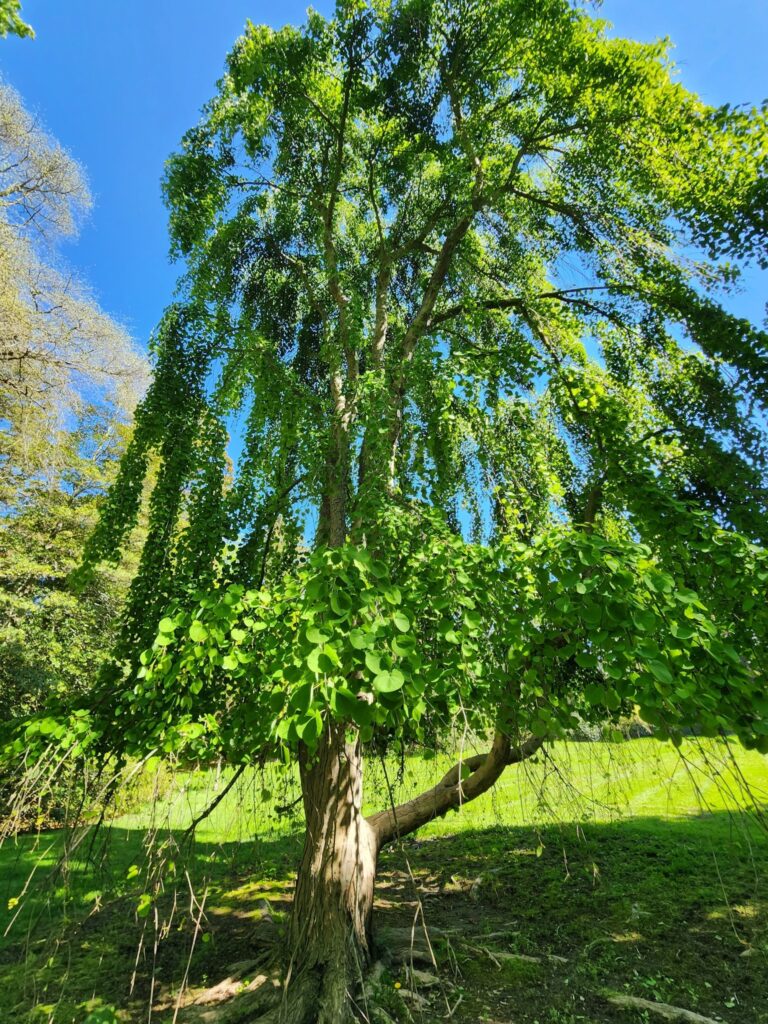
- ‘Pendulum’ — The weeping katsura. Strongly pendulous branches create a dramatic, cascading form. Eventually forms a wide, mounded, weeping tree of great elegance. Suitable for smaller spaces than the species. Height: typically 5–8 metres, spreading broadly.
- ‘Amazing Grace’ — A named weeping selection with particularly graceful, long, arching branches. One of the finest weeping forms in cultivation. Outstanding autumn colour.
- ‘Rotfuchs’ (Red Fox) — Selected for strongly reddish-purple spring and early summer foliage. More colour-intensive than the standard species in the early season. Developed in Germany; increasingly popular in European horticulture.
- ‘Heronswood Globe’ — A compact, globe-shaped form. Slow-growing and suited to smaller gardens or as a specimen in a large mixed border.
- ‘Tidal Wave’ — A vigorous, upright form with a narrow, broadly columnar crown. Better suited to smaller plots where the full spread of the standard species would be excessive.
Pests, Diseases, and Common Problems
The katsura tree is remarkably free of serious pests and diseases — one of its most attractive qualities as a garden tree.
Leaf Scorch
The most common problem is not a pest or disease at all — it is environmental. Leaf scorch (brown, papery margins on leaves) results from drought stress, wind exposure, or late spring frost damage to young foliage.
The solution is correct site selection — sheltered, moist, and protected from drying winds — and adequate irrigation during establishment and dry spells. A well-mulched, moisture-retentive root zone significantly reduces scorch risk.
Honey Fungus (Armillaria spp.)
Like many trees, the katsura is susceptible to honey fungus, particularly on sites where other trees or stumps have previously been infected. There is no chemical treatment — prevention through maintaining tree vigour, good soil conditions, and avoiding wounding roots is the primary strategy.
Phytophthora
On heavy, poorly drained soils, Phytophthora root rot can affect katsura. Again, correct site selection is the best preventive measure. Trees planted in well-drained, aerated soils are rarely affected.
Vine Weevil
Young container-grown katsura trees in nursery conditions can be attacked by vine weevil larvae feeding on roots. This is primarily a nursery concern rather than an issue for established landscape trees.
Landscape and Garden Use
The katsura tree is one of the finest all-round ornamental trees for temperate gardens, and it is underused relative to its quality. It offers something of interest in every season:
- Spring: Striking reddish-purple emerging foliage; one of the finest spring colour effects of any tree
- Summer: Elegant blue-green canopy; attractive, neat heart-shaped leaves with a pleasant, airy texture
- Autumn: Exceptional multi-toned colour in yellow, apricot, orange, and pink; distinctive caramel fragrance
- Winter: Interesting shaggy bark; attractive multi-stemmed silhouette; persistent small seed pods on female trees
As a specimen tree, the katsura excels. Planted where it can develop its full natural form — in an open lawn or parkland setting — it becomes one of the most beautiful trees in the landscape over time.
Near water, it is outstanding. Its preference for moist soils and its naturally graceful, reflective quality make it ideal beside ponds, streams, or in riverside plantings.
In smaller gardens, the weeping cultivar ‘Pendulum’ or ‘Amazing Grace’ provides all the character of the species in a more restrained size — making the katsura’s exceptional qualities accessible even where space is limited.
As an avenue or formal planting, the upright cultivar ‘Tidal Wave’ or single-stemmed specimens provide elegant, cohesive character.
Is the Katsura Right for Your Garden?
The katsura is an excellent choice if you have a sheltered, moist site with decent fertile soil and room for a tree of medium to large proportions.
It rewards generous planting preparation — good soil, ample mulch, and attentive watering in the first few years. In return, it grows at a satisfying pace and develops into a tree of genuine distinction.
It is not the right choice for thin, dry, chalk-based soils; exposed, wind-swept positions; or very hot, dry climates. In those conditions, it will struggle regardless of care.
But where conditions suit it, the katsura is among the very finest trees available to the temperate garden. Few trees offer such a complete package: spring colour, summer elegance, autumn spectacle, winter structure, and a fragrance unlike any other.
Final Thoughts
I remember the first time I noticed the caramel smell drifting from a katsura in full autumn drop. I genuinely could not identify the source at first. It seemed too sweet, too warm, too much like something from a kitchen rather than a forest.
Then I looked up. A large katsura overhead, leaves raining down in yellow and pink, the air around it thick with that warm, spun-sugar scent.
It is one of those rare moments in a garden — or any outdoor space — where nature surprises you completely. Where a living thing does something so unexpected that you cannot help but stop and pay attention.
That is what the katsura tree does. And in a world that moves very fast, that is worth quite a lot.
References
- University of Florida IFAS Extension — Environmental Horticulture Ornamental tree profiles for temperate climates, including multi-season interest trees and Asian introductions. https://edis.ifas.ufl.edu/
- NC State Extension — Plants Database Cercidiphyllum japonicum species profile: identification, cultural requirements, ornamental characteristics, and landscape use. https://plants.ces.ncsu.edu/
- Cornell University Cooperative Extension — Horticulture Shade and ornamental tree selection, planting, and long-term care for temperate and northeast garden conditions. https://cals.cornell.edu/cornell-cooperative-extension
- University of Maryland Extension — Home and Garden Information Center Landscape tree selection guides including multi-season ornamental species and moisture-loving trees. https://extension.umd.edu/
- Penn State Extension — Horticulture and Landscape Management Tree planting, establishment, and care best practices for ornamental trees in mid-Atlantic and temperate climates. https://extension.psu.edu/

Tim M Dave is a gardening expert with a passion for houseplants, particularly cacti and succulents. With a degree in plant biology from the University of California, Berkeley, he has vast experience in gardening. Over the years, he has cultivated a vast collection of desert plants and learned a great deal about how to grow and care for these unique companions.