The Japanese White Pine (Pinus parviflora): History, Features and Growth Requirements
Few trees in the world carry as much beauty, history, and cultural meaning as the Japanese white pine. Whether you encounter it clinging to a rocky mountainside in Japan or shaped into an elegant bonsai on a wooden shelf, this tree commands attention.
The Japanese white pine, known scientifically as Pinus parviflora, is a medium-sized conifer native to Japan and South Korea. Its common name refers to the soft, bluish-white appearance of its needle clusters, which give the tree a distinctive silvery-green glow.
The species belongs to the family Pinaceae and the subgenus Strobus, which groups it with other five-needled pines — those that bear needles in bundles of five. This five-needle characteristic is one of the most reliable ways to identify it in the field.
The Latin name parviflora translates roughly to “small-flowered,” a reference to its relatively modest cones and reproductive structures compared to other pines. Despite the modest name, nothing else about this tree is small in its impact.
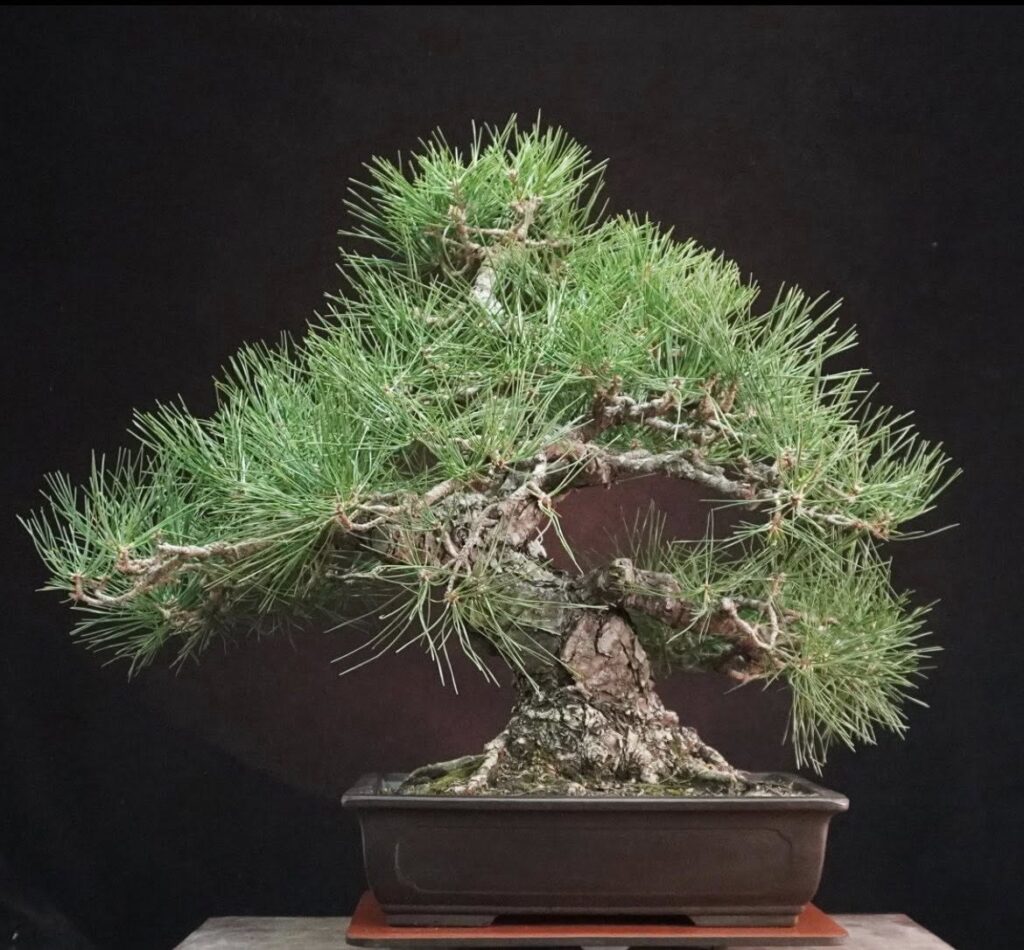
In Japan, the tree is commonly called Goyōmatsu (五葉松), literally meaning “five-needle pine.” It holds enormous reverence in Japanese culture, particularly in the art of bonsai, where it is considered one of the most prestigious species to cultivate.
Natural Range and Habitat
Pinus parviflora grows naturally across Honshu, Shikoku, Kyushu, and parts of South Korea. In the wild, it tends to occupy rugged, exposed environments — rocky ridges, coastal cliffs, and subalpine zones where few other trees can survive.
This is not a tree that demands comfort. It has adapted to thin, nutrient-poor soils, strong winds, heavy snowfall, and dramatic shifts in temperature. Over centuries, these stressful conditions have shaped the tree’s characteristic twisted trunks, windswept branches, and gnarled bark.
Wild specimens often grow at elevations between 1,000 and 2,500 meters, where the growing season is short and the winters are brutal. Yet the tree thrives. That resilience, more than anything, is what makes it so captivating.
In Japan’s national parks — particularly in the Japanese Alps — you can find old-growth specimens of Pinus parviflora that are hundreds of years old. These trees have a quiet authority about them. They have survived centuries of storms and they show every year of it, beautifully.
Botanical Description
Understanding the tree’s physical characteristics helps in identifying it, growing it correctly, and appreciating what makes it unique.
Needles
The needles of the Japanese white pine are 3 to 6 centimeters long and grow in bundles of five. They are slender, slightly twisted, and have a blue-green to grayish-green color. The inner face of each needle shows two narrow white stomatal bands, which give the tree its “white” appearance in certain lighting — and its common name.
The needles remain on the tree for three to four years before being shed, which means the tree maintains a relatively full, dense appearance throughout the year.
Cones
The cones of Pinus parviflora are 4 to 7 centimeters long, egg-shaped to cylindrical, and remain on the tree for several years after maturity. They are not as large or heavy as those of many other pine species. When they open, they release small, winged seeds that are dispersed by wind.
The cones have a subtle ornamental quality. Even in landscape plantings, the cones add textural interest without overwhelming the tree’s delicate aesthetic.
Bark and Trunk
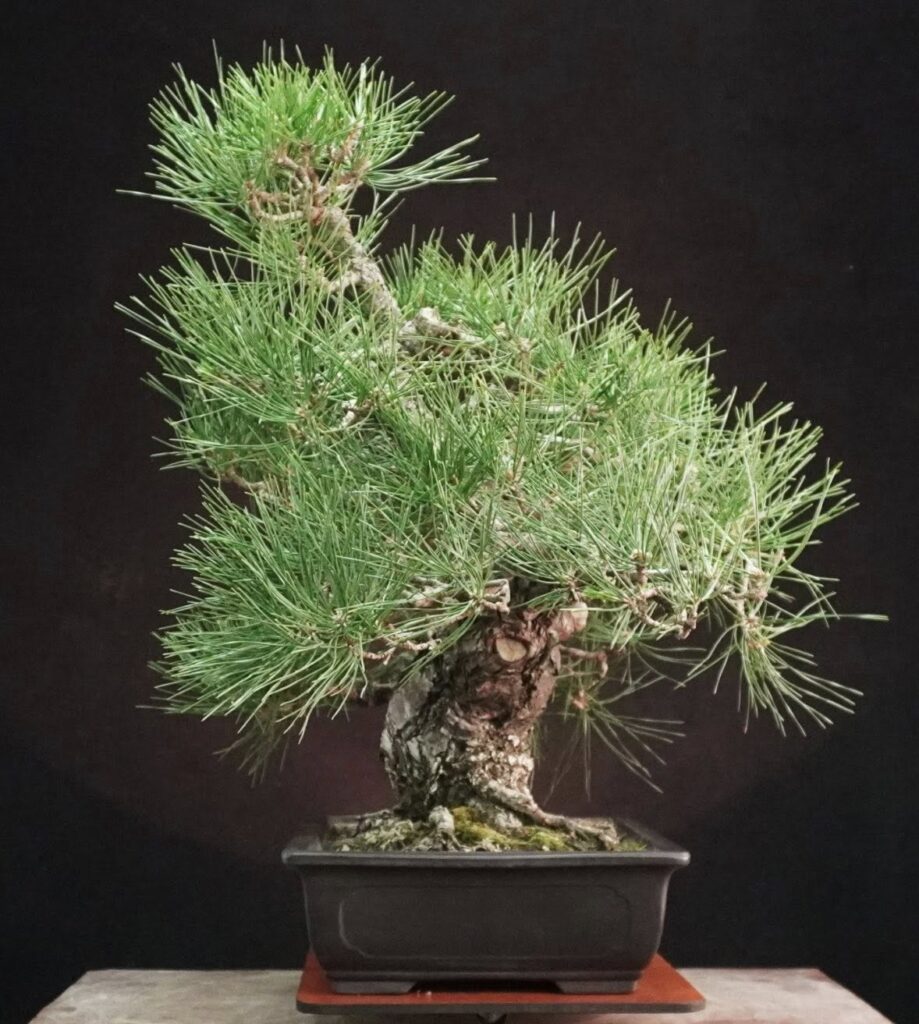
Young Japanese white pines have smooth, grayish bark that gradually becomes fissured and scaly with age. On older trees, the bark develops reddish-brown undertones with deep, irregular furrows that add tremendous visual character.
The trunk of a mature specimen is often twisted or slightly contorted, a natural result of the tree’s adaptation to wind exposure. This natural movement in the form is considered especially desirable in bonsai cultivation, where it suggests age and hardship survived with grace.
Size and Growth Rate
In cultivation, Japanese white pines typically reach 10 to 25 meters in height, though this varies significantly by variety, growing conditions, and pruning. The tree is considered slow-growing, gaining roughly 15 to 30 centimeters per year under good conditions. This slow pace is partly why the species is so valued in bonsai — slow growth means fine branching and compact foliage over time.
Cultural and Historical Significance
To understand the Japanese white pine, you have to understand its place in Japanese culture. This is not merely a botanical specimen. It is a cultural symbol with deep roots in Japanese aesthetics, spirituality, and art.
The Pine in Japanese Tradition
In Japan, pine trees in general are symbols of longevity, perseverance, and good fortune. They are associated with the New Year and feature prominently in kadomatsu, the traditional decorative arrangements placed at the entrances of homes during the New Year season.
The Japanese white pine specifically, with its refined appearance and noble bearing, has been cultivated in imperial gardens, temple grounds, and aristocratic estates for more than a thousand years.
Historical records suggest that Goyōmatsu was already a prized garden tree during the Heian period (794–1185 CE), placing its cultivation history well before many Western gardening traditions even began.
Bonsai: The Art Form Built Around This Tree
When most people hear the words “Japanese white pine,” they immediately think of bonsai. And for good reason. Goyōmatsu is arguably the most celebrated bonsai species in all of Japan.
Bonsai is the ancient Japanese art of cultivating miniature trees in containers, using careful pruning, wiring, and horticultural techniques to shape them over many years — sometimes over many generations. Within this art form, the Japanese white pine holds a position of particular prestige.
Why? Because it responds beautifully to training. Its short needles, dense ramification (branching), and willingness to accept drastic pruning make it ideal for creating the compact, aged appearance that bonsai artists seek. A well-developed Goyōmatsu bonsai can look like a centuries-old mountain tree compressed into a shallow ceramic pot.
Some of the most famous and valuable bonsai specimens in the world are Japanese white pines. Certain specimens held in Japanese collections are estimated to be 400 to 800 years old. They represent not just horticultural achievement, but living cultural heritage — trees tended by multiple generations of masters, passed down like heirlooms.
Symbolism in Art and Literature
The Japanese white pine also appears frequently in traditional Japanese paintings, woodblock prints, and poetry. Artists from the Edo period often depicted these trees on rocky coastlines or mountain slopes, using their irregular forms to suggest the passage of time and the beauty of impermanence — a concept deeply embedded in Japanese aesthetics known as wabi-sabi.
In the wabi-sabi worldview, there is beauty in age, asymmetry, and imperfection. The twisted trunk of an old Pinus parviflora — weathered, scarred, yet still alive — embodies this philosophy perfectly.
Popular Cultivated Varieties
Over centuries of cultivation, numerous named varieties of Pinus parviflora have been developed, each with slightly different characteristics. Here are some of the most widely grown:
Pinus parviflora ‘Glauca’
This is perhaps the most commonly grown variety in Western gardens. It has notably blue-gray foliage that creates a striking color contrast in the landscape. The needles are slightly more silvery than the species type, and the tree maintains a broadly pyramidal form in youth, becoming more irregular with age.
Pinus parviflora ‘Adcock’s Dwarf’
A compact, slow-growing cultivar that reaches only 1 to 2 meters in height after many years. The needles are short and the growth is dense, making it ideal for small gardens, rock gardens, and container planting. It is widely used as a bonsai starter tree.
Pinus parviflora ‘Bergman’
Another dwarf variety with a dense, rounded form. This cultivar is valued for its cold hardiness and adaptability, making it suitable for gardens in harsher climates.
Pinus parviflora ‘Fukuzumi’
A Japanese cultivar known for its particularly fine, blue-green needles and elegant growth habit. Highly sought after by bonsai collectors for its natural refinement.
Pinus parviflora ‘Hagoromo’
Known as the “feather robe” pine, this cultivar has extremely short, dense needles clustered at the branch tips, giving it an unusual, almost feathery texture. It is slow-growing and widely used in bonsai.
Landscape and Garden Use
Beyond bonsai, the Japanese white pine is an excellent landscape tree for a wide range of garden styles.
Japanese and Asian-Inspired Gardens
Naturally, it is a centerpiece tree in Japanese garden design. Its refined form, cultural associations, and aesthetic qualities make it ideal for creating authentic Japanese landscapes. It pairs well with raked gravel, moss, ornamental rocks, water features, and other garden pines and maples.
In a traditional Japanese garden, the shape of the tree often tells a story. Trained branches are directed to suggest motion or direction. The tree is never just planted — it is positioned and shaped with purpose.
Rock Gardens
The Japanese white pine’s natural habitat is rocky terrain, and it thrives when planted among boulders and well-drained soils in rock garden settings. Dwarf varieties are particularly well-suited here, where their slow growth and compact form complement the scale of the rocks.
Specimen Planting
A mature Pinus parviflora with a good natural form is striking enough to stand alone as a specimen tree in an open lawn or garden bed. Its irregular silhouette and bluish foliage ensure year-round interest, and as it ages, it only becomes more beautiful.
Containers and Patio Planting
Dwarf varieties adapt well to large containers, which allows gardeners with limited space to enjoy this tree on patios, decks, or balconies. Container-grown trees require more frequent watering and fertilizing, but their compact size makes them manageable even in urban settings.
Growing Conditions and Requirements
One of the reasons the Japanese white pine is so widely cultivated is its adaptability. However, to grow it well, you need to understand its preferences.
Sunlight
Pinus parviflora requires full sun — a minimum of six hours of direct sunlight per day. In partial shade, the tree becomes open and leggy, losing the dense, compact growth habit that makes it beautiful. In shade, it may struggle to survive.
Soil
This tree is not fussy about soil type, but it must have excellent drainage. It tolerates sandy, rocky, and even clay soils as long as water does not pool around the roots. In waterlogged conditions, root rot develops quickly and can kill the tree.
A slightly acidic to neutral pH (5.5 to 7.0) is ideal. Like most pines, it benefits from the presence of mycorrhizal fungi in the soil, which extend the root system’s ability to absorb water and nutrients.
Watering
Once established, the Japanese white pine is moderately drought-tolerant. It does not like to be kept constantly wet. Water deeply but infrequently, allowing the soil to partially dry between waterings. In bonsai culture, watering is one of the most critical and subtle skills — the soil must never be allowed to dry out completely, but overwatering is just as damaging.
Temperature and Hardiness
Pinus parviflora is cold-hardy to USDA Zone 4 (approximately -34°C or -30°F), making it suitable for many temperate regions. It handles cold winters well but may suffer in areas with very hot, humid summers, particularly in the southeastern United States. In areas with extreme summer heat, afternoon shade or increased air circulation can help.
Fertilizing
In the garden, established Japanese white pines generally need little supplemental fertilization if grown in reasonably fertile soil. However, in containers or bonsai pots, regular feeding is essential.
A balanced, slow-release fertilizer applied in spring and early summer supports healthy growth. Bonsai growers often use organic fertilizers in cakes or pellet form, placed on the soil surface, which release nutrients slowly over weeks.
Wind Exposure
Despite its wild habitat in exposed, windy locations, young and container-grown trees benefit from some protection against harsh desiccating winds, particularly in winter. Cold winter winds can cause needle browning (winterburn) on exposed trees. A windbreak or sheltered planting site helps.
Pruning and Training
Proper pruning is central to maintaining the Japanese white pine in both landscape and bonsai settings.
Candle Pruning
In spring, new growth emerges as elongated “candles” — soft, upright shoots that will eventually extend into new branches. Pinching or cutting these candles back reduces the length of new growth, which in turn encourages shorter needles and denser branching.
For bonsai, candle management is a key seasonal task. Strong candles on vigorous branches are pinched more aggressively than weaker candles on finer branches, which helps balance energy distribution across the tree.
Branch Pruning
Structural pruning — removing unwanted branches — is best done in late autumn or early winter, when the tree is dormant and the cuts heal slowly but cleanly. Avoid heavy pruning in spring when the tree is expending energy on new growth.
In bonsai, dead wood is sometimes deliberately preserved and treated with lime sulfur to create jin (deadwood on branches) or shari (strips of deadwood on the trunk), which add age and drama to the design.
Wiring
In bonsai training, aluminum or copper wire is wrapped around branches to guide them into desired positions. Branches of young Japanese white pines are reasonably flexible and respond well to wiring. Wire must be watched carefully and removed before it cuts into the bark.
Pests and Diseases
The Japanese white pine is generally a robust and disease-resistant tree, but it is not without vulnerabilities.
Pine Needle Scale
Scale insects can infest the needles, causing yellowing and dieback. They appear as small, waxy white or brown bumps along the needles. Control involves horticultural oil sprays applied in early spring before new growth hardens.
Pine Aphids
Aphids can cause distorted growth and honeydew deposits that attract sooty mold. They are usually managed with insecticidal soap or natural predators like ladybugs.
Root Rot (Phytophthora spp.)
Poor drainage is the primary cause of root rot in this species. There is no effective cure once the disease is established, making prevention through good drainage the essential strategy.
Needle Cast Diseases
Fungal diseases can cause needle browning and premature needle drop. Adequate air circulation, avoiding overhead watering, and removing infected needles help prevent spread.
Pine Pitch Moth
Larvae of this moth bore into the cambium layer of the trunk and branches, causing resinous masses to form. Physical removal of the larvae and good tree health are the main defenses.
Japanese White Pine in Bonsai: A Closer Look
Because bonsai is so central to this tree’s identity, it deserves a more detailed examination.
Why Goyōmatsu Is Revered in Bonsai
Japanese bonsai masters often describe Goyōmatsu as the “king of pines” in bonsai. The reasons are multiple. The short needles allow for fine visual refinement that would be impossible with a coarser species. The tree’s natural tendency toward interesting trunk movement means that even young nursery stock often has potential as a bonsai.
The tree also ages gracefully. Its bark develops texture and character over time, its branches thicken convincingly, and the nebari (surface root spread) can become genuinely impressive in older specimens.
Bonsai Styles for Japanese White Pine
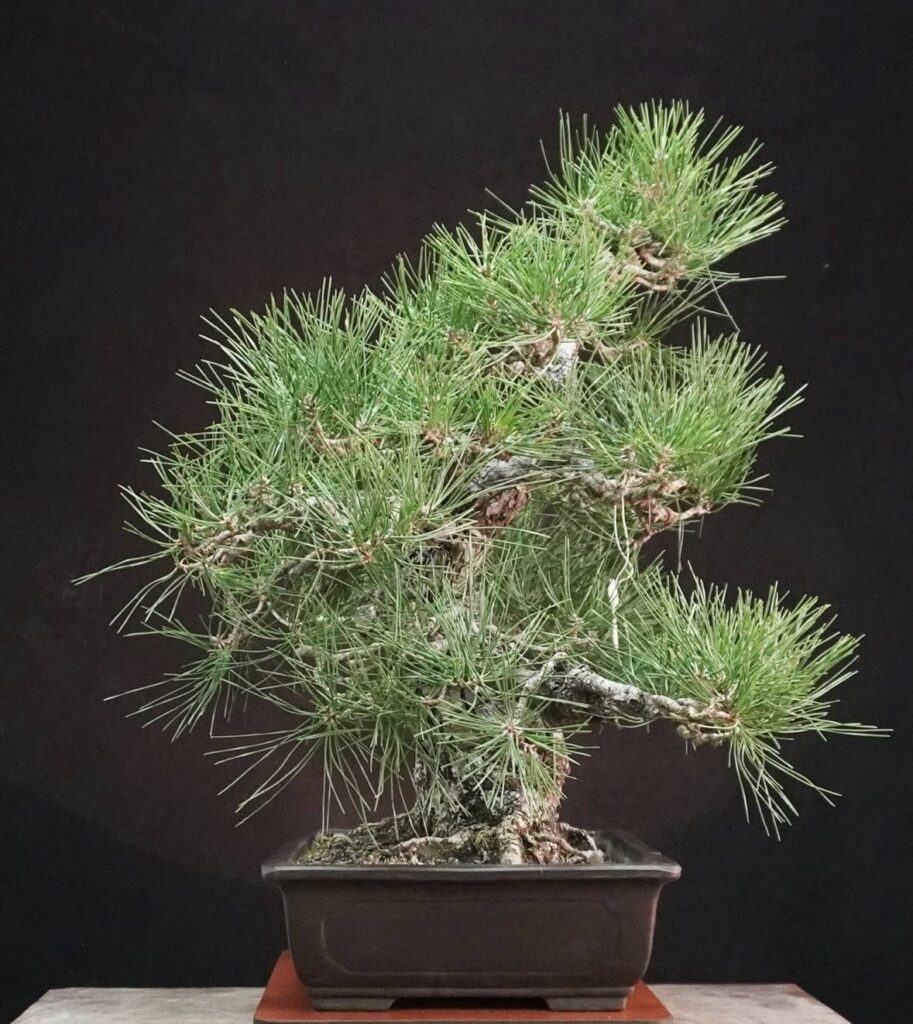
The tree lends itself to several classic bonsai styles. Informal upright (moyogi) is perhaps the most common, showcasing the tree’s naturally gentle trunk movement. Literati (bunjin) style — with a tall, thin trunk and sparse branching — reflects the tree’s wild, windswept mountain forms. Slanting (shakan) and windswept (fukinagashi) styles also evoke the tree’s rugged natural character.
Multi-trunk styles and forest plantings (yose-ue) using several trees are also popular, allowing artists to recreate miniature mountain landscapes.
Grafting in Japanese White Pine Bonsai
Because fine-needled cultivars like Goyōmatsu are slow-growing and temperamental when raised from seed, many bonsai specimens are grafted. A scion of the desired cultivar is grafted onto the rootstock of a more vigorous pine — often black pine (Pinus thunbergii) — which provides a stronger root system.
Graft scars can become a consideration in bonsai aesthetics, and skilled growers work to conceal or incorporate them into the design over time.
Seasonal Care in Bonsai
Spring is the most critical season for Goyōmatsu bonsai. It is when candle management takes place and when the tree makes most of its annual growth. Summer calls for monitoring against heat stress and maintaining soil moisture.
Autumn is when structural pruning can begin. Winter requires protection from freezing of the pot — while the tree itself can handle cold, a frozen pot can damage the roots.
Conservation and Wild Populations
While the Japanese white pine is widespread in cultivation, wild populations face localized pressures from habitat degradation, climate change, and overcollection of specimens for horticultural use.
In Japan, old-growth trees in accessible areas have sometimes been poached from mountain slopes for the bonsai trade. Reputable bonsai organizations and nurseries have increasingly emphasized ethically sourced material — trees grown from seed or cuttings rather than collected from the wild.
Climate change poses a longer-term threat by shifting the temperature and precipitation patterns of subalpine habitats. Monitoring of wild Pinus parviflora populations is ongoing, and conservation efforts are embedded in broader programs for mountain ecosystem protection in Japan.
Propagation Methods
Growing your own Japanese white pine from the beginning can be a deeply rewarding experience, though patience is required.
From Seed
Seeds require stratification — a period of cold, moist storage — to break dormancy. Soak seeds for 24 hours, then refrigerate in moist sand or peat for 30 to 60 days. Sow in spring in well-drained seed mix. Germination is usually reliable, but seedlings grow slowly.
From Cuttings
Semi-hardwood cuttings taken in late summer or early autumn can be rooted under mist or with bottom heat, though success rates are lower than with grafting. Rooting hormone improves success.
By Grafting
As noted, grafting onto black pine rootstock is the most common commercial propagation method for named cultivars. It accelerates growth and provides a more vigorous root system.
Buying Tips and What to Look For
If you are looking to purchase a Japanese white pine — whether for the garden or for bonsai — there are several things worth checking.
Needle color and density are good indicators of health. Needles should be a rich blue-green, firm, and densely arranged. Yellowing, sparse needles may indicate root problems or poor cultural history.
Root health is paramount. If possible, inspect the root ball. For bonsai material, fine, well-spread surface roots (nebari) are desirable. Avoid trees with circling roots or signs of root rot.
Trunk and branch character matters more for bonsai than for garden planting. Look for natural movement, interesting bark texture, and branching that has been thoughtfully maintained rather than neglected.
Purchase from reputable nurseries or bonsai specialists who can tell you the tree’s history — grafted or own-rooted, age, cultivar name, and any past treatments.
Suggested For You:
The Japanese Black Pine Bonsai (Pinus thunbergii): History, Styling, and Growth Requirements
15 Stunning Trees for Vibrant Fall Color: Your Guide to Autumn Beauty
10 Fragrant Trees with Sweet Scents to Elevate Your Landscape
10 Beautiful Trees That Attract Birds to Your Yard
15 Stunning Trees with White Flowers: Identification Features and Care Tips
Conclusion
There are thousands of trees you could plant in a garden or study in horticulture. But few trees offer the depth of experience that the Japanese white pine does.
It is beautiful in every season — quietly dramatic in winter with snow on its needles, vivid with new growth in spring, cool and elegant in summer, and warm with ripening cones in autumn.
It connects you to one of the world’s great horticultural traditions. It teaches patience, observation, and care. Whether you grow it as a large garden specimen, a modest container plant, or an intricate bonsai, it will reward your attention for as long as you give it.
The Japanese white pine is not just a plant. It is a relationship — with nature, with time, and with one of the most refined aesthetic traditions in human history.
References
- Dirr, M.A. (1998). Manual of Woody Landscape Plants: Their Identification, Ornamental Characteristics, Culture, Propagation and Uses. Stipes Publishing. Available via University of Georgia Extension: https://extension.uga.edu
- Murata, K. (1964). Bonsai: Miniature Potted Trees. Japan Travel Bureau. Referenced and discussed at the Bonsai Society of Australia: https://bonsai.org.au
- University of Florida IFAS Extension – Pinus parviflora Japanese White Pine Profile: https://edis.ifas.ufl.edu
- North Carolina State University Extension – Pinus parviflora Plant Fact Sheet: https://plants.ces.ncsu.edu/plants/pinus-parviflora/
- Missouri Botanical Garden – Pinus parviflora Plant Finder: https://www.missouribotanicalgarden.org/PlantFinder/PlantFinderDetails.aspx?taxonid=277638

Tim M Dave is a gardening expert with a passion for houseplants, particularly cacti and succulents. With a degree in plant biology from the University of California, Berkeley, he has vast experience in gardening. Over the years, he has cultivated a vast collection of desert plants and learned a great deal about how to grow and care for these unique companions.