Understanding Japanese Snowbell (Styrax japonicus): Identification, Growth Requirements, Problems and More
There is a particular quality that separates merely beautiful garden plants from truly exceptional ones. It is not size. It is not loudness. It is not the ability to stop traffic from a hundred feet away. It is grace — the quality of doing something beautiful in a way that feels entirely effortless, refined, and right.
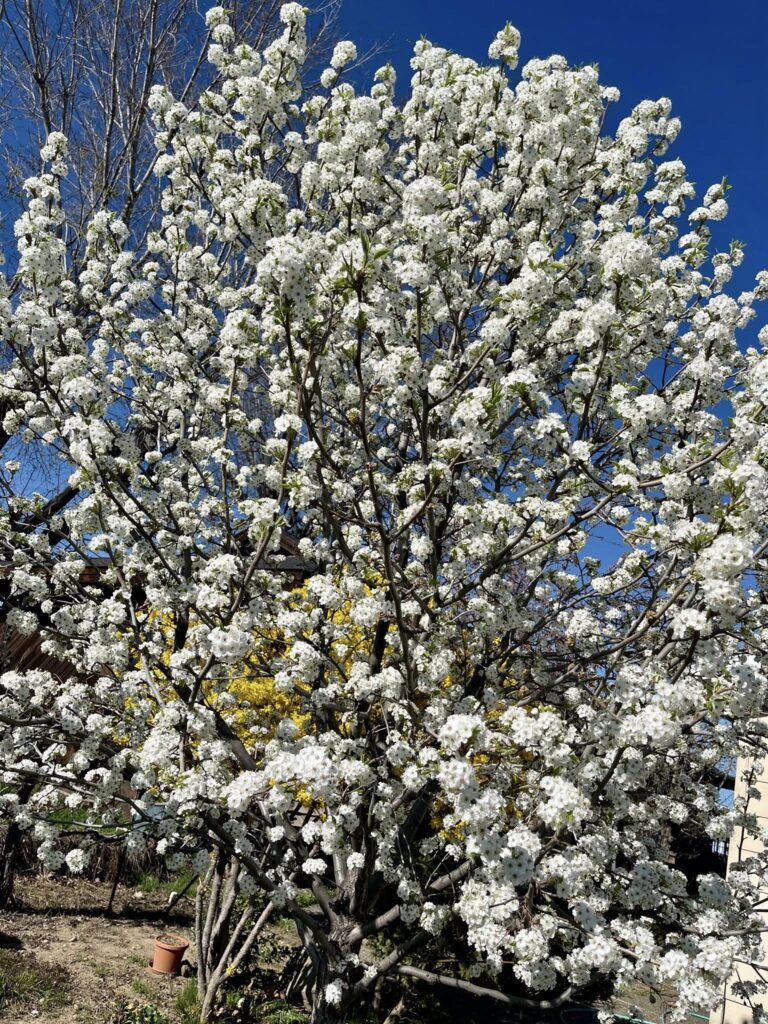
The Japanese Snowbell (Styrax japonicus) has grace in abundance. In late spring and early summer, it covers its horizontal branches with hundreds of small, pendant white bells that hang downward beneath the foliage like tiny chandeliers.
There is something genuinely moving about that upward view. The white bells against the green canopy, the slight fragrance drifting down, the elegant horizontal branching overhead — it is the kind of sight that makes a person feel that the garden has done something generous.
The Japanese Snowbell is not the most spectacular flowering tree in spring. It is not the largest, the most fragrant, or the most boldly colored. But it is one of the most consistently refined, intelligently designed, and horticulturally rewarding small trees available.
| Feature | Detail |
| Scientific Name | Styrax japonicus |
| Family | Styracaceae |
| Common Names | Japanese Snowbell, Japanese Styrax, Snowbell Tree |
| Native Range | Japan, China, Korea |
| Mature Height | 20–30 feet |
| Crown Form | Broadly spreading, horizontal, layered |
| Bloom Time | Late May–June |
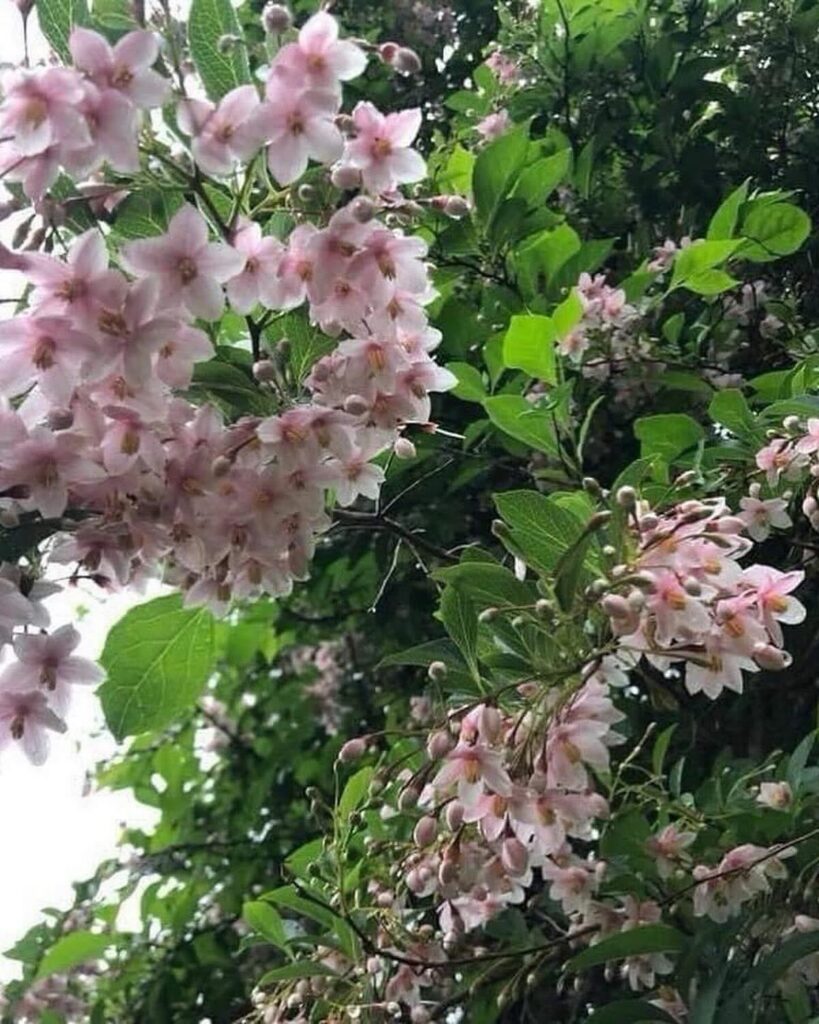
| Flower Color | White; pink forms available |
| Fragrance | Light, sweet, faintly vanilla |
| Fruit | Small, dry drupes; modest ornamental value |
| Fall Color | Yellow to orange-red |
| Hardiness Zones | USDA Zones 5–8 |
| Soil | Moist, well-drained, slightly acidic (pH 5.5–7.0) |
| Light | Full sun to partial shade |
| Best Cultivar | ‘Emerald Pagoda’ (general use); ‘Pink Chimes’ (pink) |
| Primary Limitation | Drought-sensitive; requires consistent moisture |
What Is the Japanese Snowbell?
The Japanese Snowbell belongs to the family Styracaceae — the storax family — a group of flowering trees and shrubs distributed across temperate and subtropical regions of the Northern Hemisphere. The family also includes the American Snowbell (Styrax americanus), the Fragrant Snowbell (Styrax obassia), and the Bigleaf Snowbell (Styrax grandifolius).
The genus Styrax contains approximately 130 species worldwide, ranging from small shrubs to medium trees across Asia, the Americas, and the Mediterranean. Styrax japonicus — the Japanese Snowbell — is the most widely cultivated species in the genus.
Its scientific name, Styrax derives from the Greek and Latin name for the aromatic resin produced by trees in this genus — storax or styrax resin, historically used in incense, medicine, and perfumery. Japonicus means “of Japan,” reflecting one of the species’ natural origin.
Common names are evocative and well-chosen:
- Japanese Snowbell — the universal standard; references the pendant, bell-shaped white flowers
- Japanese Styrax — the botanical trade name
- Snowbell Tree — used in British and European horticulture
- Storax — an older name occasionally used, linking it to the resinous tradition of its family
The name “Snowbell” is as close to perfect as a common plant name gets. The flowers are white as snow. They are shaped like bells. They hang in pendant clusters that sway in the breeze exactly as a bell ought to sway. Nothing is lost in translation.
Native Range and Natural History
The Japanese Snowbell is native to Japan, China, and Korea, where it grows naturally in forest margins, open woodlands, and shrubby slopes at low to moderate elevations. Its native habitat is the transitional zone between closed forest and open meadow.
In Japan, it is found across Honshu, Shikoku, and Kyushu, often growing along stream banks and in secondary forest habitats where light penetration is sufficient. In China, it is widespread across central and eastern provinces. In Korea, it occupies similar woodland margin habitats throughout the peninsula.
This woodland edge origin is directly relevant to the tree’s landscape requirements. It is naturally adapted to dappled light, moderate moisture, and the acidic, organically rich soils of forest margins — conditions that gardeners can replicate with thoughtful siting and soil preparation.
The Japanese Snowbell was introduced to Western horticulture in the late nineteenth century, brought to Europe and North America through the networks of plant explorers and botanical institutions that were actively introducing Asian plants to Western gardens during that period.
Ernest Wilson, the prolific British plant explorer who collected extensively in China and Japan in the early twentieth century, is credited with introducing or promoting several outstanding selections of the species.
From those early introductions, Japanese Snowbell has steadily grown in popularity across North America and Europe — particularly over the past three to four decades, as the demand for smaller ornamental trees with multi-season interest has expanded.
Physical Characteristics
Size and Form
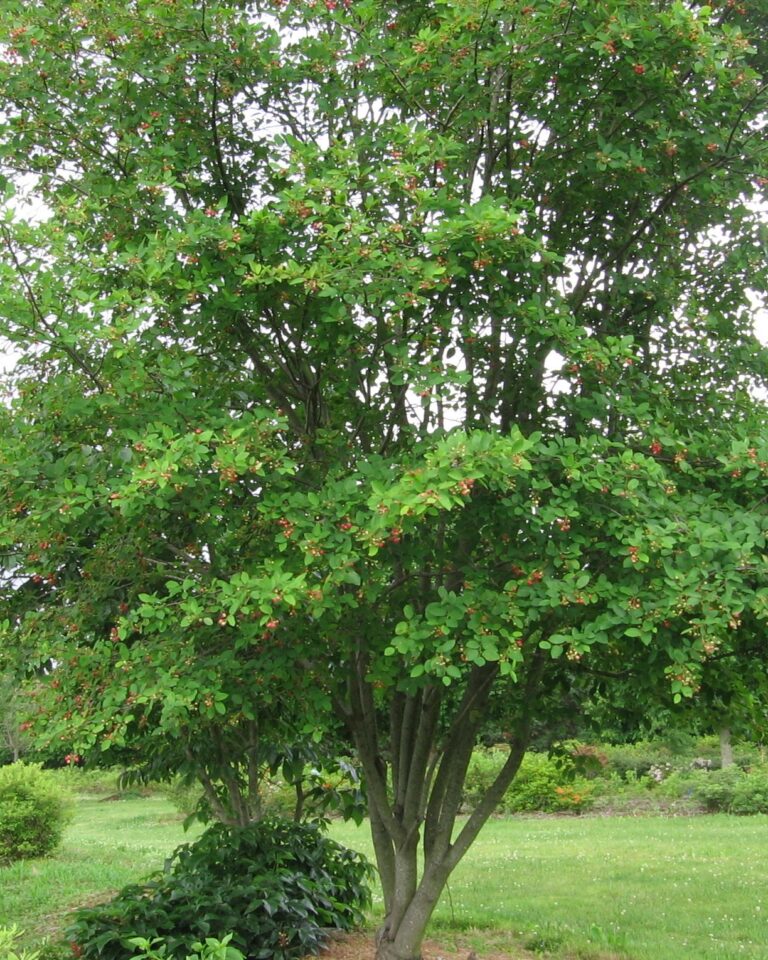
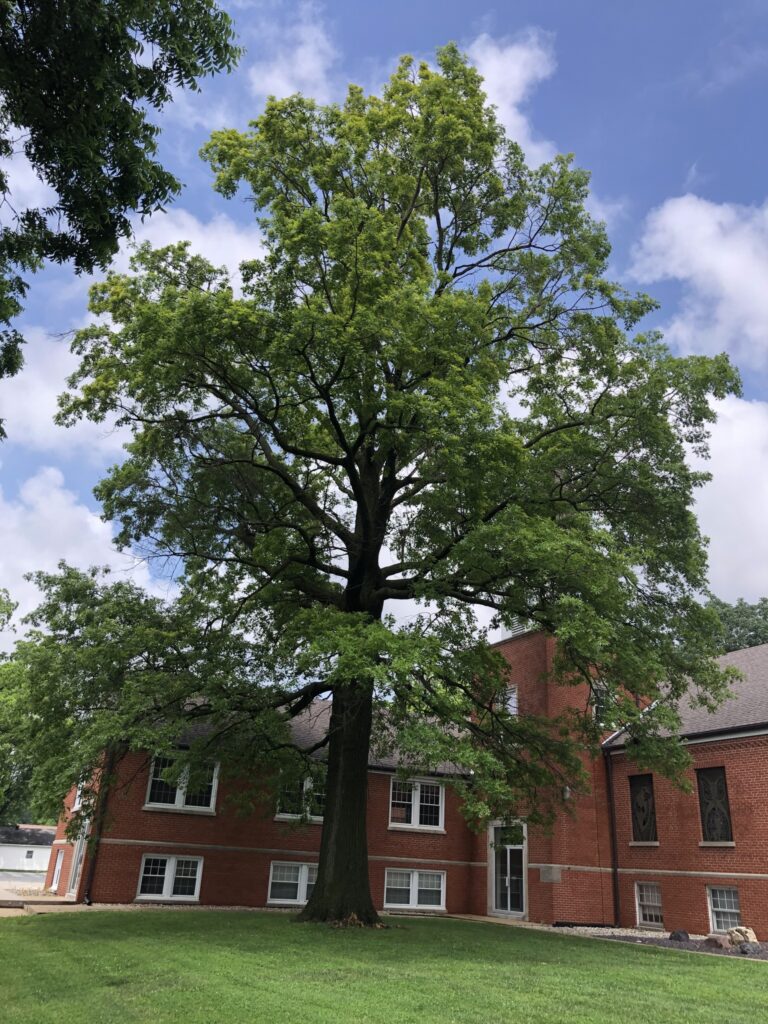
The Japanese Snowbell is a small deciduous tree, typically reaching 20 to 30 feet (6–9 meters) in height at maturity, with a spread of 15 to 25 feet (4.5–7.5 meters). Growth rate is moderate — approximately 13 to 24 inches per year under good conditions.
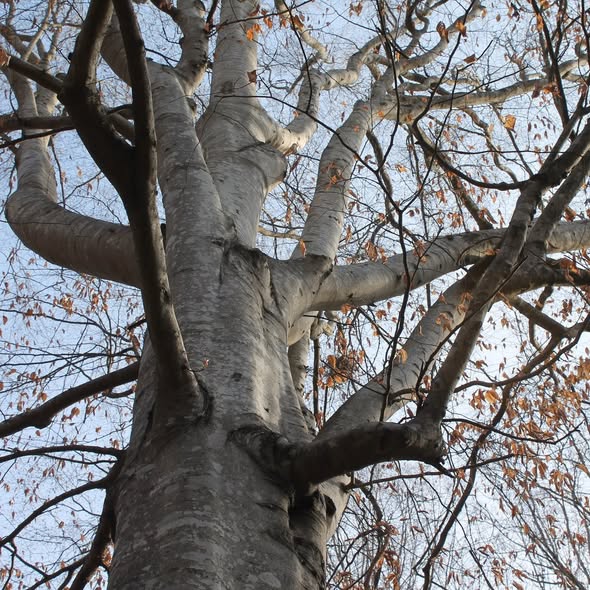
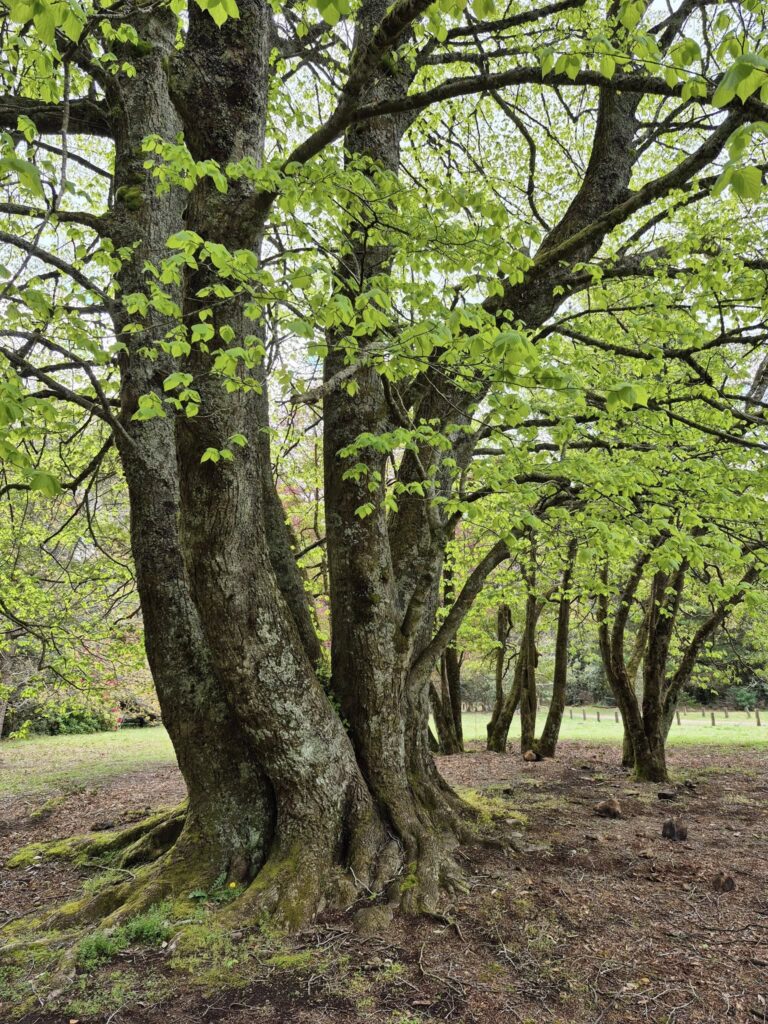
The form is one of the tree’s outstanding structural features. It develops a broadly spreading, low-branched, layered crown with strongly horizontal branching.
The horizontal layering becomes more pronounced with age, eventually creating the pagoda-like tiered profile that makes mature Japanese Snowbells among the most recognizable and elegant of all small ornamental trees.
The branching pattern is as beautiful in winter as in summer. Bare horizontal branches against a winter sky reveal the tree’s clean structure without any obscuring foliage — a quality that landscape architects prize in trees intended for year-round visual interest.
Bark and Stems
The bark is smooth, gray-brown, and relatively featureless on young trees. On older specimens, it develops shallow, interlacing ridges that add subtle texture without the dramatic exfoliation seen in some other ornamental trees. It is clean and unobtrusive.
Young stems are reddish-brown and slightly hairy, particularly near the tips where growth is newest. Older wood is gray and smooth. The overall winter appearance is clean and architectural — the horizontal branching structure is the winter show, not the bark.
Leaves
The leaves are simple, alternate, and elliptical to ovate, measuring 2 to 4 inches (5–10 cm) in length. They are glossy, dark green on the upper surface — almost lustrous — and paler beneath. The margins have fine, shallow teeth or are occasionally nearly smooth.
In summer, the foliage creates a dense, clean, dark green canopy of fine to medium texture. The glossiness gives the leaves a slightly formal quality that complements the tree’s elegant structure.
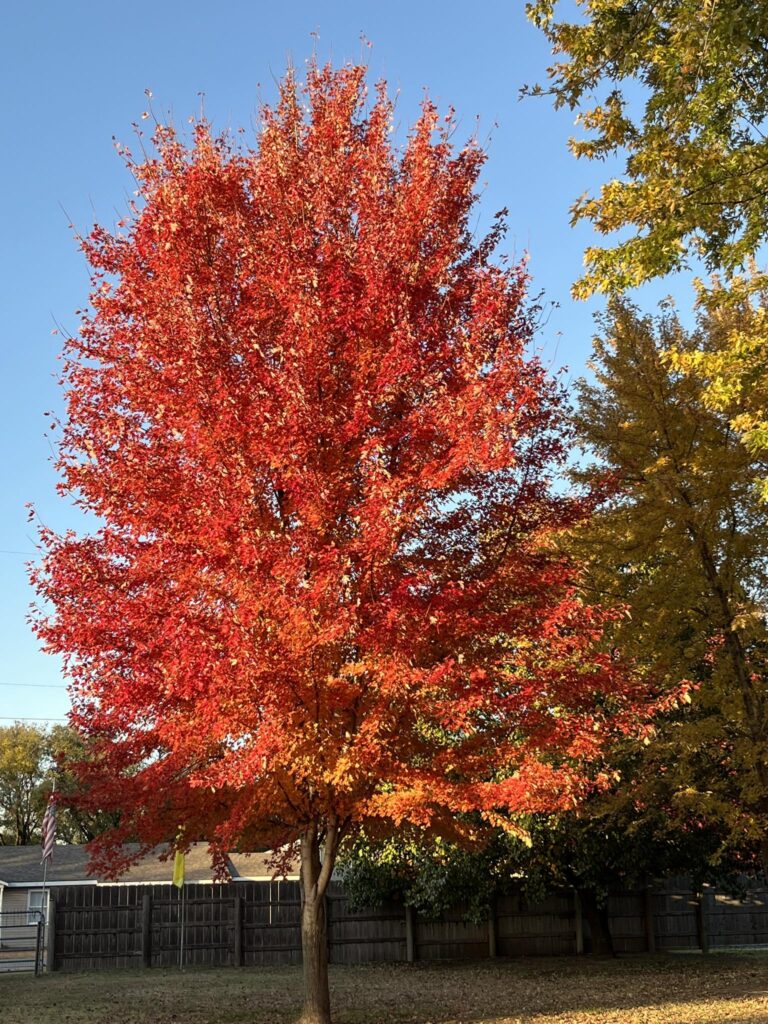
In autumn, the leaves turn yellow to orange-red — not as spectacular as maples or Black Gum, but reliably attractive and a meaningful contribution to the seasonal display. Color typically develops in October and persists for two to three weeks.
The leaves emerge slightly before or simultaneously with the flowers in spring. In the Japanese Snowbell, the white flowers appear against a backdrop of fresh, bright green new foliage — a color combination of considerable refinement and elegance.
The Flowers — The Entire Reason This Tree Exists
Everything the Japanese Snowbell does well, it does most memorably in late May and June, when it flowers.
The individual flowers are small — approximately ¾ to 1 inch (2–2.5 cm) long — but they are produced in such generous abundance and arranged with such precision that the cumulative effect is extraordinary.
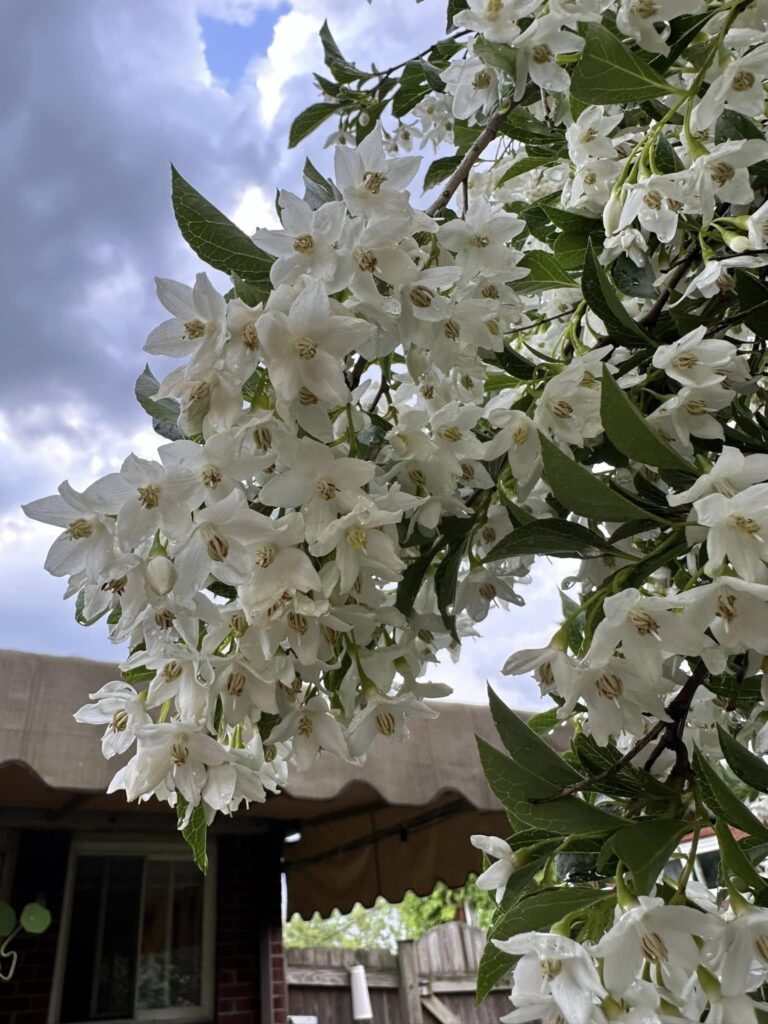
Each flower is a pendant, five-petaled white bell with reflexed (backward-curving) petals that expose a central cluster of bright yellow stamens. The petals curl back from the bell opening, creating a form that is simultaneously delicate and architecturally precise.
Flowers are arranged in short racemes of 3 to 6 blooms hanging beneath the branches — always below the foliage plane, always pendant, always oriented downward. This downward orientation is the feature that defines the Japanese Snowbell’s character.
The flowers are designed to be seen from below. Standing beneath a flowering Japanese Snowbell and looking upward into the canopy is one of the more beautiful experiences available in a spring garden.
The white bells against the green leaves, the yellow stamen clusters catching the light, the slight movement of hundreds of flowers in a breeze — it is quietly spectacular in a way that no photograph quite captures.
The flowering period runs approximately 2 to 3 weeks — shorter than some ornamental trees, but the display during that window is concentrated and memorable. Bloom typically peaks in late May through mid-June across most of the temperate United States and comparable climates elsewhere.
Fragrance
The flowers are lightly but distinctly fragrant — a clean, sweet, faintly vanilla-like scent that is never overpowering but consistently pleasant. On warm, still evenings during peak bloom, the fragrance carries several feet from the tree.
The fragrance is subtle enough that many gardeners who pass the tree quickly may not notice it.
Fruit
Following the flowers, small, oval to pear-shaped drupes develop — approximately ½ inch (1–1.5 cm) in length, turning from green to gray-brown as they ripen in late summer and autumn. The fruits hang on the same pendant stalks as the flowers, in the same positions.
The fruits are not edible and not particularly ornamental — they are modest, dry, and relatively inconspicuous. They do not add significantly to the tree’s ornamental value, but neither do they detract — they simply age quietly as the season transitions from summer toward autumn color.
Wildlife value of the fruit is modest — some bird species consume the seeds, but the Japanese Snowbell is not a primary wildlife food source in most temperate landscapes.
Four-Season Ornamental Value
Part of what makes the Japanese Snowbell worth knowing is that its contributions to the garden are genuinely spread across the full year — not concentrated entirely in the flowering window.
Spring
The fresh, bright green leaves emerge alongside or just before the white flower clusters, creating the signature combination of clean foliage and pendant bells that defines the tree’s flowering season. This is the tree’s peak season — and it is exceptional.
Summer
The dense, glossy, dark green canopy provides good shade quality for a small tree — not as deep as a large oak, but adequate for underplanting with shade-tolerant perennials. The horizontal branching creates a pleasant overhead structure in outdoor seating areas.
The tree is clean and undemanding through summer.
Autumn
Yellow to orange-red fall color — reliable rather than spectacular, but genuinely attractive. The color develops in October and adds warmth to the garden as the season transitions.
Winter
During winter, the horizontal branching architecture is revealed in full after leaf drop. The tiered, layered branch structure reads as strongly as any ornamental tree in the bare-branch season — one of the finest winter silhouettes among small deciduous trees.
Old specimens, in particular, develop a breadth and complexity of horizontal structure that is worth appreciating on its own terms.
Landscape and Garden Uses
The Japanese Snowbell’s combination of refined flower display, elegant form, manageable size, and four-season interest makes it one of the most versatile small ornamental trees available to temperate gardeners. Its applications are numerous and varied.
Specimen Planting
As a single specimen in a garden focal position — at the end of a path, in the center of a lawn, or anchoring a border — the Japanese Snowbell provides more seasonal interest and structural elegance than most other trees of comparable size.
Position it where the flowers will be seen from below — this is not merely a preference but a design principle. The entire floral experience is upward-facing. A bench or seating area beneath the tree, a path that passes under the canopy, or a low garden level below the planting site all provide the ideal viewing angle during bloom.
Shade Garden and Woodland Understory
In shade gardens, woodland gardens, and naturalistic landscapes, the Japanese Snowbell performs beautifully as a mid-story tree beneath taller oaks, maples, or conifers. Its tolerance for partial shade — rooted in its woodland edge origins — makes it one of the more dependable small flowering trees for less-than-full-sun settings.
It pairs naturally with shade-tolerant perennials and shrubs: hostas, ferns, astilbes, hellebores, rhododendrons, and native wildflowers all grow well beneath and around it, creating a multi-layered planting with continuous seasonal interest.
Patio and Courtyard Tree
The modest size and non-aggressive root system of the Japanese Snowbell make it well-suited to enclosed courtyard gardens, paved patio edges, and terrace plantings where a larger tree would overwhelm the space or threaten pavement.
In a courtyard setting, the pendant flowers visible from a seating area and the fragrance drifting on a late-May evening create a garden experience of notable refinement — the kind of sensory quality that makes a small outdoor space feel genuinely complete.
Mixed Border Anchor
As a structural anchor at the back or center of a large mixed border, the Japanese Snowbell provides height, form, and spring flower interest while remaining in scale with the surrounding plantings through the rest of the year.
Street and Urban Tree
The Japanese Snowbell has demonstrated reasonable tolerance for urban conditions — air pollution, urban soils, and heat island effects — and is used in municipal planting programs in North America, Europe, and Japan. Its moderate root system is less problematic near pavement than larger-growing species.
Notable Cultivars and Varieties
The breadth of available cultivars makes it possible to select a Japanese Snowbell precisely suited to any garden situation.
White-Flowered Cultivars
- ‘Emerald Pagoda’ — larger flowers than the species; vigorous; exceptionally strong horizontal branching that accentuates the pagoda form; considered by many authorities to be the finest general-purpose cultivar for North American gardens; National Arboretum introduction
- ‘Carillon’ — strongly weeping habit; flowers hang in dramatic cascades; excellent for accent planting or situations where a weeping form is desired
- ‘Crystal’ — compact, rounded habit; heavy flowering; good choice for smaller spaces
- ‘Pendula’ — classic weeping form; long cultivated in Japanese gardens; graceful arching branches
- ‘Sohuksan’ (syn. ‘Emerald Pagoda’ in some trade) — vigorous, horizontal form; heavy flower production
Pink-Flowered Cultivars
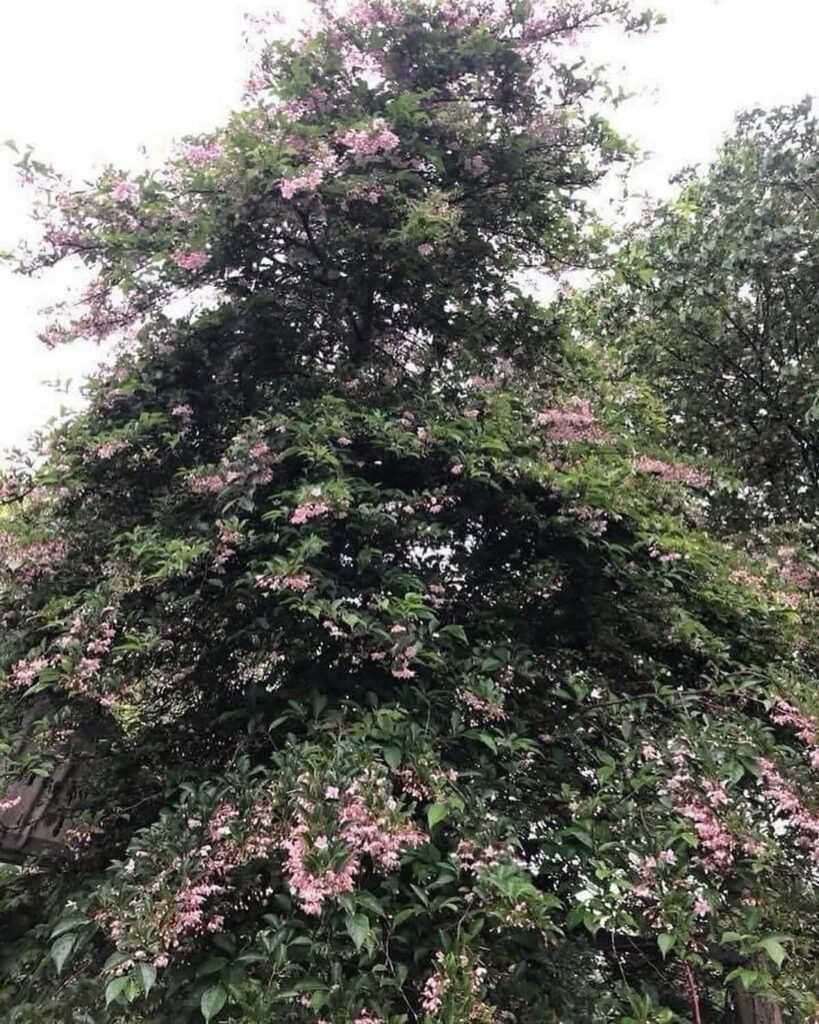
- ‘Pink Chimes’ — the standard pink-flowered cultivar; pale pink flowers; charming and unusual; brings genuine color variation to the typical white-flowered species; somewhat less vigorous than white forms
- ‘Roseus’ — pink to rosy-pink flowers; older selection; widely available in European nurseries
Variegated Foliage Cultivars
- ‘Fragrant Fountain’ — weeping habit; white flowers; moderate vigor; fragrance emphasized in selection
- ‘Evening Light’ — purple-tinged summer foliage; unique among Styrax cultivars; white flowers contrast dramatically with dark leaves; one of the most distinctive Japanese Snowbell cultivars in production
For most gardeners, ‘Emerald Pagoda’ represents the best balance of flower quality, structural form, vigor, and performance across a range of temperate conditions.
Soil, Light, and Site Requirements
Soil
Japanese Snowbell performs best in deep, moist, well-drained, organically rich soils with a slightly acidic to neutral pH — ideally 5.5 to 7.0. It is sensitive to:
- Waterlogged soils — will develop root rot in consistently saturated conditions
- Highly alkaline soils — causes iron chlorosis and gradual decline
- Severely compacted soils — restricts root development and reduces vigor
The ideal soil preparation involves generous incorporation of aged compost across the entire planting zone — not merely in the planting hole. The Japanese Snowbell’s roots spread laterally across a broad area, and improving the broader soil environment produces significantly better long-term performance than confining amendment to the hole.
Light
Full sun to partial shade. The best flowering and most compact, well-structured growth occurs in full sun to light partial shade — a minimum of 4 to 6 hours of direct sun daily. In the hottest parts of Zones 7 and 8, some afternoon shade reduces heat stress and extends flower longevity during bloom.
In deep shade, flowering is reduced and growth becomes open and irregular. The Japanese Snowbell is more shade-tolerant than many flowering trees — a practical advantage in sites with significant tree canopy — but it is not a true shade plant.
Hardiness Zones
Japanese Snowbell is hardy in USDA Zones 5 through 8. In Zone 5, selecting a sheltered planting site and providing winter mulch over the root zone improves cold hardiness at the northern edge of the range.
In the warmest parts of Zone 8, afternoon shade and consistent moisture are important for maintaining vigor through hot summers.
How to Plant and Grow Japanese Snowbell
Sourcing Plants
Purchase named cultivars from reputable nurseries carrying container-grown stock. Seedling-grown plants vary in quality and performance; vegetatively propagated named cultivars deliver consistent, predictable results.
This is particularly important with Japanese Snowbell, where cultivar selection significantly influences ultimate form, flower size, and habit.
Planting Instructions
- Select the site with careful attention to viewing angle — position the tree where its flowers will be seen from below during bloom season.
- Test soil pH before planting. Amend with sulfur if pH exceeds 7.0.
- Incorporate generous compost across the full planting zone.
- Dig the planting hole two to three times wider than the root ball and no deeper.
- Set the root flare at grade — never plant deeply. Excessive planting depth is the most common cause of Japanese Snowbell establishment failure.
- Backfill with native soil amended with compost. Avoid high-nitrogen fertilizer at planting time.
- Mulch generously — 3 to 4 inches of shredded wood or composted bark mulch extending 3 to 4 feet beyond the root ball. Maintain mulch annually.
- Water consistently during the first two to three growing seasons. Japanese Snowbell is sensitive to drought stress during establishment — consistent moisture is the single most important establishment practice.
Ongoing Care
Fertilize lightly in early spring with a balanced, slow-release fertilizer or an acid-forming fertilizer if soil pH tends toward alkaline. Avoid heavy nitrogen applications.
Prune minimally — the natural horizontal form is the tree’s greatest ornamental asset and should not be altered. Remove dead or crossing branches in late winter if needed.
Maintain consistent soil moisture — particularly through the first five years and during summer drought periods in warmer zones. Japanese Snowbell is more drought-sensitive than many comparable ornamental trees — this is its primary cultural limitation and the most common cause of decline in inappropriate sites.
Pests, Diseases, and Common Problems
The Japanese Snowbell is generally a healthy, low-maintenance tree with few serious pest or disease concerns when grown in appropriate conditions.
Ambrosia Beetles
Ambrosia beetles (Xylosandrus spp. and related genera) occasionally attack Japanese Snowbell, boring into the wood and introducing fungal pathogens. Stressed trees — particularly those suffering from drought or root damage — are far more susceptible than healthy, well-established specimens.
The characteristic symptom is tiny toothpick-like extrusions of frass from small entry holes in the bark — a distinctive and immediately recognizable sign. There is no reliable chemical treatment once boring has begun — prevention through tree health is the only effective strategy.
Scale Insects
Various scale insects may infest Japanese Snowbell, particularly on trees under stress. Horticultural oil applied in late winter before bud break controls most scale species reliably.
Leaf Spot and Minor Fungal Diseases
Fungal leaf spots may appear in wet seasons, causing brown spots or blotches on leaves. These are almost always cosmetic on healthy trees and do not require treatment. Improving air circulation by avoiding crowding reduces incidence.
Drought Stress and Leaf Scorch
Leaf scorch — browning at leaf margins and between veins — is the most common cultural problem with Japanese Snowbell, particularly in hot summers and in Zones 7 and 8. It is caused by inadequate soil moisture combined with heat and solar exposure.
The solution is consistent, deep watering during dry periods, particularly from July through September. Mulching the root zone significantly reduces soil moisture loss and moderates soil temperature — two of the most effective practices for preventing scorch.
Iron Chlorosis
On alkaline soils, yellowing between leaf veins signals iron deficiency. Correct soil pH as the long-term treatment. Chelated iron applications provide temporary improvement.
Japanese Snowbell vs. Fragrant Snowbell: Knowing the Difference
A close relative occasionally encountered in specialty nurseries is the Fragrant Snowbell (Styrax obassia), which deserves brief comparison:
| Feature | Japanese Snowbell | Fragrant Snowbell |
| Leaf size | Small (2–4 inches) | Very large (4–8 inches) |
| Flower arrangement | Short pendant racemes | Long drooping racemes |
| Fragrance | Light | Strong and pronounced |
| Mature size | 20–30 feet | 20–30 feet |
| Garden use | Specimen, woodland edge | Specimen, bold texture |
| Availability | Widely available | Specialty nurseries |
Both are outstanding ornamental trees, but the Fragrant Snowbell provides a bolder, more dramatic leaf texture and stronger fragrance, while the Japanese Snowbell offers greater refinement of form and broader cultivar selection.
For most garden situations, Japanese Snowbell is the more versatile choice — but the Fragrant Snowbell is worth seeking out for gardens where its distinctive character can be fully appreciated.
Final Thoughts
The Japanese Snowbell does not compete for attention the way some flowering trees do. It does not blaze with autumn fire like a Black Gum, or erupt with mass color like a cherry, or perfume an entire street like a Champaca. Its virtues are quieter, more refined, more particular — requiring the kind of attention that the best garden plants always reward.
Stand beneath it when it is in bloom. Look upward. Watch the white bells hanging against the green — dozens of them, swaying slightly, the yellow stamens catching the light, the faint fragrance drifting down.
That experience is what the Japanese Snowbell is about. That is what makes gardeners who know it so loyal to it — the specific, private beauty of standing beneath something that is doing exactly what it was designed to do, flawlessly, on a warm June morning.
Given the right conditions — acidic soil, consistent moisture, enough light, and room to spread its horizontal branches — it will deliver that experience reliably for decades.
Few small trees in temperate horticulture offer more for what they ask.
References
- North Carolina State University Cooperative Extension — Styrax japonicus Plant Profile https://plants.ces.ncsu.edu/plants/styrax-japonicus/
- University of Florida IFAS Extension — EDIS — Styrax japonicus: Japanese Snowbell https://edis.ifas.ufl.edu/publication/ST597
- Virginia Tech Department of Forest Resources and Environmental Conservation — Dendrology Fact Sheet: Styrax japonicus https://dendro.cnre.vt.edu/dendrology/syllabus/factsheet.cfm?ID=453
- University of Connecticut Plant Database — Styrax japonicus — Japanese Snowbell https://hort.uconn.edu/detail.php?pid=363
- Missouri Botanical Garden — Plant Finder — Styrax japonicus https://www.missouribotanicalgarden.org/PlantFinder/PlantFinderDetails.aspx?taxonid=277523

Tim M Dave is a gardening expert with a passion for houseplants, particularly cacti and succulents. With a degree in plant biology from the University of California, Berkeley, he has vast experience in gardening. Over the years, he has cultivated a vast collection of desert plants and learned a great deal about how to grow and care for these unique companions.