Japanese Apricot (Prunus mume): History, Features, Problems, and Full Cultivation Details
Winter is the season most gardens go quiet. Trees stand bare. Borders thin out. The garden becomes a place you glance at rather than linger in. And then — sometimes as early as January, long before spring even stirs — Japanese apricot (Prunus mume) opens its blossoms on naked branches, fragrant and fearless, while frost still edges the grass.
This is a tree that has been revered for over a thousand years across East Asia. It is the subject of more Chinese and Japanese poetry than almost any other plant. It is painted on porcelain, embroidered on silk, carved into jade, and celebrated at festivals attended by hundreds of thousands of people each winter.
This guide sets the record straight. Here is everything you need to know about Prunus mume — its origins, its beauty, its cultural significance, and precisely how to grow it well.
What Is Japanese Apricot? Botanical Identity and Background
Prunus mume belongs to the family Rosaceae — the same family as roses, apples, cherries, and true apricots. Despite its common English name, it is more closely related to the apricot (Prunus armeniaca) than to the plum (Prunus salicina), though it is frequently and incorrectly called “Japanese plum” in some regions.
The plant is native to southern China, where it has been cultivated for over 3,000 years. It was introduced to Japan approximately 1,500 years ago and has since become so deeply embedded in Japanese culture that it is commonly, though somewhat loosely, called the “Japanese” apricot. Korea also has a long and rich tradition of cultivation and appreciation.
In its natural form, Prunus mume grows as a small to medium-sized deciduous tree or large shrub, typically reaching 4 to 10 metres (13 to 33 feet) in height and a similar spread. In garden cultivation, it is often maintained at 2 to 5 metres (6 to 16 feet) through pruning.
The species name mume is a transliteration of the Chinese méi (梅), the plant’s most important name across East Asia — a character so culturally significant that it appears in place names, personal names, poems, paintings, and proverbs stretching back to antiquity.
The Flowers: Beauty in the Coldest Season
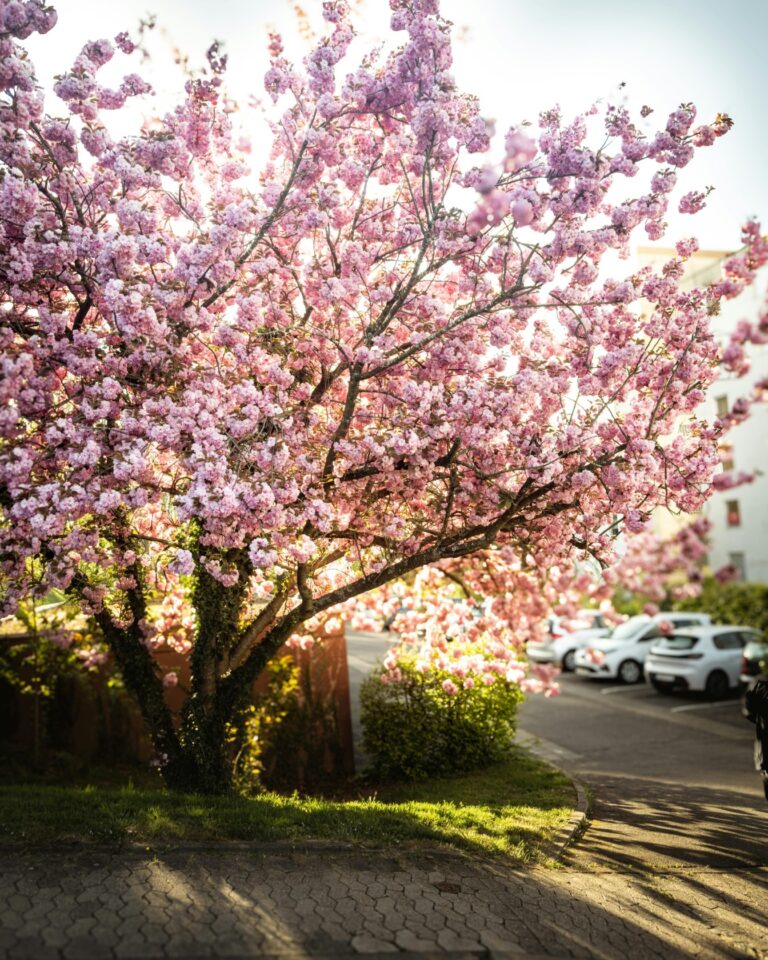
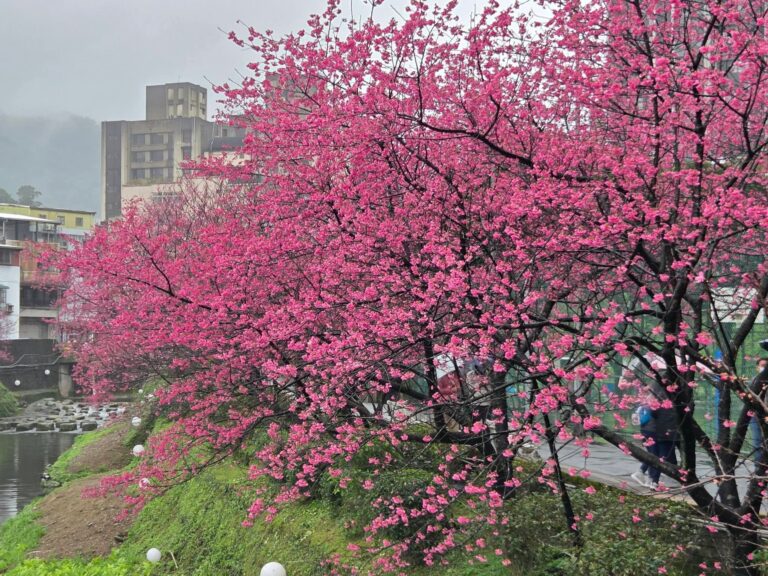
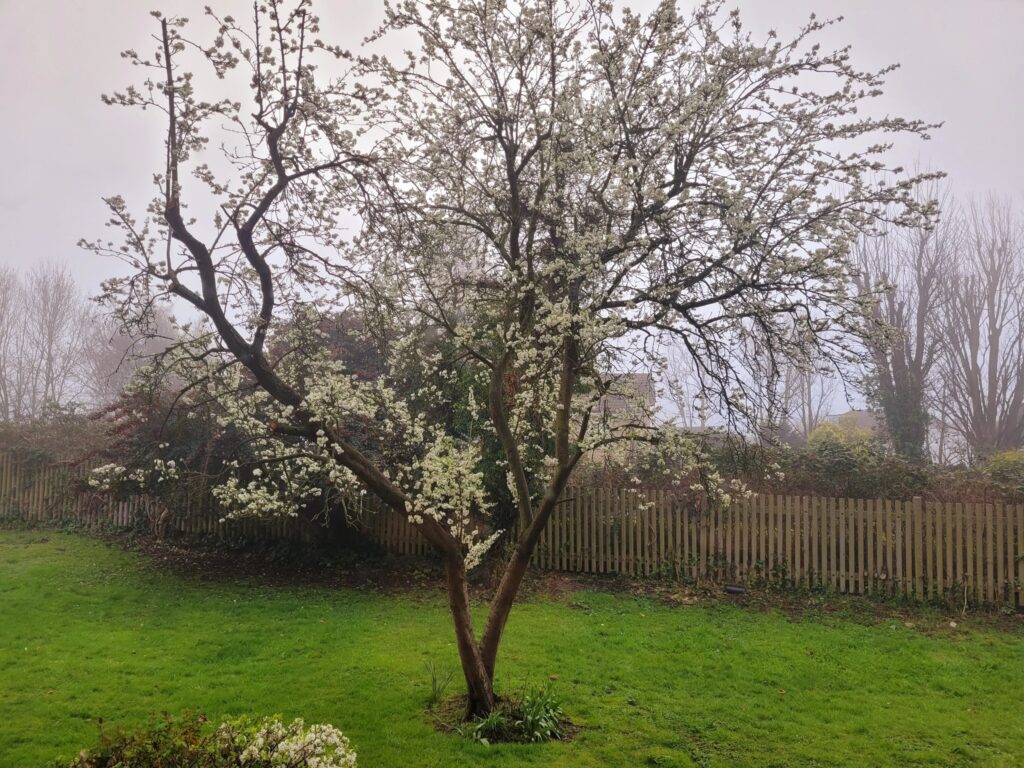
The flowers of Prunus mume are its defining glory. They appear on bare branches in mid to late winter — typically December through March in most of the plant’s cultivation range — well before any leaves emerge. This winter-blooming habit is the single most remarkable thing about the tree, and the quality that has earned it its extraordinary cultural status.
Individual flowers are 2 to 3 centimetres across, with five rounded petals in the wild species. They are produced in such density along the branches that a mature tree in full bloom can appear covered in a soft cloud of colour.
Depending on the cultivar, flower colour ranges from pure white through pale pink, rose pink, deep cerise, and rich crimson-red. Double-flowered forms, with many more than five petals, are also widely cultivated.
The fragrance is exceptional — sweet, clean, and distinctly apricot-like, with a freshness that is intensified by the cold air of winter. I have stood beside a fully bloomed Prunus mume in February, and the scent rising from its branches while frost still lay on the ground nearby is one of those experiences that genuinely stays with you.
The combination of fragrance, colour, and the audacity of blooming in winter is precisely why this tree has been celebrated by artists and poets for millennia. It represents resilience, elegance, and the promise of spring to come.
Cultural Significance: A Symbol Across Civilisations
To understand Prunus mume fully, you need to appreciate its cultural weight. This is one of the most symbolically important plants in the world.
In China
The Chinese méi (梅) is one of the Four Gentlemen of Chinese art and poetry — a group of four plants (the others being orchid, bamboo, and chrysanthemum) each representing particular virtues. Méi embodies perseverance, integrity, and hope — virtues expressed through its willingness to bloom in the harshest season.
The Song Dynasty poet Lin Bu (967–1028 AD) famously wrote of the mume blossom with such reverence that his verses are still recited today. Emperor Huizong of the Song Dynasty painted it repeatedly. Thousands of classical Chinese poems reference it directly.
In modern China, the mume blossom (méihuā, 梅花) is a strong candidate for national flower, deeply associated with national identity and the spirit of resilience through adversity.
In Japan
In Japan, the ume (梅) was the most celebrated flowering tree before cherry blossoms (sakura) rose to cultural dominance during the Heian period (794–1185 AD). The famous Man’yōshū — Japan’s oldest anthology of poetry, compiled in the 8th century — contains more poems about ume than about cherry blossoms.
The Dazaifu Tenmangu Shrine in Fukuoka Prefecture, one of Japan’s most visited Shinto shrines, is famous for its 6,000 ume trees, which bloom each February in a festival (Ume Matsuri) drawing enormous crowds.
Shrines and temples associated with the scholar-deity Tenjin (Sugawara no Michizane) traditionally plant ume, based on a legend that his beloved plum tree flew from Kyoto to Dazaifu to be with him in exile.
In Korea
In Korea, the maesil (매실) tree is cultivated extensively both ornamentally and for its fruit, which is used to produce maesil-cheong (a fermented plum syrup), maesil-ju (plum wine), and numerous traditional foods and medicines.
Natural Habitat and Climate Adaptability
Prunus mume is native to montane regions of southern China, growing at elevations of 300 to 3,100 metres (1,000 to 10,000 feet) in mixed woodland and forest margins. This mountain origin helps explain several of its key horticultural characteristics — its cold hardiness, its preference for well-drained soils, and its tolerance of dry summers.
The plant is hardy to USDA Hardiness Zones 6 through 9. Some well-established specimens in sheltered positions have survived Zone 5 conditions, but Zone 6 is the reliable practical minimum for outdoor cultivation.
Key climate requirements:
- Cold winters are essential — the plant requires a period of winter chilling (typically 500 to 900 hours below 7°C / 45°F) to break dormancy and flower reliably; without adequate chilling, bud development is erratic
- Mild springs — late spring frosts can damage open flowers and reduce fruit set; a sheltered position provides meaningful protection
- Warm summers — adequate summer warmth is needed to ripen the wood and support the following winter’s flower bud development
- Low to moderate humidity in summer — the plant is susceptible to fungal diseases in conditions of high summer humidity, which is one reason it performs better in regions with dry summers
This climate profile makes Prunus mume particularly well-suited to:
- The Pacific Coast of North America (especially California and the Pacific Northwest)
- The southeastern United States (Zones 7–9)
- The UK and Western Europe (in sheltered positions, Zones 7–9)
- New Zealand and southeastern Australia
- Parts of the Mediterranean basin
Light Requirements
Prunus mume requires full sun to very light partial shade for optimal flowering and vigour.
Full sun — at least six hours of direct sunlight daily — produces the most profuse flowering, the strongest wood, and the most colourful fruit. A south- or west-facing aspect is ideal in temperate climates.
Partial shade is tolerated and may be beneficial in the hottest parts of Zone 9, where afternoon shade reduces heat stress without significantly reducing flowering. However, in cooler climates, any reduction in sun exposure delays wood ripening, reduces flower bud formation, and makes the plant more susceptible to disease.
Avoid positions that face east in cold climates. East-facing positions receive morning sun that rapidly thaws frozen tissue after cold nights — a process that causes more physical damage to flower buds than the frost itself. A position that thaws slowly, in gentle indirect light after a frosty night, is kinder to the flowers.
Soil Requirements: Drainage Above All Else
Like most members of the Rosaceae family, Prunus mume is highly sensitive to waterlogged soil. Poor drainage is the single most common cause of failure in cultivation, typically manifesting as root rot and progressive dieback over one to three years.
Ideal soil characteristics:
- Excellent drainage — this is non-negotiable; even brief periods of standing water around the root zone cause damage
- Slightly acidic to neutral pH: ideally pH 6.0 to 7.0; it tolerates mildly alkaline soils better than many fruiting trees
- Moderately fertile — good natural soil fertility is preferred over heavily amended, overly rich soils
- Loamy or sandy-loamy texture — both drain reliably while holding sufficient moisture between rainfall events
- Deep and uncompacted — the tree develops a substantial root system that performs best in soil with good depth
For clay soils: incorporate generous amounts of coarse grit and composted organic matter before planting. Raising the planting position — creating a gentle mound or raised bed — dramatically improves drainage in marginal sites.
Hillside or slope positions often provide natural drainage advantages that make them among the most suitable sites for Prunus mume — replicating the mountain terrain of its native habitat.
Planting Japanese Apricot: Step by Step
Step-by-step planting guide:
- Choose the right site — full sun, excellent drainage, shelter from late spring frosts, and ideally proximity to a path or seating area so the winter fragrance can be enjoyed at close range
- Prepare the soil — incorporate organic matter and coarse grit if the soil is heavy; test pH and adjust if significantly outside the 6.0 to 7.0 range
- Dig a wide, shallow planting hole — two to three times the width of the root ball, and no deeper than the root ball height
- Set the root flare at soil level — the point where the trunk base widens slightly must sit at the final soil surface, never below it
- Backfill with native soil — avoid enriching the backfill excessively; it encourages a restricted root zone
- Stake if needed — in exposed or windy positions, stake loosely for the first year; remove the stake once the tree has anchored itself
- Water thoroughly at planting — saturate the entire root zone
- Apply organic mulch — spread 7 to 10 centimetres of shredded bark or composted wood chips over the root zone, keeping it clear of the trunk by at least 10 centimetres
Best planting time: Autumn or early winter for bare-root plants (the traditional method). Container-grown plants can be planted in spring or early autumn.
Watering: From Establishment to Maturity
During establishment (the first two growing seasons), consistent moisture is essential, particularly through the first summer after planting. Water deeply every seven to ten days during dry spells.
Established trees are considerably more drought-tolerant and generally require supplemental irrigation only during prolonged dry spells in summer.
An important principle: Prunus mume prefers to dry slightly between waterings rather than sit in consistently moist soil. The instinct to water frequently and shallowly — common among gardeners — works against this plant. Deep, infrequent watering that encourages roots to grow downward toward consistently moist soil layers is always preferable.
In rainy climates, excellent soil drainage matters more than irrigation scheduling. Where summer rainfall is regular and soils drain well, established trees need little or no supplemental watering.
Fertilising: Timing Matters as Much as Quantity
Prunus mume is not a heavy feeder, but it benefits from targeted, well-timed fertilisation to support flowering and fruit development.
Recommended fertilising schedule:
- Early spring (as buds break): apply a balanced, slow-release granular fertiliser (such as 10-10-10 or a general-purpose fruit tree fertiliser) across the root zone
- Midsummer: a low-nitrogen, high-potassium supplement supports wood ripening and flower bud development for the coming winter
Avoid:
- High-nitrogen fertilisers applied in late summer or autumn — these stimulate soft, lush growth that does not harden before winter, increasing susceptibility to frost damage and disease
- Excessive overall nitrogen at any time — it promotes vigorous leafy growth at the direct expense of flowering; a modest approach to nitrogen is always appropriate for flowering and fruiting trees
For trees in reasonable garden soil, a single annual application of a balanced fertiliser in early spring is usually sufficient.
Pruning: The Art and the Science
Pruning Prunus mume is a subject taken seriously by growers across East Asia — particularly in Japan, where the shaping of ume trees is a recognised horticultural art with specific techniques and aesthetic principles.
For the Western gardener, the essentials are straightforward.
When to prune:
- Immediately after flowering ends — typically late February or March in most of its range; this is the critical pruning window
- Pruning at this time encourages vigorous new growth through spring and summer — the long shoots produced during this period are what carry the following winter’s flower buds
- Never prune in summer — this removes the young shoots that bear next winter’s flower buds
- Never prune in autumn — this stimulates new growth that is then vulnerable to winter damage
What to prune:
- Remove dead, damaged, or diseased wood first
- Cut back flowered shoots to two to three buds from their base — this shortens the shoots that flowered and encourages new flowering shoots to develop from the retained buds
- Remove crossing or congested branches to maintain good air circulation through the canopy
- Remove any shoots that are growing directly back toward the centre of the tree
Pruning for shape: Prunus mume lends itself naturally to open-centred, vase-shaped forms that allow maximum light and air into the canopy. This is the traditional form across East Asia and also the most practical for disease prevention.
Fruit: The Japanese Apricot as a Culinary Plant
While much attention goes to the flowers, the fruit of Prunus mume is economically and culinarily significant — particularly in China, Japan, and Korea.
The fruits are small, round, and yellow-green at maturity — typically 2 to 3 centimetres in diameter. They are not pleasant eaten raw: the flesh is sour, astringent, and contains compounds that are mildly toxic when fresh. However, when processed, they yield products of exceptional value.
Major culinary products from Prunus mume fruit:
- Umeboshi (梅干し) — Japan’s iconic salt-pickled ume, produced by salting and sun-drying the fruits; deeply sour, intensely salty, and considered a digestive aid and natural preservative; ubiquitous in Japanese cuisine
- Ume-shu (梅酒) — a liqueur produced by steeping fresh ume fruit in alcohol (typically shochu) with sugar; sweet, fruity, and widely enjoyed
- Maesil-cheong (매실청) — Korean fermented ume syrup, made by layering fruit with sugar and fermenting for several months; used in teas, dressings, and marinades
- Maesil-ju (매실주) — Korean ume wine
- Suanmeitang (酸梅汤) — Chinese sour plum drink made from dried smoked mume fruit; a traditional summer beverage
- Dried ume — used as flavouring in Chinese and Japanese cooking
For gardeners interested in fruit production as well as ornament, cultivars selected for fruit size and quality are preferable to those selected purely for ornamental flowering. More on this in the cultivar section.
Best Cultivars of Prunus mume
Centuries of cultivation in China and Japan have produced hundreds of named cultivars, ranging from pure white single-flowered forms to deeply double dark crimson blooms, weeping habits, and upright fastigiate forms. The following represent some of the best and most widely available.
| Cultivar | Flower | Habit | Notes |
| ‘Peggy Clarke’ | Deep rose pink, double | Upright | Heavy bloomer; one of the best for Western gardens |
| ‘Matsubara Red’ | Deep red-pink, semi-double | Upright | Striking colour; blooms prolifically |
| ‘Dawn’ | Shell pink, double | Upright | Very fragrant; excellent for cut branches |
| ‘Omoi-no-mama’ | White with occasional pink striping | Upright | Japanese classic; elegant and fragrant |
| ‘Bonita’ | Rose-pink, semi-double | Upright | Compact; good for smaller gardens |
| ‘Kobai’ | Dark red, single | Upright | Traditional Japanese form; strong fragrance |
| ‘Rosemary Clarke’ | White with red calyx, double | Upright | Vigorous; extended blooming period |
| ‘W.B. Clarke’ | Deep pink, double | Weeping | Outstanding weeping form; spectacular in full bloom |
For gardeners primarily interested in fruit production, named Chinese cultivars selected for large, high-quality fruit — such as ‘Nanko’ — are widely grown commercially and also available to home growers.
Common Pests and Diseases
Prunus mume is susceptible to several of the pest and disease problems common across the Rosaceae family.
Brown rot (Monilinia spp.): Affects fruit and blossoms, causing rapid decay and the appearance of grey-brown spore masses. Remove affected material promptly; improve air circulation through pruning; apply registered fungicide at blossom time in areas where the disease recurs.
Leaf spot and shot hole (Stigmina carpophila): Produces circular brown spots on leaves that eventually drop out, leaving a “shot hole” appearance. Rake and remove fallen leaves; avoid overhead irrigation; apply copper-based fungicide in severe cases.
Aphids: Colonies appear on soft new growth in spring, causing leaf curl and distortion. Natural predators — ladybirds, lacewings, parasitic wasps — usually establish control without intervention. A strong jet of water dislodges colonies effectively on smaller trees.
Scale insects: Small, waxy bumps on bark and stems. Treat with horticultural oil applied in late winter before growth begins.
Bacterial canker (Pseudomonas syringae): Causes sunken, dead patches on bark and stems, often with gummy exudate. Prune out affected wood to healthy tissue; apply copper-based bactericide at leaf fall and bud break; avoid pruning in wet weather.
Crown gall (Agrobacterium tumefaciens): Warty growths at or below the soil line. There is no cure; remove and destroy affected plants; avoid replanting susceptible species in infected soil.
Using Japanese Apricot in the Landscape
Prunus mume is one of the most versatile ornamental trees for gardens in its hardiness range. Its winter flowering season, elegant form, and fragrance give it a unique landscape role that no other commonly grown tree fills.
As a specimen tree: a single, well-placed tree visible from a main window or beside a path ensures the winter flower display is enjoyed from both inside and outside. The bare-branch silhouette is architectural and handsome even before the flowers open.
As an espaliered wall plant: trained flat against a warm south- or west-facing wall, it gains the reflected warmth that protects early flowers from frost and allows cultivation in marginally cold positions. Wall-trained specimens often produce the earliest and most prolific blooms.
As a cut flower source: long stems bearing buds and open flowers, cut just as the buds begin to open and placed in water indoors, bring the extraordinary fragrance inside. This is a traditional practice across East Asia and deeply appreciated wherever it is tried.
In a Japanese-inspired garden: alongside bamboo, pine, stone lanterns, and water features, Prunus mume is an essential element of traditional Japanese garden aesthetics.
In a winter garden: combined with Chimonanthus praecox (wintersweet), witch hazel (Hamamelis spp.), Viburnum farreri, and winter-flowering heaths, it contributes to a garden that delivers genuine beauty and fragrance during the months when most gardens are dormant.
Frequently Asked Questions
Is Japanese apricot the same as Japanese plum? They are the same plant — Prunus mume — though the two names reflect different translating traditions. “Japanese apricot” is technically more accurate, as the plant is more closely related to the apricot than the plum. Both names are in common use.
Can you eat the fruit of Prunus mume? Not raw. The fresh fruit contains compounds that are mildly toxic and the flavour is intensely sour and astringent. However, when processed — pickled, fermented, or cooked — the fruit yields outstanding products, including umeboshi, ume-shu, and various traditional preparations.
When does Japanese apricot bloom? Depending on the climate and cultivar, flowering occurs from December through March in the Northern Hemisphere. In the warmest parts of its range (Zone 9), early cultivars may begin in December. In cooler areas (Zone 6), late cultivars may not peak until late February or March.
How long does Japanese apricot live? Prunus mume is a notably long-lived tree for its size. Well-maintained specimens of 200 to 600 years are documented at historic sites in China and Japan. Even in garden cultivation, a well-sited and well-pruned tree will easily outlive its planter.
Is Japanese apricot deer-resistant? Like most Prunus species, it is not reliably deer-resistant. Deer browse on young shoots and may damage the bark of young trees. In high-deer-pressure areas, physical protection for young trees is advisable.
Final Thoughts
Prunus mume is a tree that asks a modest question of the gardener: will you make space for beauty in winter? If the answer is yes — if you can offer a sunny, well-drained spot and a willingness to prune after flowering each year — the tree will repay you with something genuinely rare.
Flowers on bare branches while the rest of the garden sleeps. A fragrance that travels on cold January air. A connection to artistic and cultural traditions stretching back three thousand years.
Choose a sunny, well-drained site, give it room to develop its natural form, prune it faithfully after flowering, and leave the winter pruning alone. The rest — the beauty, the fragrance, the presence — the tree provides entirely on its own.
References
- North Carolina State University Extension – Prunus mume: Japanese Apricot Plant Profile https://plants.ces.ncsu.edu/plants/prunus-mume/
- University of Florida IFAS Extension – Prunus mume: Japanese Apricot / Japanese Flowering Plum https://edis.ifas.ufl.edu/publication/ST527
- University of California Cooperative Extension – Ume (Prunus mume) Culture and Production https://ucanr.edu/sites/sacmg/files/109836.pdf
- Clemson University Cooperative Extension – Flowering Plum and Cherry: Prunus Species https://hgic.clemson.edu/factsheet/flowering-peach-plum-and-cherry/
- Virginia Cooperative Extension, Virginia Tech – Prunus mume Fact Sheet https://dendro.cnre.vt.edu/dendrology/syllabus/factsheet.cfm?ID=107

Tim M Dave is a gardening expert with a passion for houseplants, particularly cacti and succulents. With a degree in plant biology from the University of California, Berkeley, he has vast experience in gardening. Over the years, he has cultivated a vast collection of desert plants and learned a great deal about how to grow and care for these unique companions.