Saving Your Hydrangeas: Preventing and Treating Root Rot
Root rot is a destructive disease caused by fungi or water molds that attack a plant’s roots, preventing them from absorbing water and nutrients. For hydrangeas, the most common culprits are fungi like Phytophthora, Pythium, and Rhizoctonia. These pathogens thrive in wet, poorly drained soil
When I first encountered root rot, I didn’t realize how insidious it was. The damage starts underground, where you can’t see it. By the time you notice wilting leaves or stunted growth, the roots may already be mushy, black, and beyond saving.
Understanding what root rot is and how it spreads is the first step to protecting your hydrangeas.
Why Hydrangeas Are Prone to Root Rot
Root rot pathogens enter through small wounds or stressed roots, often caused by overwatering or compacted soil. Once inside, they break down root tissue, turning healthy white roots into a slimy, dark mess.
Without healthy roots, plants can’t take up water or nutrients, leading to wilting, yellowing, and eventual death if untreated. Hydrangeas are versatile plants, but they’re not immune to trouble. Here’s why they’re particularly susceptible to root rot:
- Love for moist soil: Hydrangeas thrive in moist, well-drained soil. Overwatering or poor drainage creates a perfect environment for root rot pathogens.
- Heavy clay soils: Many American regions, like the Midwest and parts of the South, have clay-heavy soils that retain water, suffocating roots.
- Overcrowded planting: Planting hydrangeas too close together limits air circulation, trapping moisture around the roots.
- Seasonal weather: Spring rains, humid summers, or sudden temperature swings in states like Georgia, Ohio, or Oregon can stress plants and encourage fungal growth.
- Improper planting depth: Planting hydrangeas too deep buries the root crown, increasing moisture retention and rot risk.
I learned this lesson the hard way when I planted my hydrangeas in a low-lying corner of my yard. After a week of heavy rain, the soil stayed soggy, and my plants suffered. Knowing these risk factors can help you take proactive steps to keep your hydrangeas healthy.
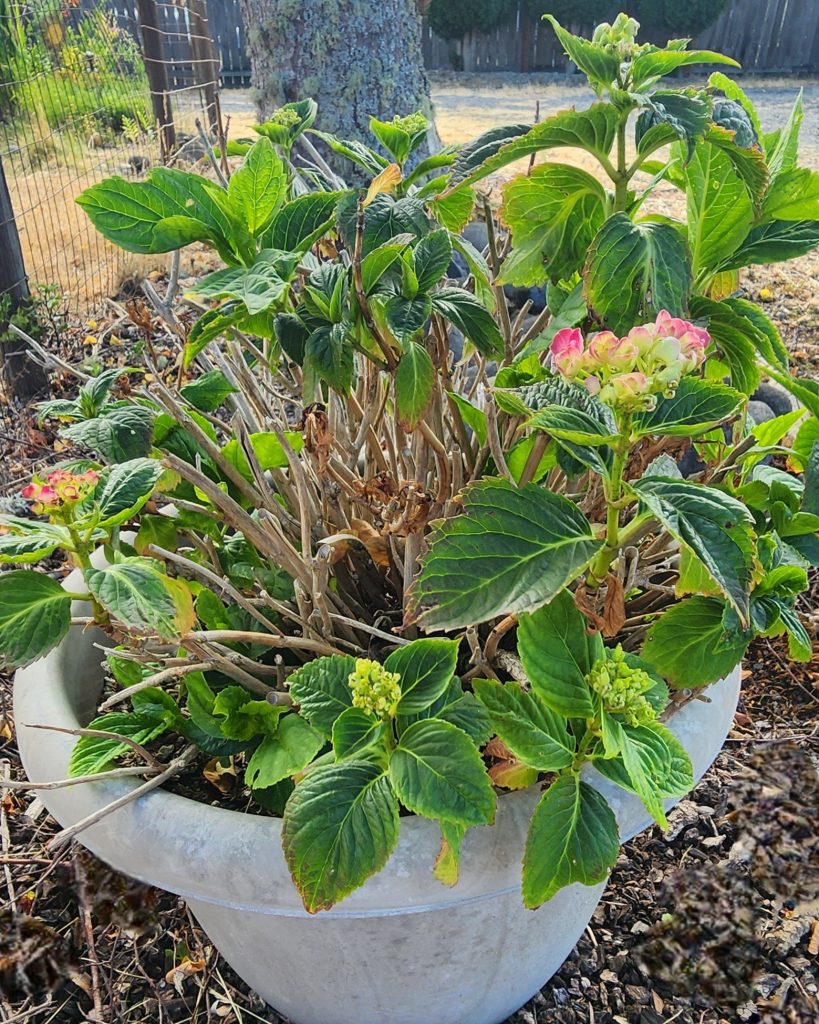
Symptoms of Root Rot in Hydrangeas
Catching root rot early is critical for saving your plants. Here’s what to watch for:
- Wilting leaves: Leaves droop even when the soil is wet, a sign the roots can’t absorb water.
- Yellowing or browning foliage: Leaves turn yellow or brown, often starting at the base and moving upward.
- Stunted growth: New blooms or leaves are smaller than usual or fail to develop.
- Soft, mushy roots: Dig around the base—if the roots are brown, black, or slimy instead of white and firm, root rot is likely.
- Foul odor: A rotten, musty smell near the soil is a clear indicator of fungal activity.
- Stem discoloration: The base of the stems may turn brown or black, often with a soft, mushy texture.
I remember pulling up one of my hydrangeas and gasping at the slimy, black roots. It was heartbreaking, but it taught me to act fast when I see these signs. Regularly inspecting your plants can make all the difference.
Causes of Hydrangea Root Rot
Root rot doesn’t strike randomly—it’s triggered by specific conditions. Here are the main culprits:
- Overwatering: Too much water suffocates roots, creating an anaerobic environment where fungi thrive.
- Poor drainage: Compacted or clay-heavy soil traps water, preventing roots from breathing.
- Contaminated soil or tools: Fungi can spread through infected soil, compost, or unsterilized gardening tools.
- Improper planting: Planting hydrangeas too deep or in poorly prepared soil increases moisture retention.
- Weather extremes: Prolonged wet periods, high humidity, or sudden temperature changes weaken plants, making them vulnerable.
- Lack of air circulation: Dense planting or overgrown foliage traps moisture, encouraging fungal growth.
In my case, overwatering was the main issue. I thought my hydrangeas needed daily watering, especially during a hot summer. Instead, I was drowning them. Learning to check soil moisture before watering changed my approach forever.
How to Prevent Hydrangea Root Rot
Prevention is far easier than treatment. Here’s a detailed guide to keeping root rot at bay:
1. Choose the Right Location
Plant hydrangeas in a spot with partial shade (4-6 hours of sunlight) and well-drained soil. Avoid low-lying areas where water pools after rain. In my garden, I moved my hydrangeas to a raised bed with morning sun and afternoon shade, and they’ve thrived ever since.
2. Test and Amend Soil
Test your soil’s drainage by digging a 12-inch hole, filling it with water, and timing how long it takes to drain. If it takes more than 4-6 hours, your soil needs help. Amend with organic matter like compost, peat moss, or coarse sand to improve drainage.
In my clay-heavy soil, I mixed in 30% compost and 10% sand, which transformed the texture.
3. Water Wisely
Water hydrangeas deeply but infrequently—about 1-2 times per week, depending on the weather. Use a soaker hose or water at the base to keep foliage dry. Check soil moisture by sticking your finger 2 inches into the soil; if it’s dry, water. If it’s wet, wait. I now use a moisture meter to avoid guesswork.
4. Improve Air Circulation
Space hydrangeas 3-4 feet apart to allow air to flow around the roots and foliage. Prune lower branches to reduce humidity near the soil. After thinning out my overcrowded hydrangea bed, I noticed fewer fungal issues.
5. Use Clean Tools
Sanitize pruning shears, shovels, and other tools with a 10% bleach solution (1 part bleach to 9 parts water) before and after use. I learned this after accidentally spreading root rot to a second plant with contaminated shears.
6. Mulch Smartly
Apply a 2-3 inch layer of organic mulch like bark, wood chips, or pine straw to regulate soil moisture and temperature. Keep mulch 2 inches away from the plant’s base to avoid trapping moisture against the stems. I switched to pine bark mulch, which looks great and doesn’t hold excess water.
7. Choose Resistant Varieties
Some hydrangea varieties are less prone to root rot. For example, panicle hydrangeas (Hydrangea paniculata) like ‘Limelight’ are more tolerant of wet conditions than bigleaf hydrangeas (Hydrangea macrophylla). Research varieties suited to your region’s climate and soil.
8. Monitor Weather Patterns
In regions with heavy spring rains (like the Northeast) or humid summers (like the South), check soil moisture frequently. During wet seasons, reduce watering and ensure proper drainage. I keep a rain gauge in my garden to track rainfall and adjust my care routine.
How to Treat Hydrangea Root Rot
If root rot has already struck, don’t give up hope. Here’s a step-by-step guide to save your hydrangeas:
Step 1: Diagnose the Problem
Gently dig around the base of the plant to inspect the roots. Healthy roots are white, firm, and fibrous; rotting roots are brown, black, or slimy. If only a portion of the roots is affected, you may be able to save the plant. I used a small hand trowel to avoid damaging healthy roots during inspection.
Step 2: Remove Affected Roots
Use sterilized shears to cut away damaged roots. Remove all slimy or discolored sections, leaving only healthy, white roots. Be thorough but gentle—cutting too much can shock the plant. I cried a little when I had to remove half of my hydrangea’s roots, but it was necessary for recovery.
Step 3: Treat with Fungicides
Apply a fungicide labeled for root rot, such as one containing mefenoxam (Subdue Maxx) or fosetyl-Al (Aliette). Follow the label instructions carefully, as overuse can harm the plant or soil. I applied a systemic fungicide as a soil drench and saw improvement within 2-3 weeks.
Step 4: Repot or Replant
For potted hydrangeas, replace the soil with fresh, well-draining potting mix (e.g., a mix of peat moss, perlite, and compost). For in-ground plants, consider relocating to a better-drained spot. Amend the new site with 30-40% organic matter. I replanted my hydrangea in a raised bed with improved soil, and it made a huge difference.
Step 5: Adjust Care
Reduce watering to prevent further stress. Water only when the top 2 inches of soil are dry. Avoid fertilizing until the plant shows signs of recovery, as stressed plants can’t handle extra nutrients. I waited 6 weeks before applying a diluted, balanced fertilizer.
Step 6: Monitor and Maintain
Check for new growth and healthy roots over the next few months. Look for firm, white roots and vibrant leaves as signs of recovery. Be patient—full recovery can take a season or more. My hydrangea took 4 months to produce new blooms, but it was worth the wait.
Step 7: Consider Organic Alternatives
If you prefer natural solutions, try introducing beneficial microbes like mycorrhizal fungi or Trichoderma to the soil. These can suppress root rot pathogens and improve root health. I experimented with a Trichoderma-based product and noticed stronger roots over time.
Regional Considerations for American Gardens
Root rot risks vary across the U.S. due to differences in climate, soil, and weather. Here’s how to adapt your care based on your region:
Northeast (e.g., New York, Massachusetts)
- Challenge: Heavy spring rains and cold, wet soils increase root rot risk.
- Solution: Use raised beds or mounds to improve drainage. Test soil annually and amend with compost. Avoid planting in low-lying areas. I visited a friend in upstate New York whose hydrangeas suffered after a rainy spring—raised beds saved her plants.
South (e.g., Georgia, Texas)
- Challenge: High humidity and warm temperatures create a fungal paradise.
- Solution: Ensure excellent air circulation by spacing plants widely. Use drip irrigation to keep foliage dry. Mulch lightly to avoid trapping heat. A Georgia gardener I met swore by pine straw mulch to combat humidity-related issues.
Midwest (e.g., Illinois, Ohio)
- Challenge: Clay-heavy soils retain water, suffocating roots.
- Solution: Amend soil with 30-40% organic matter like compost or aged manure. Test drainage before planting. Consider panicle hydrangeas, which tolerate clay better. My Midwest cousin struggled with clay soil until she added gypsum to improve drainage.
West (e.g., California, Oregon)
- Challenge: Drought-prone areas tempt overwatering, while coastal regions face wet winters.
- Solution: Use a soaker hose for consistent, controlled watering. In coastal areas, ensure proper drainage with sandy loam or raised beds. A California neighbor avoided root rot by switching to drought-tolerant oakleaf hydrangeas.
Pacific Northwest (e.g., Washington)
- Challenge: Constant rain and high humidity encourage fungal growth.
- Solution: Plant in well-drained soil or containers. Prune regularly to improve air circulation. Use fungicides preventatively during wet seasons. I learned this from a Seattle gardener who uses elevated planters to keep hydrangeas healthy.
Hydrangea Varieties and Root Rot Susceptibility
Not all hydrangeas are equally prone to root rot. Here’s a breakdown of common types and their resilience:
- Bigleaf Hydrangea (Hydrangea macrophylla): These mophead and lacecap varieties are popular but sensitive to overwatering. They’re prone to root rot in poorly drained soil. Choose well-drained sites and monitor moisture closely.
- Panicle Hydrangea (Hydrangea paniculata): Varieties like ‘Limelight’ and ‘PeeGee’ are more tolerant of wet conditions and clay soils. They’re a great choice for regions with drainage issues.
- Oakleaf Hydrangea (Hydrangea quercifolia): Native to the U.S., these are hardy and less susceptible to root rot if planted in well-drained soil. They’re ideal for Southern gardens.
- Smooth Hydrangea (Hydrangea arborescens): Varieties like ‘Annabelle’ are adaptable but need good drainage to avoid root issues.
- Climbing Hydrangea (Hydrangea anomala petiolaris): These are less prone to root rot due to their vertical growth, which keeps roots less waterlogged.
When I replaced my bigleaf hydrangeas with panicle varieties, I noticed fewer root rot issues, especially during rainy springs. Researching varieties suited to your region can save you headaches.
Advanced Treatment Options
For gardeners who want to go beyond basic fungicides, here are advanced strategies to combat root rot:
1. Beneficial Microbes
Introduce mycorrhizal fungi or Trichoderma to the soil. These beneficial organisms compete with root rot pathogens, strengthening plant defenses. Products like MycoApply or RootShield are available at garden centers. I tried RootShield on a struggling hydrangea, and the roots looked healthier within a month.
2. Biochar
Biochar, a type of charcoal, improves soil structure and drainage while suppressing fungal growth. Mix 10-15% biochar into the soil when planting or replanting. A friend in Oregon swears by biochar for her hydrangeas in soggy soil.
3. Organic Soil Drench
Create a natural soil drench using worm compost tea or neem oil diluted in water. Apply every 2 weeks to suppress fungi and boost soil health. I used compost tea during recovery, and it seemed to give my plants a boost.
4. Soil Solarization
In warm climates, cover bare soil with clear plastic during summer to heat it and kill pathogens. This works best before planting new hydrangeas. A Texas gardener I know used this method to sterilize her garden bed before replanting.
Seasonal Care Calendar for Hydrangeas
To prevent root rot year-round, follow this seasonal care guide:
Spring
- Test soil: Check drainage and pH (hydrangeas prefer 5.5-6.5).
- Prune: Remove dead or crowded branches to improve air circulation.
- Water: Begin regular watering as plants wake up, but avoid overwatering during rainy periods.
- Mulch: Apply fresh mulch to regulate soil temperature.
Summer
- Monitor moisture: Water deeply 1-2 times per week, adjusting for rainfall.
- Check for symptoms: Watch for wilting or yellowing leaves, especially after heatwaves.
- Fertilize sparingly: Use a balanced fertilizer (10-10-10) once, but avoid overfeeding.
Fall
- Prepare for Winter: Reduce watering as plants enter dormancy.
- Clean Up: Remove fallen leaves to prevent fungal spores from overwintering.
- Inspect Roots: Dig around struggling plants to check for early root rot.
Winter
- Protect Roots: Add extra mulch in cold climates to insulate roots.
- Avoid Wet Soil: Ensure proper drainage to prevent waterlogging during snowmelt.
- Plan Ahead: Order resistant varieties or fungicides for spring.
I follow this calendar religiously now, and my hydrangeas have never looked better.
Companion Planting to Prevent Root Rot
Companion plants can improve soil conditions and deter fungi. Consider these options:
- Marigolds: Their roots release compounds that suppress soil pathogens.
- Lavender: Improves air circulation and prefers well-drained soil, complementing hydrangeas.
- Ferns: Thrive in similar shady conditions and help maintain soil structure.
- Yarrow: Enhances drainage and attracts beneficial insects.
I planted marigolds near my hydrangeas, and they not only look beautiful but also seem to keep fungal issues at bay.
Tool and Product Recommendations
Here are some tools and products to help prevent and treat root rot:
- Soil Moisture Meter: Models like the XLUX Soil Moisture Meter ($12-15) help you avoid overwatering.
- Fungicides: Subdue Maxx (mefenoxam) or Aliette (fosetyl-Al) are effective for root rot. Follow label instructions.
- Pruning shears: Felco F-2 shears ($50-60) are durable and easy to sterilize.
- Soaker hose: The Gilmour Flat Soaker Hose ($20) delivers water directly to roots without wetting foliage.
- Organic amendments: Espoma Bio-Tone Starter Plus ($15) adds beneficial microbes to soil.
I invested in a moisture meter and soaker hose, and they’ve been game-changers for my garden.
Case Studies: Real-Life Hydrangea Rescues
Case 1: Sarah in Georgia
Sarah, a homeowner in Atlanta, noticed her bigleaf hydrangeas wilting during a humid summer. She dug up the plants, found black roots, and treated them with a mefenoxam-based fungicide. She also amended her clay soil with compost and relocated the plants to a raised bed. By the next season, her hydrangeas were blooming again.
Case 2: Mike in Oregon
Mike, a Portland gardener, struggled with root rot due to constant rain. He switched to panicle hydrangeas and used biochar to improve drainage. He also applied Trichoderma annually, which reduced fungal issues significantly.
Case 3: My Own Experience
In my Virginia garden, I saved a struggling hydrangea by cutting away 40% of its roots, treating it with Aliette, and replanting it in a well-drained spot. Patience and careful monitoring brought it back to life.
FAQs About Hydrangea Root Rot
Q: Can hydrangeas recover from root rot?
A: Yes, if caught early. Remove damaged roots, treat with fungicide, and improve soil and watering practices.
Q: How do I know if my hydrangea has root rot or just needs water?
A: Wilting despite wet soil, yellowing leaves, and a foul smell near the roots indicate root rot, not thirst.
Q: What’s the best fungicide for hydrangea root rot?
A: Fungicides with mefenoxam (Subdue Maxx) or fosetyl-Al (Aliette) are effective. Always follow label instructions.
Q: How often should I water my hydrangeas to prevent root rot?
A: Water deeply 1-2 times per week, depending on the weather. Check soil moisture before watering.
Q: Can mulch prevent root rot?
A: Yes, if applied correctly. Use 2-3 inches of organic mulch and keep it away from the plant’s base.
Q: Are some hydrangea varieties more resistant to root rot?
A: Panicle and oakleaf hydrangeas are more tolerant than bigleaf varieties. Choose varieties suited to your region.
Q: Can I use organic methods to treat root rot?
A: Yes, try compost tea, neem oil, or beneficial microbes like Trichoderma to suppress fungi.
Suggested For You:
7 Steps to Save Your Overwatered Hydrangea
Understanding Hydrangea Wilting: 5 Steps to Save the Plant
Brown Spots on Hydrangea Leaves: Identification and Remedy
Understanding Why Hydrangeas Droop: 7 Causes + Fixes
4 Methods of Propagating Hydrangeas + Their Success Rate
Final thoughts
Hydrangea root rot is a challenge, but it’s not the end of your garden dreams. By understanding the causes, recognizing symptoms early, and taking preventive steps, you can protect your hydrangeas from this silent killer. So, grab your trowel, test your soil, and give your hydrangeas the care they deserve.
References
- University of California Agriculture and Natural Resources. (n.d.). Phytophthora Root Rot.
- American Horticultural Society. (2023). Hydrangea Care Guide. Link
- Clemson Cooperative Extension. (2022). Hydrangea Diseases.
- Penn State Extension. (2021). Root Rot in Landscape Plants.
- North Carolina State Extension. (2023). Hydrangea Culture and Care.

Tim M Dave is a gardening expert with a passion for houseplants, particularly cacti and succulents. With a degree in plant biology from the University of California, Berkeley, he has vast experience in gardening. Over the years, he has cultivated a vast collection of desert plants and learned a great deal about how to grow and care for these unique companions.