6 Reasons Hibiscus Leaves are Curling + How to Fix Fast
Hibiscus plants are the showstoppers of any garden. Their vibrant blooms and lush foliage can transform a backyard into a tropical paradise. But when those glossy green leaves start curling, it’s like a punch to the gut. I’ve been there, staring at my once-thriving hibiscus, wondering what went wrong.
If you’re in the same boat, don’t worry—this guide is for you. We’ll dive deep into why hibiscus leaves curl, how to fix it, and how to keep your plants thriving.
Why are My Hibiscus Leaves Curling?
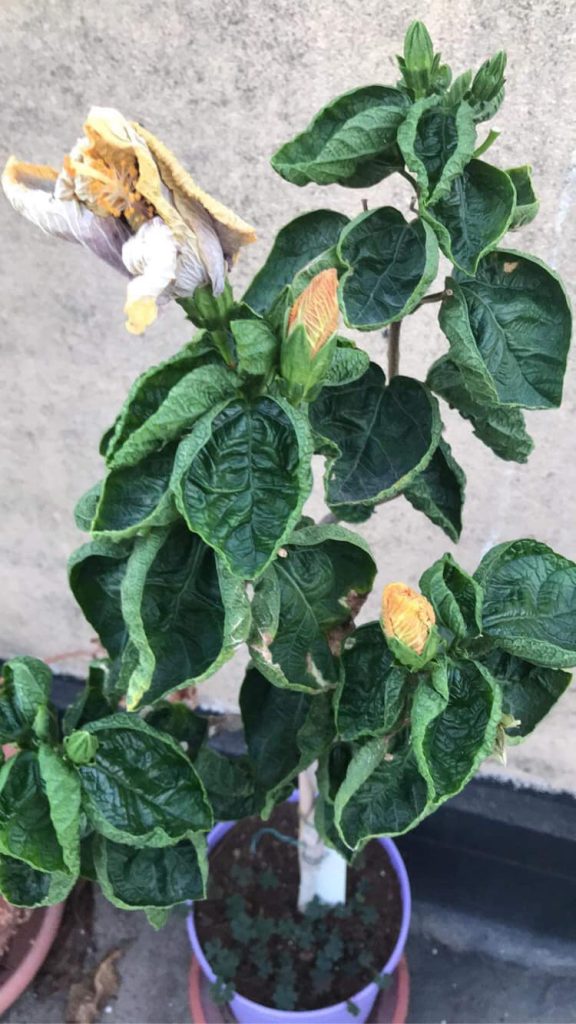
Hibiscus leaves curl for a variety of reasons. It’s often a sign that your plant is stressed. The culprits could be environmental, pest-related, or even care mistakes. Let’s break down the most common causes.
1. Incorrect Watering: Too Much or Too Little
Hibiscus plants are picky about water. Too much, and their roots drown. Too little, and they dehydrate. Both scenarios can cause leaves to curl.
Hibiscus need consistent moisture, especially in hot American summers. If the soil dries out, the leaves curl inward to conserve water. Heat also causes the plant to lose more water than the roots can absorb, resulting in a droopy plant. Check the soil. If it’s dry an inch below the surface, your plant is thirsty.
On the flip side, soggy soil suffocates roots. This can cause root rot, a condition that kills the roots stopping the plant from receiving nutrients and water. Signs of overwatering in hibiscus are leaves curling, turning yellow, and some dropping off. Ensure your pot or garden bed has good drainage.
Fix: Water deeply but infrequently. Aim for moist, not soggy, soil. In summer, I water my hibiscus every 2-3 days, depending on the heat. Use a moisture meter if you’re unsure. For potted plants, ensure drainage holes are clear.
2. Environmental Stress: Sun, Heat, and Cold
Hibiscus love warmth, but American climates can be brutal. From scorching Arizona summers to chilly New England falls, environmental factors play a big role.
- Too much sun: Hibiscus thrive in full sun, but intense heat can stress them. In my Arizona friend’s garden, her hibiscus leaves curled when temperatures hit 100°F. The plant was losing a lot of water thus it curls trying to reduce sun exposure.
- Too little sun: Conversely, too much shade can weaken hibiscus, causing leaves to curl. I noticed this when I moved a potted hibiscus to a shady corner of my patio. Less sunlight exposure can also cause leggy growth and yellowing of leaves.
- Cold stress: Hibiscus are tropical plants. In colder regions like the Midwest, frost can cause leaves to curl and blacken. I once lost a hibiscus to an unexpected early frost in Ohio.
Fix: Place hibiscus in a spot with 6-8 hours of sunlight. In hot climates, provide afternoon shade. For cold areas, grow hibiscus in pots and bring them indoors when temperatures drop below 50°F. Use mulch to insulate garden plants.
3. Pests: The Tiny Terrors
Pests are a nightmare for hibiscus. They suck sap, spread disease, and cause leaves to curl. Here are the usual suspects in American gardens:
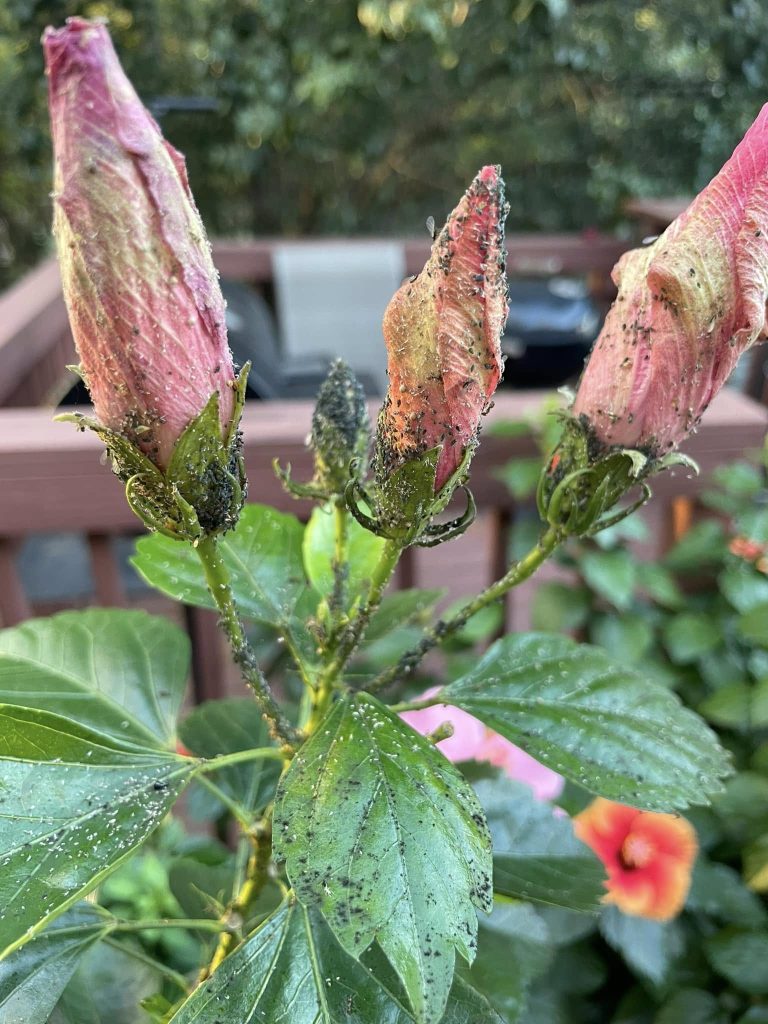
- Aphids: These tiny green or black bugs cluster on new growth. I’ve seen them wreak havoc on my hibiscus, leaving leaves curled and sticky. Additionally, aphids secrete honeydew, a sticky sugary substance that can attract ants or cause sooty mold.
- Spider mites: These microscopic pests thrive in dry conditions. Look for webbing and speckled leaves. I once mistook spider mite damage for drought stress.
- Whiteflies: These small, white insects flutter when disturbed. They transmit viruses that cause curling and yellowing leaves.
Fix: Inspect your plant regularly. For aphids and whiteflies, a strong blast of water from a hose works wonders. I use neem oil for stubborn infestations. For spider mites, increase humidity and spray with insecticidal soap. Always isolate affected plants to prevent spread.
4. Nutrient Deficiencies
Hibiscus are heavy feeders. Lack of key nutrients like nitrogen, potassium, calcium, and magnesium can hinder growth and cause leaves to curl. These nutrients are vital for leaf development and plant health.
Here’s what to watch for:
- Nitrogen deficiency: Yellowing, curling leaves often signal low nitrogen. I noticed this when my hibiscus stopped blooming.
- Potassium deficiency: Curling leaves with brown edges may indicate low potassium.
- Magnesium deficiency: Leaves curling upward with yellowing between veins could mean magnesium is lacking.
Fix: Use a balanced fertilizer (10-10-10 or 20-20-20) every 4-6 weeks during the growing season (spring and summer). I swear by a water-soluble fertilizer for quick results. For magnesium, add Epsom salts (1 tablespoon per gallon of water) monthly.
5. Diseases: Fungal and Viral Infections
Diseases can also cause leaf curling. In humid American climates, like Florida or Louisiana, fungal issues are common. Damp conditions provide a conducive environment for the spread of bacteria and fungi that cause leaf distortion.
- Fungal leaf spot: Black or brown spots with curling leaves. I’ve seen this in overly wet conditions.
- Viral infections: Viruses like hibiscus mosaic virus cause distorted, curled leaves. These are harder to diagnose and often spread by pests.
Fix: For fungal issues, remove affected leaves and apply a fungicide. Improve air circulation by pruning. For viral infections, there’s no cure—remove and destroy the plant to prevent spread. Always sterilize tools after use.
6. Chemical Damage
Herbicides or pesticides can accidentally harm hibiscus. I once used a weed killer too close to my hibiscus, and the leaves curled overnight. Drift from lawn treatments is a common issue in suburban American gardens.
Fix: Avoid spraying chemicals near hibiscus. If damage occurs, flush the soil with water to dilute the chemical. Prune affected leaves and monitor recovery.
Diagnosing the Problem
To fix curling leaves, you need to play detective. Here’s how I approach it:
- Check the soil moisture and adjust your watering routine. Is it too dry or soggy?
- Inspect for pests, carefully looking under the leaves and along the stems. Use a magnifying glass to spot tiny critters.
- Evaluate light and temperature. Is your plant getting enough sun? Is it too hot or cold?
- Use a soil test kit to check pH and nutrient levels. Hibiscus prefer slightly acidic soil (pH 6.0-7.0).
- Look for disease signs such as spots, wilting, or unusual growth patterns.
Solutions Based on Your Geolocation
American climates vary wildly, so solutions depend on where you live. Here’s how to manage hibiscus in different regions:
Southern Gardens (Zones 9-11)
In states like Florida, Texas, and California, hibiscus can grow year-round. But heat and humidity bring challenges.
- Watering: Water daily in summer. I use drip irrigation to keep the soil consistently moist.
- Pests: Aphids and whiteflies thrive in warm climates. Regular neem oil sprays keep them at bay.
- Sun protection: Provide afternoon shade during heatwaves. I use shade cloth for my patio hibiscus.
Northern Gardens (Zones 4-7)
In colder regions like New York or Michigan, hibiscus are often grown as annuals or potted plants.
- Winter care: Bring potted hibiscus indoors before frost. Keep it on a sunny window and reduce watering.
- Light: Ensure 6+ hours of sunlight. Grow lights help during short winter days.
- Pests: Spider mites love dry indoor air. I mist my plants weekly to boost humidity.
Midwest and Central U.S. (Zones 5-8)
States like Ohio and Missouri have hot summers and cold winters. This requires proper season adjustments for a great balance.
- Seasonal care: Mulch garden hibiscus in fall to protect roots. Use 2-3 inches of bark mulch.
- Watering: Water deeply but less often in cooler months. Be sure to check soil moisture weekly.
- Fertilizing: Feed monthly during spring and summer. Stop in fall to avoid weak growth.
Step-by-Step Recovery Plan
Here’s a practical plan to revive your curling hibiscus:
- Assess the damage: Identify the cause using the diagnostic steps above.
- Prune affected leaves: Use clean shears to remove curled or damaged leaves. This encourages new growth.
- Adjust watering: Water deeply, but ensure good drainage. I water in the morning to reduce fungal risk.
- Treat pests: Apply neem oil or insecticidal soap as needed. Repeat every 7-10 days until pests are gone.
- Fertilize: Use a balanced fertilizer to boost nutrients. I apply it after pruning for quick recovery.
- Monitor environment: Move potted plants to better light or temperature conditions. Protect garden plants with mulch or shade cloth.
- Be patient: Recovery takes time. New growth may take 2-4 weeks.
Preventing Future Curling
When I started growing hibiscus in my small Chicago garden, I was clueless. My first plant’s leaves curled so badly I thought it was done for. After some thorough investigation, I realized I was overwatering and neglecting pests.
I began researching, talking to local gardeners, and experimenting with solutions. Now, my hibiscus are the envy of the neighborhood. The key? Patience and persistence. Every curled leaf is a lesson, and every healthy bloom is a victory.
My lesson: Prevention is easier than cure. Here’s how to keep your hibiscus healthy:
- Check soil moisture regularly. I use a simple finger test—stick it an inch into the soil.
- Feed every 4-6 weeks during the growing season. I alternate between liquid and granular fertilizers.
- Trim dense growth to prevent fungal issues. I prune my hibiscus in early spring.
- Inspect weekly for pests and other diseases. Early detection saves plants.
- Use shade cloth in summer and mulch or indoor storage in winter.
Advanced Tips for Hibiscus Enthusiasts
If you’re a seasoned gardener, here are some pro tips:
- Add compost or worm castings tea annually to boost soil health. I mix in a handful of compost every spring.
- Grow marigolds or garlic as companion plants to deter pests naturally. These are some of the flowers that repel bugs naturally.
- Take cuttings in spring to grow new plants. I’ve successfully propagated hibiscus by rooting 6-inch cuttings in water.
- Test soil pH yearly. If it’s too alkaline, add sulfur. If too acidic, add lime. Be sure to consult a nearby gardening center or university extension.
FAQs
Q: Can curled hibiscus leaves recover?
A: Yes, if you address the cause early. Prune damaged leaves and fix the underlying issue.
Q: How often should I water my hibiscus?
A: It depends on your climate. In hot areas, water every 2-3 days. In cooler regions, every 4-5 days. Check soil moisture first.
Q: Are hibiscus prone to pests?
A: Yes, aphids, spider mites, and whiteflies love them. Regular inspection and neem oil help.
Q: Can I grow hibiscus indoors year-round?
A: Yes, with enough light and humidity. I use a grow light and pebble tray for indoor hibiscus.
Final thoughts
Hibiscus leaf curling can feel like a gardening failure, but it’s a solvable problem. Whether it’s watering mishaps, pests, or environmental stress, you now have the tools to diagnose and fix it. I’ve shared my own struggles and successes to show that anyone can master hibiscus care with a little effort. So, grab your watering can, inspect those leaves, and get ready for a garden full of stunning blooms.
References
- University of Florida IFAS Extension. (2023). Hibiscus: A Versatile Plant for Florida Landscapes. https://edis.ifas.ufl.edu/publication/MG269
- Missouri Botanical Garden. (2024). Hibiscus rosa-sinensis. http://www.missouribotanicalgarden.org/PlantFinder/PlantFinderDetails.aspx?kempercode=c843
- Clemson Cooperative Extension. (2022). Hibiscus: Care and Maintenance. https://hgic.clemson.edu/factsheet/hibiscus/

Tim M Dave is a gardening expert with a passion for houseplants, particularly cacti and succulents. With a degree in plant biology from the University of California, Berkeley, he has vast experience in gardening. Over the years, he has cultivated a vast collection of desert plants and learned a great deal about how to grow and care for these unique companions.