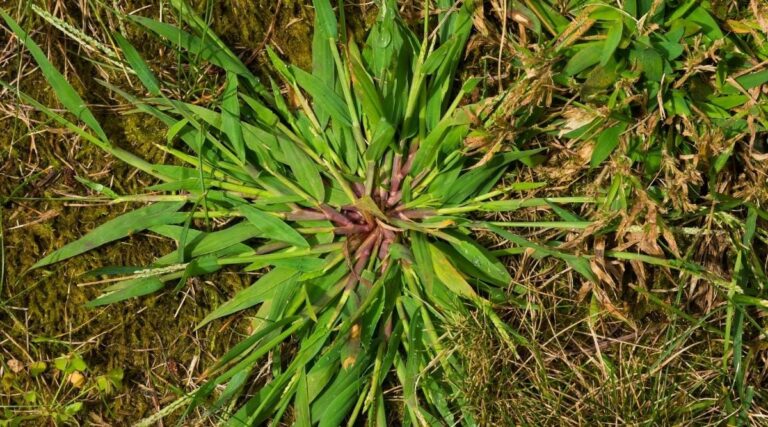
5 Safe Ways to Get Rid of Crabgrass in Summer (Without Use of Chemicals)
Achieving a lush green lawn calls for more than just planting your grass seeds and watering. It involves investing in lots of effort in terms of lawn care and time. Lawn care involves weeding and careful cutting of the tall grass. But no matter how much we may try, we are going to have some bits of weeds once in a while. One of the most notorious weeds is crabgrass.
Crabgrass is a type of lawn weed that takes the shape of a crab and can be a real problem once it invades your lawn. And because crabgrass is more vibrant than lawn grass, it grows even when the grass goes dormant during winter.
Crabgrass thrives throughout the year and that is the reason for which it is a perennial weed. Once allowed alongside the grass, crabgrass may overtake the whole lawn by the time you realize it.
The good news is that crabgrass can be removed easily with the use of home remedies. In the discussion below, we are going to dwell on the different ways of killing crabgrass in summer and how to prevent its return to the lawn. Before we look at how to get rid of crabgrass, let’s look at the following questions:
Can I treat crabgrass in the summer?
You can still treat crabgrass in summer, but it is not a very good idea. This is because by the time you get to summertime, crabgrass seeds are beginning to germinate, and it will be harder to get rid of the many colonies.
The most opportune time to treat the crabgrass on your lawn is in the spring. Around this time, the weed has not produced any seeds yet. This way, you are sure that after you get rid of the crabgrass weed, it will not return since there are no germinating seeds on your lawn.
But if, for any reason, you did not get rid of the weed in spring, use a post-emergent herbicide and a pre-emergent herbicide during the summer. Pre-emergent herbicide prevents the seeds from germinating in spring.
How to get rid of crabgrass in the summer Naturally
Commercial crabgrass herbicides are harmful and can be washed off by the rain and end up in downstream water. And that is not all; the chemicals are harmful to the lawn soil since they add to the acidity that hinders the proper growth of the grass, while at the same time encouraging the growth of more crabgrass.
When this is a major concern for people like you and me, there are other options to explore. Methods of getting rid of crabgrass without the use of chemicals include;
1. Use of baking soda
Another great option for dealing with stressful crabgrass weeds on your lawn is the use of this home remedy. The sodium in the baking soda is phytotoxic and kills any plant it comes into contact with. Consider the use of powdered baking soda instead of the liquid form; the powdered form is stronger and more effective.
To get rid of crabgrass using baking soda, first wet the weeds with some water so that the powder can stick on the leaves. Then apply the powdered baking soda and wait to see the plant die from the leaves, stem, and even the roots. Do not leave the weed plant on the lawn; pull it out and replace it with healthy grass sod.
2. Use of vinegar
Alternatively, you can use a vinegar solution to kill crabgrass. To do this, mix one part white vinegar with an equal portion of water in a spray bottle. White diluted vinegar is best because other types have too much acid that could end up poisoning the lawn soil and hindering the proper growth of grass.
Spray the solution on the crabgrass plant and keep it close so that you do not damage the nearby grass. The solution creates a region of higher concentration than the one in the plant, and this sucks up water from the weed plant, hence it dries up. After the weed is dead, remove it with a shovel and plant some grass seeds in the bare spot.
3. Burning
Burning, as a method of getting rid of crabgrass, includes the use of a heat gun, weed burner, or even a blow torch. Exposing the weed plant to extreme temperatures produced by the heat gun kills the cells in the plant, thus killing it.
The use of this method is a little dangerous because you risk starting a lawn fire anytime. For safety reasons, it is always advisable to have a water hose on standby so that you can put out the fire in case it starts. Finish the process by removing the roots of the crabgrass and replacing them with new grass seeds.
4. Applying corn gluten
Although corn gluten does not necessarily kill the crabgrass seeds, it is the best organic crabgrass killer. This is because of the high nitrogen content that acts as organic fertilizer for the lawn grass. But there is not enough to show that corn gluten prevents the germination of crabgrass seeds.
5. Pulling out the crabgrass
The most effective method of getting rid of crabgrass is by pulling it out manually. This is because the method does not involve any use of chemicals, nor does it risk the surrounding lawn grass.
To make the process without taking a toll on yourself, consider watering the lawn first so that you can soften the soil. Pulling them out when the soils are dry risks interfering with so many grass plants since the weed has fibrous roots that spread far and wide.
Does crabgrass go away on its own?
Just like any weed, crabgrass too will not go away on its own. You have to make efforts to get rid of this notorious weed. Letting crabgrass thrive alongside your grass makes things worse because it overgrows the grass.
The grass starts turning yellow because it is deprived of the essential nutrients for its proper growth, so it turns brown and eventually dies. By the time it hits you, the whole lawn will have been overtaken by the crabgrass, at a point in which you have to grow a new lawn altogether.
Even treating crabgrass is not enough; you have to remove the plant by the roots, otherwise, the weed will return and be stronger this time around.
When should you kill crabgrass?
Springtime is the best time to kill crabgrass because the weather allows it, and the weed has not produced any seeds yet. The spring season comes with moderate temperatures, and no rainfall would otherwise wash off the newly applied herbicide.
The herbicide will have enough time to act on the crabgrass and kill it effectively. If you are killing the weeds in summer, consider the use of a post-emergent herbicide to get rid of crabgrass. And even as you do that, ensure to apply the herbicide close to the plant as much as possible so that you do not end up killing the grass surrounding the weed.

Tim M Dave is a gardening expert with a passion for houseplants, particularly cacti and succulents. With a degree in plant biology from the University of California, Berkeley, he has vast experience in gardening. Over the years, he has cultivated a vast collection of desert plants and learned a great deal about how to grow and care for these unique companions.