15 Flowering Shrubs for Zone 5: The Best Choices for Cold-Climate Gardens
Gardening in Zone 5 requires a particular kind of patience and, frankly, a particular kind of respect for the climate. Winters in Zone 5 are genuinely harsh — temperatures regularly drop to between -20°F and -10°F (-29°C to -23°C) — and the growing season, while rewarding, is compressed between late spring frosts and early autumn cold snaps.
Not every beautiful shrub survives these conditions. Many that look spectacular in warmer gardens simply cannot endure the depth of a Zone 5 winter.
This guide covers 15 of the best flowering shrubs for Zone 5, selected for their genuine cold hardiness, ornamental value across the growing season, and suitability across the wide geographic range that Zone 5 encompasses.
Understanding USDA Zone 5 and Its Global Equivalents
USDA Hardiness Zone 5 covers a broad swath of North America. In the United States, it encompasses much of the Midwest — including parts of Illinois, Iowa, Indiana, Ohio, and Michigan — as well as portions of the mid-Atlantic states, the Mountain West, and parts of New England.
In Canada, southern Ontario, parts of British Columbia’s interior, and portions of the Prairie provinces fall within or near Zone 5 conditions.
Beyond North America, Zone 5 equivalent climates exist across parts of northern and central Europe — including upland areas of the UK, parts of Germany, Poland, the Czech Republic, Austria, and Scandinavia — as well as in elevated regions of New Zealand’s South Island and parts of southern Australia. The plants on this list are selected to serve gardeners across this entire range.
The key characteristic of Zone 5 is its minimum winter temperature. Selecting plants rated to Zone 5 or lower is the primary safeguard against winter loss. Microclimate factors — the protection offered by walls, slopes, and surrounding vegetation — can sometimes allow Zone 6 plants to survive in Zone 5 gardens, but this is unreliable and should not be the basis of a permanent planting scheme.
1. Lilac — Common Lilac (Syringa vulgaris)
Few flowering shrubs carry as much emotional weight as the common lilac. Its deep purple, lavender, pink, or white flower panicles in late spring release a fragrance that is, for many people in Zone 5 gardens, one of the defining scents of the season. When a lilac blooms after a long northern winter, it feels like the year finally beginning.
Native to the Balkans and widely naturalised across the cooler regions of North America and Europe, lilac is exceptionally cold-hardy, growing reliably in Zones 3–7. It is one of the defining garden shrubs of the northeastern United States, the Great Lakes region, New England, and the colder provinces of Canada, as well as upland areas of the UK and much of northern and central Europe.
Old lilac specimens — sometimes a hundred years old and more — are a familiar feature of farmsteads and abandoned homesteads across the American Midwest, testament to their extraordinary durability.
Lilac blooms on old wood, which means pruning must be done carefully — immediately after flowering, never in late summer or autumn, which would remove the developing buds for the following year. It prefers full sun and well-drained, slightly alkaline soil. Deadheading spent flowers on younger plants encourages better flowering in subsequent years, though large, established plants are best left to develop naturally.
Widely available cultivars include ‘Charles Joly’ (double, dark purple), ‘Madame Lemoine’ (double, white), ‘Miss Kim’ (compact, pale lavender), and ‘Sensation’ (purple with white-edged petals). The late-flowering series of Preston and Villosa lilacs — bred specifically for cold climates — are particularly valuable in areas where late frosts regularly damage early-blooming varieties.
Best for: Northeastern and midwestern United States, southern Canada, upland UK, northern and central Europe, Scandinavia.
2. Forsythia (Forsythia × intermedia)
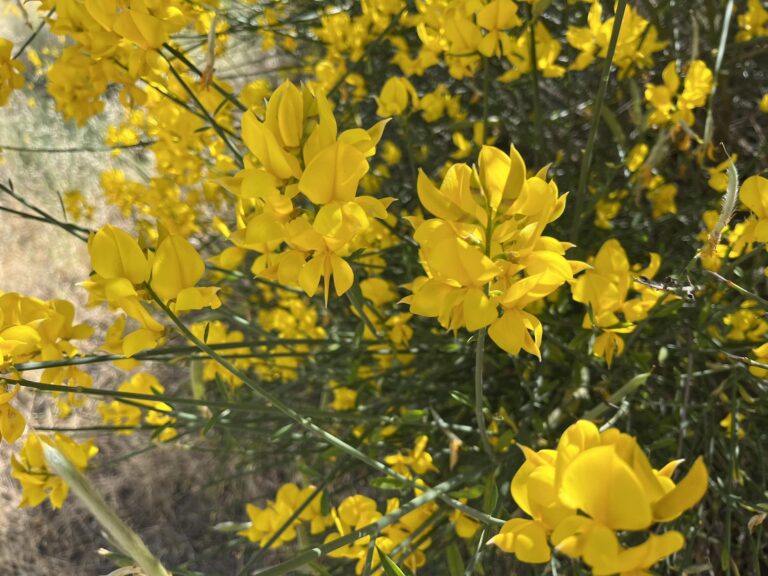
Forsythia is the herald of spring in Zone 5 gardens. Its brilliant yellow flowers appear on bare stems in early to mid-spring — often the first colour in the garden after the grey months of winter — and for a few weeks, nothing in the landscape is quite as cheerful. It grows in Zones 5–8 and tolerates the cold winters and compressed growing seasons of Zone 5 with characteristic resilience.
It is widely grown across the northern and eastern United States, Canada, the UK, and continental Europe, where it is a familiar presence in garden borders, informal hedges, and mass planting in public landscapes. It grows in full sun to partial shade, tolerates clay and urban soils, and requires minimal maintenance — a prune after flowering every few years is all that is typically needed to keep it in good shape.
For Zone 5 gardeners in particularly cold positions, varieties such as ‘Northern Gold’ and ‘Meadowlark’ — bred specifically for cold hardiness — are more reliable bloomers, as flower buds on standard varieties can be damaged by extreme cold in the most exposed positions.
Best for: Northern and eastern United States (including Great Lakes region), southern Canada, UK, northern and central Europe.
3. Viburnum — Korean Spice Viburnum (Viburnum carlesii) and Related Species
Viburnums are among the most cold-hardy and versatile flowering shrubs available to Zone 5 gardeners, and several species offer exceptional ornamental value. Viburnum carlesii — Korean spice viburnum — is one of the finest, producing rounded clusters of intensely fragrant, pink-budded, white flowers in mid-spring. The fragrance is extraordinary — warm, spicy, and deeply sweet — and carries across the garden on still spring mornings.
It grows in Zones 4–7 and is widely planted across the northeastern and midwestern United States, southern Canada, the UK, and continental Europe. It grows to approximately 1.5–2 metres in a rounded, compact habit that suits mixed borders and specimen planting.
Other outstanding Zone 5 viburnums include Viburnum lentago (nannyberry, native to eastern North America, Zones 2–8), Viburnum trilobum (American highbush cranberry, Zones 2–7), and Viburnum opulus (guelder rose, Zones 3–8). All offer spring flowers, attractive berries in autumn, and good autumn foliage colour — three seasons of genuine ornamental return.
Best for: Northeastern and midwestern United States, southern Canada, UK, northern and central Europe.
4. Weigela (Weigela florida)
Weigela is a deciduous shrub that brings generous colour to the late spring garden in Zone 5. Its trumpet-shaped flowers in shades of pink, red, white, and bicolour open reliably after the last frosts and continue for several weeks, providing one of the most prolific late-spring flower displays of any shrub in this hardiness range. It grows in Zones 4–8 and is widely planted across the northern and eastern United States, Canada, the UK, continental Europe, and temperate Australasia.
It tolerates clay soils and urban conditions well and grows in full sun to partial shade. Its primary maintenance need is the removal of about one-third of the oldest stems after flowering every few years, which maintains vigour and encourages the best floral performance. Modern cultivars such as ‘Wine and Roses’ — deep purple foliage with vivid pink flowers — and ‘My Monet’ — variegated cream foliage — have expanded weigela’s appeal beyond its flowers alone.
Best for: Northern and eastern United States, southern Canada, UK, continental Europe, temperate Australasia.
5. Panicle Hydrangea (Hydrangea paniculata)
Among the hydrangeas, panicle hydrangea is the undisputed champion for Zone 5 gardens. It is the most cold-hardy hydrangea species, growing reliably in Zones 3–8, and it blooms on new wood — meaning it flowers on growth produced in the current season, never on stems from the previous year. This is a critically important quality in Zone 5, where cold winters can kill overwintered stems on less hardy hydrangea species, resulting in seasons without flowers.
From midsummer through early autumn, it produces large, cone-shaped flower heads that open creamy white and gradually age to pink and deep rose. The dried heads persist attractively through winter, providing additional seasonal interest.
Widely available cultivars include ‘Limelight’ (large, lime-green to white heads), ‘Little Lime’ (compact, suitable for smaller gardens), ‘Pinky Winky’ (bicolour white and pink heads on a single panicle), and ‘Quick Fire’ (the earliest-blooming, producing flowers in early July in most Zone 5 gardens).
Panicle hydrangeas grow in full sun to partial shade with moist, well-drained soil. They are pruned in late winter or early spring — cut back by roughly one-third to one-half — and flower on the resulting new growth. Few shrubs in Zone 5 combine this level of cold hardiness with such consistent, late-season flower performance.
Best for: Northern and midwestern United States, all of southern Canada, upland UK, northern and central Europe, Scandinavia.
6. Spirea — Bridal Wreath and Japanese Spirea (Spiraea spp.)
Spiraeas are among the most reliable and widely planted flowering shrubs for Zone 5, and the range of available species and cultivars means there is a spiraea suited to almost every garden size, style, and flowering preference. They grow in Zones 3–9 — a range that covers virtually every garden in the northern hemisphere — and tolerate cold, heat, drought, poor soils, and urban pollution with equal good nature.
Spring-flowering types, such as Spiraea nipponica ‘Snowmound’ and Spiraea × vanhouttei (bridal wreath spiraea), produce cascading white flowers on arching stems in late spring, creating a graceful, fountain-like effect that is one of the most elegant displays in the Zone 5 spring garden. Summer-flowering types, particularly Spiraea japonica and its cultivars — ‘Anthony Waterer,’ ‘Little Princess,’ ‘Goldflame’ — produce flat-topped clusters of pink, red, or white flowers from early through late summer.
Spring-flowering spiraeas are pruned immediately after bloom. Summer-flowering types are cut back hard in early spring, producing the vigorous new growth that carries the summer flowers.
Best for: Northern and eastern United States, all of Canada within hardiness range, UK, northern and central Europe, temperate Australasia.
7. Potentilla — Shrubby Cinquefoil (Dasiphora fruticosa)
Shrubby cinquefoil may not be the most dramatic shrub in the Zone 5 garden, but it is arguably the most consistently valuable. It flowers continuously from late spring through autumn — a genuinely long season — in shades of yellow, white, orange, pink, and red. It grows in Zones 2–7, meaning it is among the very hardiest flowering shrubs available to cold-climate gardeners anywhere in the world.
In Zone 5 gardens across the northern United States, Canada, Scandinavia, Scotland, and high-altitude regions of central Europe, potentilla is a dependable presence in borders, rock gardens, and informal hedging.
It grows in full sun to partial shade, tolerates poor, alkaline, and clay soils, and requires minimal maintenance. Cultivars such as ‘Goldfinger,’ ‘Abbotswood,’ and ‘Pink Beauty’ are widely available in nurseries across North America and Europe.
For gardens where a long flowering season with minimal intervention is the primary goal, shrubby cinquefoil is one of the most reliable tools available.
Best for: All of Zone 5 — particularly Canada, northern United States, Scandinavia, upland UK, and central Europe.
8. Native Serviceberry (Amelanchier spp.)
Serviceberry is a multi-season shrub of the highest quality, and it is native to many of the very regions that fall within Zone 5. Amelanchier canadensis — shadblow serviceberry — and Amelanchier laevis — Allegheny serviceberry — are both native to eastern North America, where they grow naturally along stream banks, woodland edges, and moist lowlands.
They grow in Zones 3–8 and produce cloud-like white flowers in early spring — among the first flowering woody plants to bloom each year in Zone 5 gardens.
After the flowers, edible blue-black berries ripen in early summer, consumed eagerly by birds and pleasant for humans as well — sweet and similar in flavour to a blueberry. Autumn foliage turns vivid orange, red, and scarlet. The full four-season display requires almost no deliberate management to sustain.
In the UK and northern Europe, Amelanchier lamarckii — a closely related species — is widely grown in gardens and is naturalised across parts of the Netherlands and Belgium. It performs equally well in Zone 5-equivalent climates across Europe.
Best for: Eastern and northern North America, all of Zone 5 Canada, UK, northern and central Europe.
9. Rugosa Rose (Rosa rugosa)
Rugosa rose is arguably the most practical and self-sufficient rose for Zone 5 gardens. Unlike many hybrid roses that require careful winter protection, specific pruning, regular spraying for disease, and dedicated attention to survive northern winters, rugosa roses are extraordinarily tough.
They grow in Zones 2–7, resist blackspot and other fungal diseases naturally due to their dense, textured foliage, and produce fragrant flowers repeatedly from late spring through autumn without deadheading.
Their large, deeply fragrant flowers — in pink, white, magenta, and purple — are followed by substantial, tomato-red hips in autumn that are rich in Vitamin C and highly attractive to birds through the winter months. The autumn hip display is, in many Zone 5 gardens, as ornamentally valuable as the summer flowers.
Rugosa roses are widely grown across Canada, the northern and eastern United States, the UK, Scandinavia, and northern and central Europe. They are particularly valuable in coastal gardens, where their natural salt tolerance allows them to thrive in conditions that damage less robust shrubs.
Best for: All of Zone 5 — particularly Canada, northern United States, UK, Scandinavia, northern Europe, coastal gardens.
10. Crabapple — Flowering Crabapple (Malus spp.)
While often thought of as small trees, many flowering crabapples grow and function as large shrubs in Zone 5 gardens, particularly compact cultivars bred for smaller landscapes. Their spring flowers — in white, pink, and deep rose — are among the most abundant and colourful of any woody plant, and their small autumn fruits in red, orange, and yellow provide food for birds through winter.
They grow in Zones 3–8 and are widely planted across the northern and eastern United States, Canada, the UK, and continental Europe. Compact cultivars such as ‘Lancelot,’ ‘Royal Raindrops,’ and ‘Prairie Fire’ are particularly suited to Zone 5 borders and smaller landscapes. Disease resistance — particularly to apple scab, rust, and powdery mildew — varies considerably by cultivar and is an important consideration when selecting.
For Zone 5 gardens where a large, spring-flowering specimen with wildlife value is needed, a well-chosen compact crabapple cultivar is one of the most rewarding options available.
Best for: Northern and eastern United States, all of Zone 5 Canada, UK, northern and central Europe.
11. Witch Hazel (Hamamelis × intermedia)
Witch hazel is one of the most remarkable flowering shrubs in temperate horticulture. It blooms in the absolute depths of winter — from January through March in most Zone 5 gardens — producing spider-like, ribbon-petalled flowers in yellow, orange, red, and copper on bare stems. In the coldest part of the year, when the garden has little else to offer, a witch hazel in full bloom is a genuinely arresting sight.
The hybrid Hamamelis × intermedia — a cross between Japanese and Chinese witch hazels — produces the largest and most strongly coloured flowers and is the most widely grown group for garden use. Cultivars such as ‘Arnold Promise’ (yellow, late flowering), ‘Diane’ (deep red), ‘Jelena’ (copper-orange), and ‘Pallida’ (soft yellow, fragrant) are available from specialist nurseries across North America, the UK, and continental Europe.
Witch hazels grow in Zones 5–9 and prefer moist, acidic, humus-rich, well-drained soil in full sun to partial shade. They are slow-growing and somewhat expensive to purchase, but they are long-lived and become increasingly impressive with age. Autumn foliage colour — in yellow, orange, and red — adds a second season of distinctive interest.
Best for: Northeastern United States, southern Canada (milder zones), UK, continental Europe.
12. Beautybush (Kolkwitzia amabilis)
Beautybush is a shrub that deserves far wider use in Zone 5 gardens. In late spring and early summer, it covers itself in small, trumpet-shaped, pink flowers with yellow throats — produced in such abundance that the arching stems are nearly obscured. The display lasts for two to three weeks and is genuinely beautiful in the full, generous sense of that word.
It grows in Zones 4–8 and is native to central China, but has been widely grown in North American and European gardens since its introduction in the early twentieth century. It grows in full sun with well-drained soil, is tolerant of poor and alkaline soils, and requires minimal pruning — the removal of some of the oldest stems after flowering every few years is sufficient. In Zone 5 gardens across the midwestern and eastern United States, Canada, and temperate Europe, it is a reliable and long-lived performer.
Best for: Midwestern and eastern United States, southern Canada, UK, continental Europe.
13. Ninebark (Physocarpus opulifolius)
Ninebark is a native North American shrub that has become one of the most popular ornamental shrubs in Zone 5 gardens over the past two decades — and its rise in popularity is well-founded. It is exceptionally cold-hardy, growing in Zones 2–8.
It is drought tolerant, adaptable to clay and poor soils, and virtually pest and disease free. And modern cultivars offer extraordinarily striking foliage in deep burgundy, near-black, gold, and copper, combined with white or pink summer flowers and attractive seed capsules in autumn.
Popular cultivars include ‘Diabolo’ (deep burgundy-purple foliage, Zone 3–8), ‘Center Glow’ (gold outer leaves, dark red inner foliage), ‘Little Devil’ (compact, dark burgundy), and ‘Coppertina’ (copper-orange new growth).
All grow in full sun to partial shade and are widely available across North American nurseries. In the UK and Europe, interest in ninebark has grown significantly in recent years, and it is increasingly available through specialist shrub nurseries.
Best for: All of Zone 5 — particularly northern and midwestern United States, all of Canada, increasingly UK and northern Europe.
14. Smokebush (Cotinus coggygria)
Smokebush is grown primarily for its foliage and its extraordinary, hazy flower plumes — the smoke-like effect that gives the shrub its name — but it is also a genuinely cold-hardy plant that performs reliably across Zone 5 gardens. Its large, rounded leaves in deep purple, burgundy, or blue-green turn vivid orange, red, and scarlet in autumn, providing what is often the most dramatic autumn colour display of any shrub in the Zone 5 garden.
It grows in Zones 4–8 and is widely planted across the continental United States, Canada, the UK, and continental Europe. It grows in full sun with well-drained, even poor, soil. Purple-leaved cultivars such as ‘Royal Purple,’ ‘Grace,’ and ‘Velvet Cloak’ are most widely grown. Hard pruning in late winter, while not required, encourages the largest and most colourful leaves if foliage effect is the primary goal.
Best for: Northern and eastern United States, southern Canada, UK, northern and central Europe.
15. Shrubby St. John’s Wort (Hypericum prolificum)
Shrubby St. John’s Wort closes this list as a genuinely excellent, if underused, native North American shrub for Zone 5 gardens. It produces bright, clear yellow flowers with prominent central stamens from midsummer through early autumn — a long flowering season — and maintains an attractive, compact, mounded habit without pruning. It grows in Zones 4–8 and is native to the eastern United States, where it grows naturally in woodland edges, rocky slopes, and dry open habitats.
It is one of the best native shrubs for supporting native bees, which collect both nectar and pollen from its flowers in significant quantities through the summer months. In gardens designed for ecological function — pollinator gardens, native plant landscapes, or naturalistic designs in the Zone 5 Midwest, Northeast, or Great Lakes region — it is a practical and attractive addition.
Widely available in native plant nurseries and increasingly in general nursery trade across the United States and Canada, it grows in full sun to partial shade and tolerates poor, dry, and rocky soils with ease.
Best for: Eastern and midwestern United States, southern Canada, naturalistic and pollinator-friendly Zone 5 gardens.
Practical Tips for Success in Zone 5 Gardens
Growing shrubs in Zone 5 involves a specific set of practical considerations that gardeners in milder climates do not face. Attending to these details makes a significant difference to long-term success.
Choose reliably rated cultivars. A shrub rated to Zone 5 by a reputable source — a university extension service, a botanical garden, or a specialist nursery — is a much safer choice than one rated to Zone 6 or grown in milder trials. Cold hardiness can vary considerably between cultivars of the same species. Where possible, choose cultivars bred or selected specifically for cold-climate performance.
Plant in spring or early summer. In Zone 5, spring planting gives new shrubs the maximum time to establish their root systems before the first winter. Autumn planting is riskier — particularly for newly introduced or less established plants — as root systems may not be sufficiently developed to survive hard frost without damage. If autumn planting is unavoidable, water well before the ground freezes and mulch heavily around the root zone.
Mulch before winter. A 8–10 centimetre layer of organic mulch — straw, bark, or shredded leaves — applied around the base of shrubs before the ground freezes helps moderate soil temperature, reduces frost heave, and protects the root zone from the most extreme cold. This is particularly important for shrubs in their first and second winter.
Protect vulnerable plants in the first few winters. Even plants rated to Zone 5 can be vulnerable in their first year before root systems are fully established. Burlap windbreaks, frost cloth, or temporary shelters can protect newly planted shrubs in the most exposed positions through the first one or two winters.
Take advantage of microclimates. South-facing walls, sheltered courtyards, and positions on gentle south-facing slopes can create conditions one full zone warmer than the surrounding garden. In these positions, Zone 6 plants — camellias, certain hydrangeas, and less hardy roses — can often be grown successfully in Zone 5 gardens, expanding the plant palette considerably.
Suggested For You:
25 Low Maintenance Shrubs: Beautiful Choices That Take Care of Themselves
15 Winter Interest Shrubs: Colour, Structure, and Life in the Cold-Season Garden
15 Drought Tolerant Shrubs: The Best Choices for Dry Gardens and Water-Wise Landscapes
20 Evergreen Shrubs for Borders: Structure, Colour, and Year-Round Presence
25 Flowering Shrubs for Full Sun: The Complete Guide to a Radiant Garden
Final Thoughts
Zone 5 gardening rewards those who choose well at the beginning. The investment of time spent selecting genuinely cold-hardy shrubs — plants rated to Zone 5 or colder, proven in similar climates, and suited to the specific conditions of the site — pays dividends year after year. The plants do not merely survive the winters; they build strength through them, returning each spring more established, more floriferous, and more deeply rooted than before.
The 15 shrubs in this guide are among the finest available for Zone 5 growing across North America, Canada, upland Britain, and the equivalent cold climates of northern and central Europe. Each one brings genuine ornamental value — not despite the cold climate, but as a natural expression of it. A Zone 5 garden in full flower in late spring or blazing with autumn colour is a garden that has earned every moment of its beauty.
That, for anyone who has lived through a Zone 5 winter, feels exactly right.
References
- University of Minnesota Extension — Cold Hardy Shrubs for Minnesota Landscapes https://extension.umn.edu/planting-and-growing-guides/shrubs
- Penn State Extension — Selecting Flowering Shrubs for Cold Climates https://extension.psu.edu/flowering-shrubs-for-the-landscape
- Iowa State University Extension and Outreach — Hardy Shrubs for Iowa Gardens https://hortnews.extension.iastate.edu/shrubs
- University of Wisconsin-Madison Division of Extension — Flowering Shrubs for Wisconsin: Zone 4 and 5 Selections https://extension.wisc.edu/publications/flowering-shrubs-for-wisconsin/
- North Carolina State University Cooperative Extension — Plant Toolbox: Zone 5 Shrubs https://plants.ces.ncsu.edu/find_a_plant/?habit=shrub&hardiness_zone=5

Tim M Dave is a gardening expert with a passion for houseplants, particularly cacti and succulents. With a degree in plant biology from the University of California, Berkeley, he has vast experience in gardening. Over the years, he has cultivated a vast collection of desert plants and learned a great deal about how to grow and care for these unique companions.