Understanding Flowering Pear (Pyrus calleryana): Identification, History, Problems and Cultivation Details
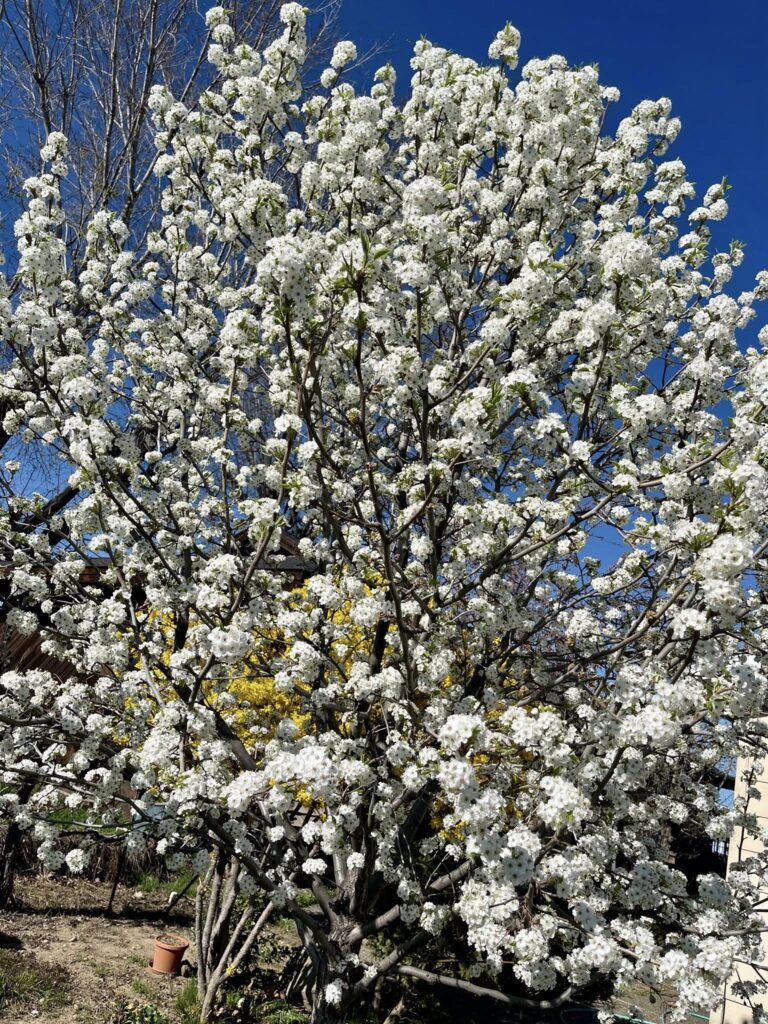
Drive through almost any suburban street in the eastern United States in early spring, and you will likely see them. Rows of trees exploding in dense, brilliant white blossom before a single leaf has opened. The display is genuinely beautiful — pure, almost bridal white against grey March skies.
For a few weeks, it is hard to imagine a more striking ornamental tree. That tree is almost certainly a flowering pear — Pyrus calleryana — and the story behind it is far more complicated than that lovely spring display suggests.
This guide tells the full story. The botany, the geography, the remarkable horticultural history, the genuine landscape value, and the serious environmental concerns that have made this one of the most debated trees in modern horticulture.
Before we dive into, lets have a quick look at what this tree is all about:
| Scientific name | Pyrus calleryana |
| Common names | Flowering pear, Callery pear, Bradford pear |
| Family | Rosaceae |
| Native range | Central and eastern China, northern Vietnam |
| Hardiness zones | USDA Zones 5–9 |
| Mature height | 8–12 metres |
| Flower colour | Pure white |
| Flower scent | Unpleasant (trimethylamine) |
| Autumn colour | Red, orange, purple, burgundy |
| Sun requirement | Full sun |
| Soil tolerance | Extremely broad |
| Invasive status | Banned/restricted in several US states |
| Best cultivar for streets | ‘Chanticleer’ / ‘Cleveland Select’ |
What Is the Flowering Pear?
The flowering pear (Pyrus calleryana), also known as the Callery pear, is a medium-sized, fast-growing deciduous tree native to China and Vietnam. It belongs to the family Rosaceae — the same family as apples, cherries, plums, and roses — and is closely related to the common fruiting pear (Pyrus communis).
The species was named after Joseph-Marie Callery, a French missionary who collected plant specimens in China in the 1850s. It was introduced to Western horticulture in the early 20th century — originally for disease resistance research — but eventually became one of the most widely planted ornamental street and landscape trees in the world.
Its appeal is easy to understand. It blooms abundantly. It tolerates pollution, drought, and poor soils. It grows quickly, fits neatly into urban spaces, and turns a fine reddish-purple in autumn. For decades, it seemed like the perfect urban tree.
The reality, as with many things that seem perfect, proved more complex.
Scientific Classification
| Kingdom | Plantae |
| Order | Rosales |
| Family | Rosaceae |
| Genus | Pyrus |
| Species | P. calleryana |
| Common names | Flowering pear, Callery pear, Bradford pear |
| Native range | China, Vietnam |
Important note on naming: The name “Bradford pear” refers specifically to the cultivar Pyrus calleryana ‘Bradford’ — the most widely planted selection. All Bradford pears are flowering pears, but not all flowering pears are Bradford pears.
This article covers the species as a whole, including its many cultivars.
Geographic Origin and Natural Habitat
Pyrus calleryana is native to central and eastern China and northern Vietnam. In its natural habitat, it grows in a range of conditions — forest edges, shrubby hillsides, rocky slopes, riverbanks, and disturbed areas — at elevations ranging from lowland plains to approximately 2,000 metres in mountain regions.
In China, it is found across numerous provinces including Hubei, Hunan, Zhejiang, Jiangsu, Shandong, and Sichuan. It grows naturally as part of mixed broadleaf woodland and secondary scrubland communities, often alongside willows, oaks, and other members of the Rosaceae family.
The tree was formally introduced to the United States in 1909 by the USDA’s Frank N. Meyer, who collected specimens in China with the primary goal of finding rootstock resistant to fire blight — a devastating bacterial disease that was destroying commercial pear orchards across America at the time. The tree’s ornamental potential was initially secondary to its scientific purpose.
It was not until the 1950s and 1960s that horticulturalists at the USDA Plant Introduction Station in Glenn Dale, Maryland, developed the first ornamental cultivar — ‘Bradford’ — and began the tree’s transformation into one of the most planted landscape trees in modern history.
Physical Description and Identifying Features
Overall Form and Size
The flowering pear is a broadly pyramidal to oval tree when young, typically maturing into a rounded to spreading crown. Standard specimens reach 8 to 12 metres in height with a spread of 6 to 9 metres, though this varies by cultivar.
It is notably fast-growing, particularly in its early years, putting on 60 to 90 cm of growth per year under good conditions. This speed of establishment was one of the qualities that made it so attractive to urban planners and developers in the latter half of the 20th century.
Flowers
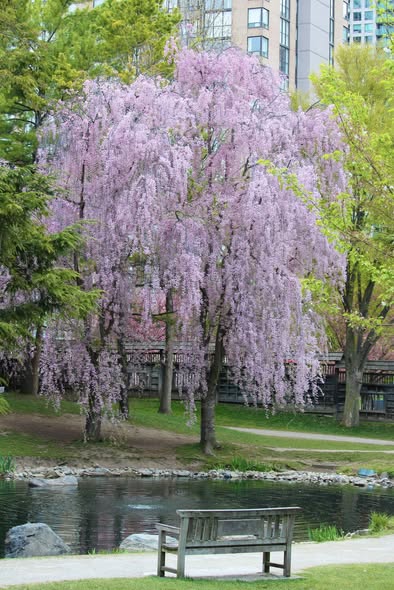
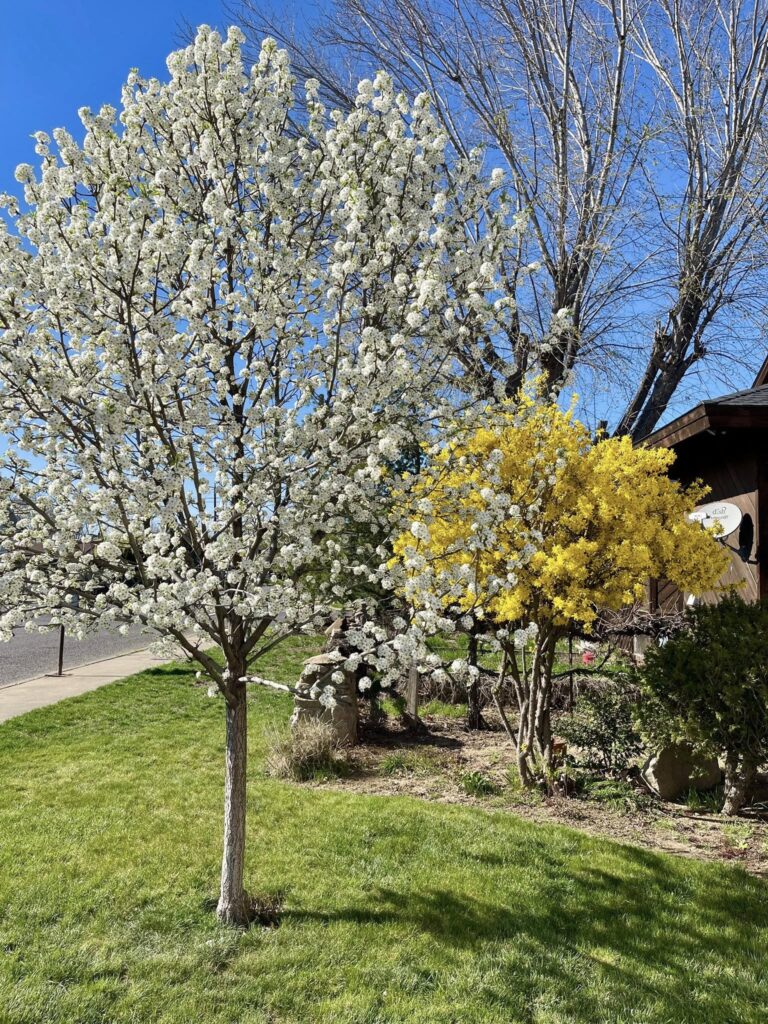
The flowers are the defining feature of the tree’s ornamental appeal. They appear in mid to late spring — often in March in the eastern United States — before the leaves fully open, covering the entire canopy in dense clusters of small, five-petalled, pure white flowers.
Each individual flower is about 2 cm across, with five rounded white petals and prominent reddish-purple anthers at the centre. Seen from a distance, the overall effect of a flowering pear in full bloom is of a dense, white cloud suspended above the bare branches.
One honest note for those considering planting: the flowers of Pyrus calleryana have a notably unpleasant odour, variously described as fishy, musty, or reminiscent of rotting material.
This smell comes from trimethylamine, a compound also produced by decaying flesh and some fish. Up close, the scent can be strong. From a distance, it is less noticeable. This is a real consideration when choosing a planting location near windows, patios, or seating areas.
Leaves
The leaves are 3 to 8 cm long, broadly ovate to nearly circular, with a finely wavy or crenulated margin and a glossy, dark green upper surface. They emerge after the flowers fade, giving the tree a two-season display — blossom first, then foliage.
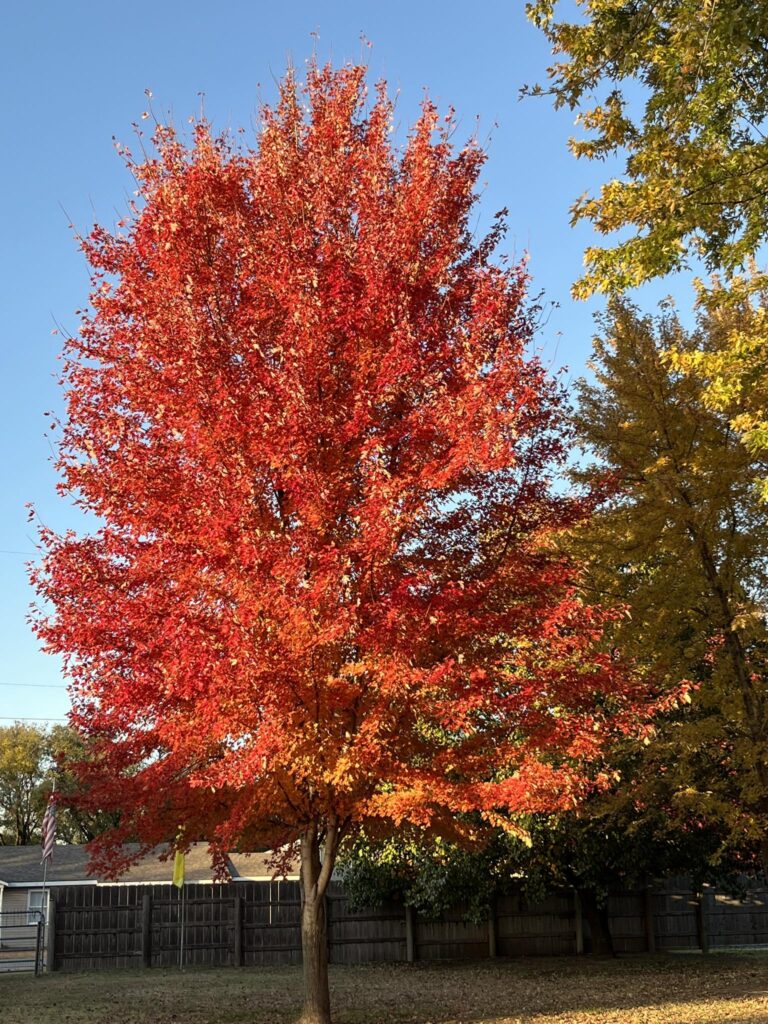
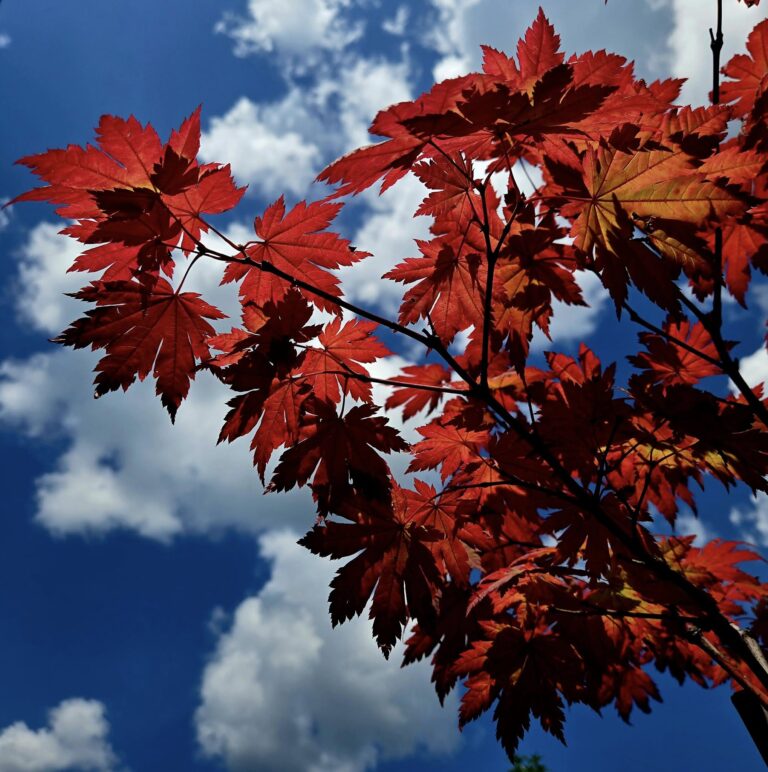
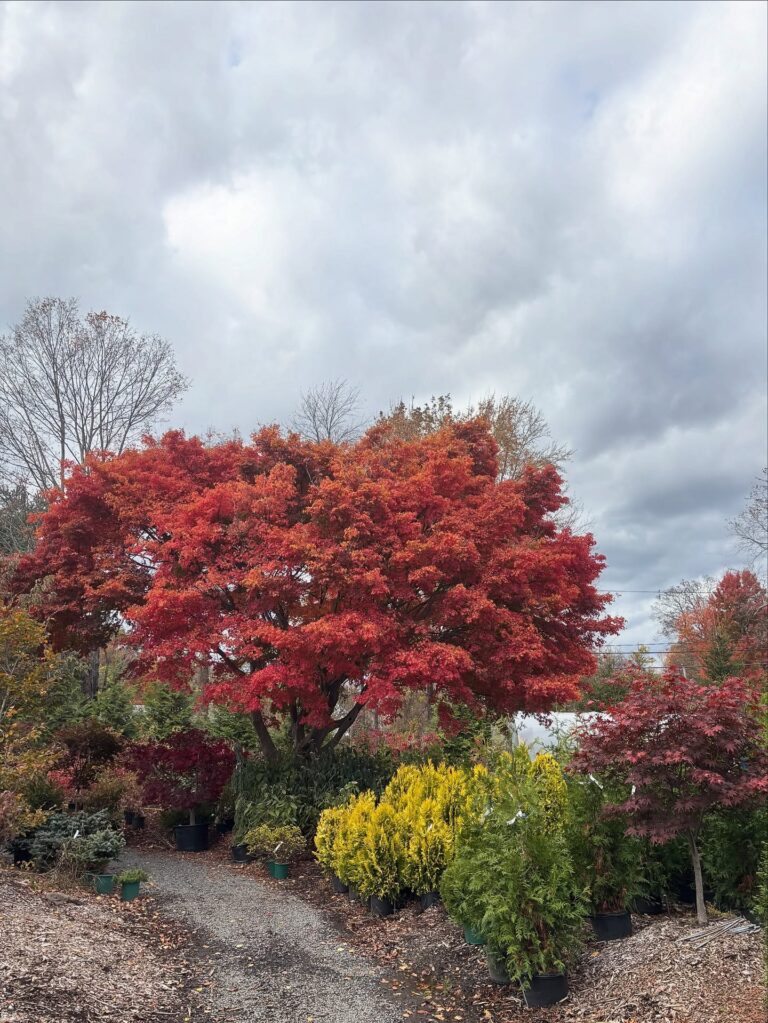
In autumn, the foliage turns a rich mixture of red, orange, purple, and burgundy — one of the most colourful autumn displays of any commonly planted street tree. The timing and intensity of colour vary by cultivar and climate.
The leaves persist late into autumn, often staying on the tree well into November in temperate regions, which extends the tree’s season of visual interest.
Fruit
The fruit is a small, hard, rounded pome — approximately 1 to 2 cm in diameter — that is not edible for humans. It is green ripening to brown, sometimes with a slight russet blush. The fruit is very hard and astringent even when ripe.
However, birds eat it readily, particularly after the first frosts soften the flesh. This is ecologically significant — and environmentally problematic — as birds disperse the seeds widely, enabling the tree to spread far beyond where it was planted (discussed in detail below).
Bark and Twigs
The bark is grey-brown and smooth in young trees, becoming slightly rougher and plated with age. Some wild-type specimens and certain cultivars carry thorns on their branches — a feature largely bred out of popular ornamental cultivars but retained in naturalised populations.
Horticultural History and Cultivar Development
The history of Pyrus calleryana in Western horticulture is one of the most instructive case studies in the unintended consequences of plant introduction.
The Bradford Cultivar
The ‘Bradford’ cultivar, selected in the 1950s at the USDA Glenn Dale station and named after F.C. Bradford, a former director of the station, was introduced to the American market in the 1960s. It was sterile — unable to set fruit when self-pollinated — which meant it was initially considered non-invasive and safe for widespread planting.
It was fast-growing, pollution-tolerant, drought-resistant, free from most pest problems, and strikingly beautiful in bloom. Cities, developers, and homeowners planted it everywhere. By the 1990s, it had become one of the most commonly planted street trees in the United States.
The Structural Problem
The Bradford pear has a fundamental structural weakness that was always present but became undeniable as the trees aged. Its branches emerge from the trunk at very narrow, acute angles — a growth habit called co-dominant stem structure — which creates weak branch unions prone to splitting.
As Bradford pear trees reach 20 to 30 years of age, they become highly vulnerable to storm damage. Entire limbs — sometimes half the crown — split away in wind, ice, or snow events, leaving the tree disfigured, potentially dangerous, and often requiring removal.
This structural failure has played out in cities and suburbs across the United States, leading many municipalities to stop planting Bradford pears in public spaces.
Other Cultivars Introduced
Partly to address the Bradford’s structural issues, and partly to extend the market, nurseries introduced numerous additional Pyrus calleryana cultivars:
- ‘Aristocrat’: A wider-spreading form with better branch angles and improved storm resistance than Bradford; strong autumn colour
- ‘Chanticleer’ (also called ‘Cleveland Select’): A narrow, upright (fastigiate) form widely used in street planting; considered structurally superior and more tolerant than Bradford; still very widely planted in the UK and Europe
- ‘Redspire’: Broadly pyramidal, excellent autumn colour, somewhat better branch structure
- ‘Trinity’: More compact and rounded, suitable for smaller spaces
- ‘Jack’: Developed with improved heat and drought tolerance for southern US conditions
The introduction of multiple cultivars, however, created an unforeseen problem. While individual cultivars were often self-sterile, cross-pollination between different cultivars resulted in fertile fruit — and the beginning of a serious invasive species problem.
The Invasive Species Problem
This is the aspect of Pyrus calleryana that has moved the tree from ornamental favourite to environmental concern in large parts of the United States.
How It Spreads
When two different Pyrus calleryana cultivars growing near each other cross-pollinate — which is easily facilitated by bees — fertile seeds are produced. Birds eat the small fruits and deposit the seeds in their droppings across roadsides, field edges, forest margins, and disturbed ground.
The resulting seedlings are vigorous, thorny, and highly competitive. They grow rapidly in disturbed soils, form dense, thorny thickets, and can out-compete native vegetation, particularly in field margins, roadsides, pastures, and open woodland edges.
Where Invasive Populations Are Established
Naturalised, invasive populations of Pyrus calleryana are now documented across a wide band of the eastern United States, including:
- Ohio, Indiana, Illinois, and Missouri in the Midwest — where it has become a significant problem in agricultural margins and restored prairie
- Pennsylvania, Virginia, West Virginia, and North Carolina in the Mid-Atlantic and Appalachian regions
- Georgia, Tennessee, Alabama, and South Carolina in the Southeast
- Texas and Oklahoma in the South-Central region
In Ohio, the tree has been described by state ecologists as one of the most aggressively spreading invasive woody plants in the state. It is now found along virtually every rural roadside in the central and southwestern parts of the state.
Legal Status
The seriousness of the invasive threat has prompted regulatory action in several US states:
- Ohio banned the sale and distribution of Pyrus calleryana in all its forms effective January 2023
- Pennsylvania has listed it as an invasive species and discouraged its planting
- South Carolina has listed it as an invasive exotic pest plant
- Missouri actively discourages planting and promotes removal
Several other states are in the process of reviewing their position. The trend is clear: the era of unrestricted Pyrus calleryana planting in the eastern United States is effectively over.
What This Means for Gardeners
If you live in the eastern United States, planting Pyrus calleryana in any form is no longer advisable, and in some states it is now illegal. If you already have one, the tree can remain in place — the legal restrictions in most states apply to sale and new planting, not to existing trees.
For those in western North America, the United Kingdom, continental Europe, Australia, and New Zealand, the invasive risk is lower but should still be monitored. Naturalised populations have been recorded in parts of southeastern Australia, and caution is warranted.
Where the Flowering Pear Still Has a Place
It would be unfair — and inaccurate — to dismiss Pyrus calleryana entirely. In appropriate regions where invasive spread is not a concern, some cultivars still offer genuine landscape value.
In the United Kingdom and Europe
In the United Kingdom, ‘Chanticleer’ remains widely planted and is considered one of the best small to medium street trees available for urban environments. Its narrow, upright form suits confined street plantings, and the combination of spring blossom, summer foliage, and autumn colour makes it a year-round performer.
The invasive risk in the UK is currently considered low — winters are cold enough, and the ecology sufficiently different, to limit the kind of aggressive naturalisation seen in the American Midwest and Southeast.
In Germany, the Netherlands, Belgium, France, and Scandinavia, flowering pear cultivars — particularly ‘Chanticleer’ — are commonly used in urban planting schemes. London, Manchester, Birmingham, Amsterdam, and Berlin all have significant plantings of this cultivar in their street tree inventories.
In Western North America
In California, Oregon, Washington, and British Columbia, the invasive threat from Pyrus calleryana is considerably lower than in the eastern states. The tree is still used in urban and suburban planting in these regions, though awareness of the issue has led to increased caution.
Ecological Value and Wildlife Interactions
Despite its invasive issues in certain regions, Pyrus calleryana does provide some ecological value in the landscape:
- Pollinators: The early spring flowers provide nectar and pollen for bees and other pollinators at a time when few other trees are in bloom — this is ecologically valuable, particularly for early-emerging bumblebee queens
- Birds: Fruit is consumed by starlings, cedar waxwings, American robins, mockingbirds, and thrushes, providing late-season food. This is, of course, also the mechanism of invasive spread.
- Invertebrates: The tree supports a modest range of generalist insect species, though its ecological value in this regard is significantly lower than native alternatives
However, it is worth being direct: in regions where native alternatives exist — such as serviceberry (Amelanchier spp.), native crabapple (Malus spp.), redbud (Cercis canadensis), or flowering dogwood (Cornus florida) — those alternatives will almost always provide greater ecological value, better structural integrity, and no invasive risk.
Growing Conditions and Practical Guidance
For those in regions where planting is still appropriate:
Climate and Hardiness
Pyrus calleryana is hardy across USDA Zones 5 to 9, making it one of the most climate-adaptable ornamental trees available. It tolerates:
- Cold winters to approximately -26°C (Zone 5)
- Hot, dry summers in continental climates
- Urban heat island conditions and reflected heat from paving
- Air pollution, including elevated ozone and particulate levels
Soil Tolerance
This is one of the most soil-tolerant ornamental trees available. It grows in:
- Clay, loam, or sandy soils
- Acidic to alkaline pH (4.5 to 8.0)
- Compacted or disturbed urban soils
- Periodically wet or dry conditions
This exceptional soil tolerance was a primary reason for its adoption as a street and urban tree — it survives in conditions that would kill most other ornamentals.
Planting and Maintenance
- Sun: Full sun required; at least 6 hours daily
- Spacing: Allow a minimum of 6 metres between specimens and from buildings
- Pruning: For ‘Bradford’ and other wide-angled cultivars, early structural pruning to remove co-dominant stems significantly improves long-term storm resistance. This should be done in the first 10 years.
- Watering: Established trees are drought-tolerant; newly planted trees need regular watering in the first two growing seasons
Final Thoughts
The flowering pear is, in many ways, a cautionary tale. It is beautiful — genuinely, spectacularly beautiful in bloom. And for a time, it seemed to answer every question urban planners and gardeners asked of an ornamental tree: tough, fast, adaptable, and showy.
But good intentions in horticulture are not enough on their own. The introduction of multiple cultivars that cross-pollinate freely, combined with effective bird dispersal and extraordinary competitive vigour, turned a celebrated ornamental into a serious ecological problem across large parts of the United States.
The lesson is worth remembering the next time a new “perfect” ornamental tree is introduced with great enthusiasm and no reservations.
If you are in the eastern United States, choose a native alternative. Your landscape will be richer for it, and the roadsides of Ohio, Virginia, and Georgia will thank you. If you are in the UK or western Europe, ‘Chanticleer’ remains a legitimate and attractive option — but keep an eye on naturalisation as climates shift.
The flowering pear is not a villain. It is simply a tree planted in the wrong place, at the wrong scale, without sufficient foresight. Understanding that distinction is how we do better.
References
- USDA Forest Service — Northeastern Area: Pyrus calleryana — Callery Pear https://www.fs.usda.gov/database/feis/plants/tree/pyrcal/all.html
- Ohio State University Extension — Callery Pear: An Invasive Tree https://ohioline.osu.edu/factsheet/anr-0109
- North Carolina State University Cooperative Extension — Pyrus calleryana Plant Profile https://plants.ces.ncsu.edu/plants/pyrus-calleryana/
- University of Florida IFAS Extension — Callery Pear (Pyrus calleryana) https://edis.ifas.ufl.edu/publication/ST527
- Purdue University Extension — Invasive Plants of the Eastern United States: Callery Pear https://extension.purdue.edu/invasivespecies/callery-pear.html

Tim M Dave is a gardening expert with a passion for houseplants, particularly cacti and succulents. With a degree in plant biology from the University of California, Berkeley, he has vast experience in gardening. Over the years, he has cultivated a vast collection of desert plants and learned a great deal about how to grow and care for these unique companions.