Flowering Dogwood (Cornus florida): History, Features, Problems, and More
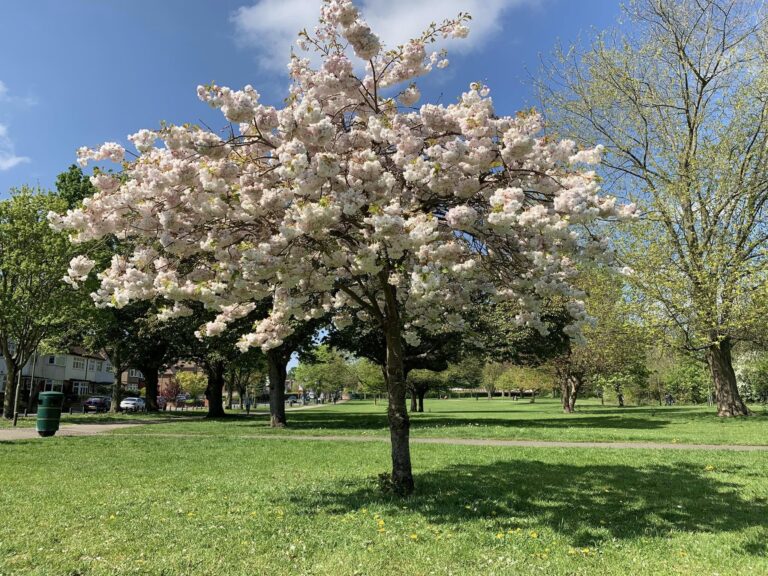
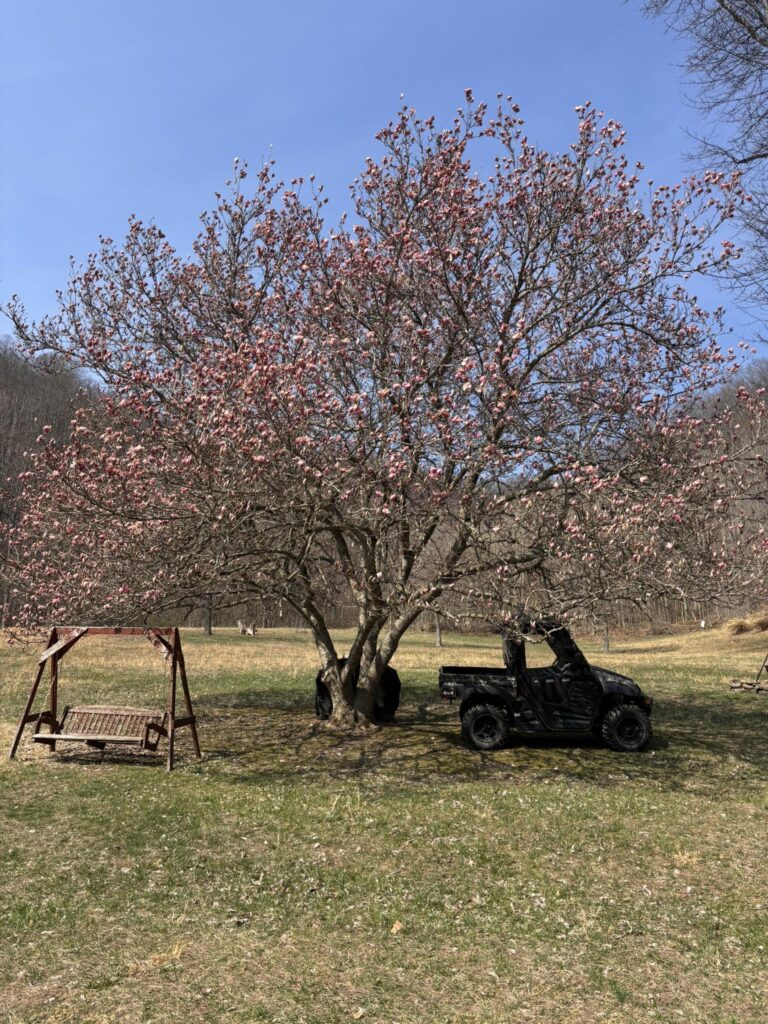
There is a moment every spring, usually in late March or early April, when the forest edges of the eastern United States seem to light up from within. Before most trees have leafed out, flowering dogwood (Cornus florida) opens its blossoms — white or pink, wide and elegant — against the still-bare woods behind it. It is one of the most quietly spectacular sights in North American horticulture.
This is a tree with deep roots in American culture, ecology, and landscape design. It is the state tree of Virginia and Missouri, the state flower of North Carolina, and the state tree and flower of British Columbia in Canada. It has been planted in gardens, parks, and roadsides across the country for generations.
Yet for all its familiarity, Cornus florida is widely misunderstood. Many gardeners plant it in the wrong site, wonder why it struggles, and blame the tree. This guide gives you the full picture — from its botanical identity and natural habitat to precise care requirements, the best cultivars available, and how to protect it from its most serious threats.
What Is Flowering Dogwood? Botanical Profile
Cornus florida belongs to the family Cornaceae. It is native to eastern North America, from southern Maine and southern Ontario in the north, south through Florida, and west to eastern Kansas and eastern Texas. Within this range, it grows as an understory tree — meaning it naturally occupies the shaded layer beneath the forest canopy, rather than the full-sun crowns of dominant hardwoods.
This origin as an understory species has profound implications for how the tree should be grown in gardens. More on that shortly.
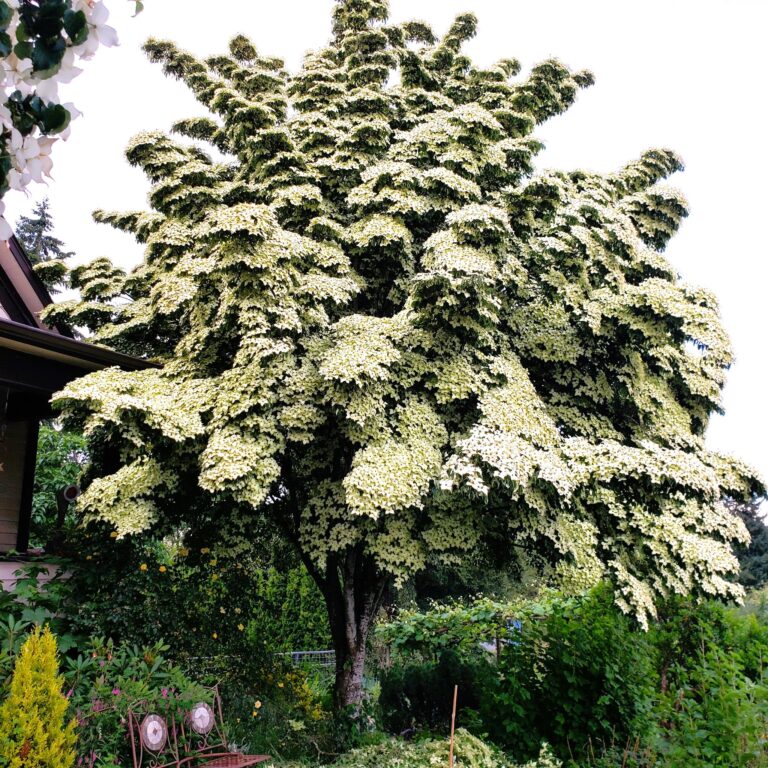
In its natural setting, Cornus florida typically reaches 6 to 10 meters (20 to 33 feet) in height, with a spread often equalling or exceeding its height. The growth rate is slow to moderate — roughly 30 to 45 centimeters (12 to 18 inches) per year — but the resulting form, over time, is layered, graceful, and architecturally distinctive.
The bark is dark grey and broken into small, block-like segments — sometimes described as resembling alligator skin — and is itself an attractive feature, particularly visible in winter.
What People Call “Flowers” Are Not Actually Flowers
This is one of the most interesting botanical details about Cornus florida, and one worth knowing.
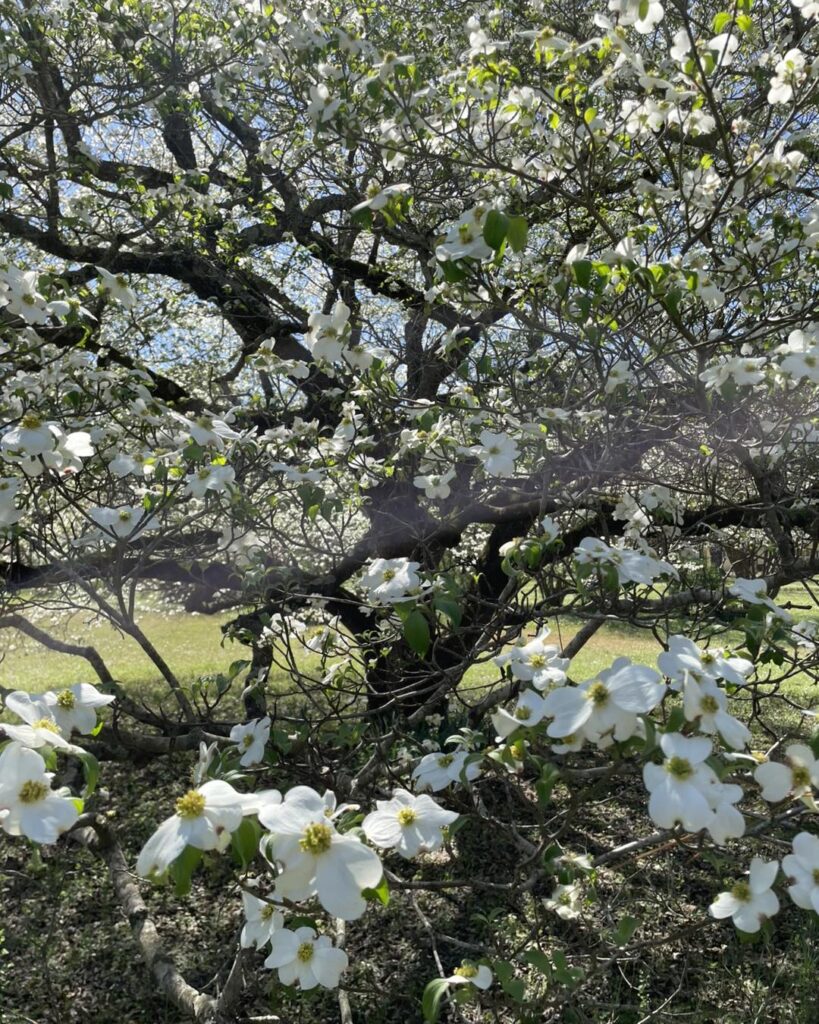
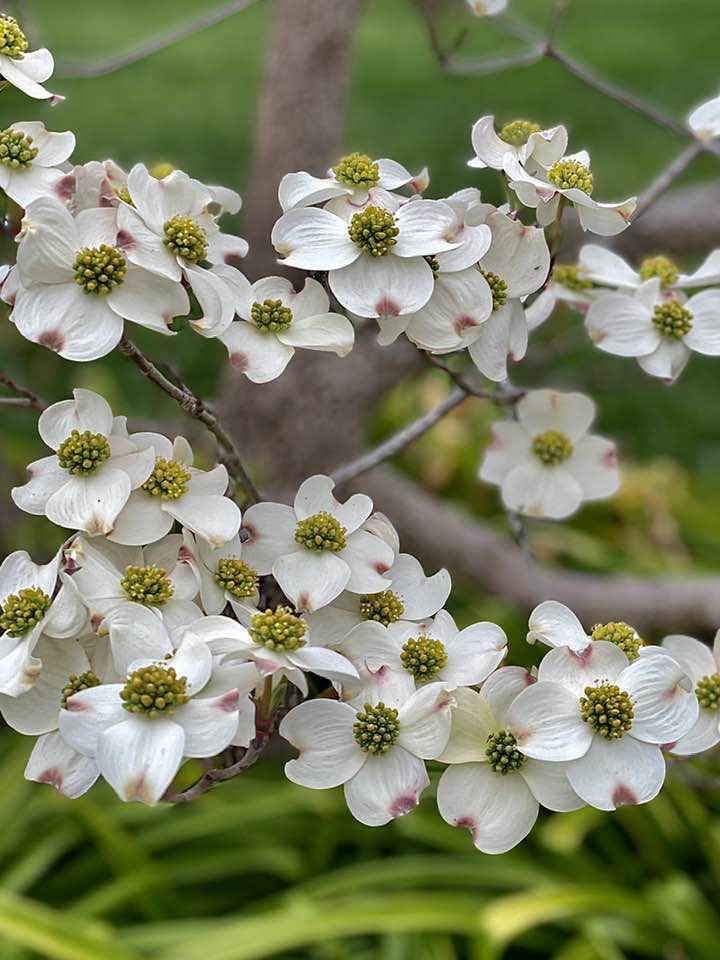
What most people refer to as the “flowers” of flowering dogwood — those large, four-petalled white or pink structures — are not flowers at all. They are bracts: modified leaves that have evolved to attract pollinators. Each bract is typically notched at the tip, giving it a distinctive shape.
The actual flowers are small, inconspicuous, and clustered at the centre of the four bracts. They are greenish-yellow and easily overlooked.
This distinction matters because it explains the tree’s timing. The bracts open before or alongside the first leaves, maximising their visibility to early pollinators — native bees, butterflies, and beetles — at a time when few other flowers are available.
The result is a display that lasts two to four weeks in spring — longer than most flowering trees — because the bracts are leaves, not true petals, and they persist and fade gradually rather than dropping all at once.
Four-Season Appeal: More Than a Spring Tree
Flowering dogwood is often thought of purely as a spring spectacle. In reality, it earns its place in the landscape year-round.
Spring: The bracts open in late March to mid-April across most of the tree’s range — the main event, and unmissable. White is the natural colour; pink and red cultivars are widely available. The display typically lasts three to four weeks.
Summer: After flowering, the tree produces attractive foliage — dark green, oval leaves with distinctive parallel veining. The foliage is handsome without being dramatic, providing a quiet backdrop for other summer-blooming plants.
Autumn: Cornus florida delivers a double autumn display — one that many gardeners overlook in their enthusiasm for the spring flowers. The leaves turn rich burgundy-red to purple in October, often creating a stunning contrast with the clusters of bright red berries that ripen simultaneously. These berries persist into winter.
Winter: The bare branches of flowering dogwood have a distinctive horizontal, layered structure — a sculptural quality that gives winter interest when most deciduous trees offer only bare twigs. The block-like bark adds further texture.
Natural Habitat and Why Understory Matters
Understanding where Cornus florida grows naturally is the single most important piece of knowledge for growing it successfully.
In the wild, it grows beneath the canopy of taller hardwoods — oaks, hickories, tulip poplars, maples. It receives dappled light through the canopy: significant brightness, but rarely the full intensity of midday summer sun. The soil beneath this canopy is rich in organic matter, slightly acidic, well-drained, and consistently moist from forest leaf litter.
When you replicate these conditions in a garden — even partially — flowering dogwood thrives. When you plant it in conditions that deviate significantly from this template, it struggles.
The most common planting mistakes:
- Full, unrelieved sun exposure — particularly in hot afternoon sun
- Dry, alkaline, or compacted soils
- Open, exposed positions without shelter from wind or heat
- Planting too deep or piling mulch against the trunk
Each of these recreates conditions the tree never experiences in its natural habitat.
Light Requirements: The Dappled Light Ideal
Flowering dogwood performs best in partial shade to full sun — but these categories need qualifying.
In cooler climates (USDA Zones 5 and 6), Cornus florida tolerates and even thrives in full sun, provided soil moisture is consistent. The cooler temperatures and shorter summers mean full sun causes less heat stress.
In warmer climates (Zones 7, 8, and 9), afternoon shade is essential. The intense afternoon sun of a southern summer can scorch foliage, stress the root system, and make the tree significantly more vulnerable to its most serious disease — dogwood anthracnose.
Ideal light exposure:
- Morning sun with afternoon shade — excellent in all zones
- Dappled light beneath a high canopy — excellent everywhere
- Full sun in cool climates — acceptable with consistent moisture
- Full afternoon sun in hot climates — avoid
The rule of thumb: the warmer your climate, the more shade the tree needs. This mirrors its natural ecology precisely.
Soil Requirements: Moisture, Acidity, and Structure
Flowering dogwood has specific soil preferences that must be respected for long-term success.
Ideal soil conditions:
- Slightly to moderately acidic: pH 5.2 to 6.5 — outside this range, nutrient uptake suffers
- Consistently moist but well-drained: the tree dislikes both drought and waterlogging
- Rich in organic matter: as found naturally beneath a forest canopy
- Loamy and well-structured: not compacted, not excessively sandy
What it does not tolerate:
- Alkaline soils — causes chlorosis and decline
- Heavy clay that holds water for extended periods — root rot follows
- Compacted urban soils with poor aeration
- Prolonged drought, particularly in summer
Improving the soil before planting — incorporating compost to increase organic matter, adjusting pH with elemental sulfur if necessary — is far more effective than trying to amend soil around an established, struggling tree.
Planting Flowering Dogwood: Step by Step
The care taken at planting determines much of the tree’s long-term health. Cornus florida is not a tree that recovers easily from a poor start.
Step-by-step planting guide:
- Choose the site carefully — assess light, soil drainage, and air circulation; avoid low-lying frost pockets and exposed, wind-swept positions
- Test the soil pH — if above 6.5, incorporate elemental sulfur and organic matter before planting
- Dig a wide, shallow hole — two to three times the diameter of the root ball, and no deeper than the root ball itself; this is critical
- Set the root flare at or just above soil level — the root flare is the point where the trunk base flares outward; it must never be buried
- Backfill with native soil amended with compost — a 50/50 mix of native soil and well-composted organic matter is appropriate here, unlike most trees, because the forest floor analogy is directly applicable
- Water slowly and thoroughly — saturate the entire planting hole
- Mulch generously — apply 7 to 10 centimeters (3 to 4 inches) of shredded wood or leaf compost mulch over the root zone, extending well beyond the drip line; this is the single most beneficial thing you can do for the long-term health of a planted dogwood
- Keep mulch away from the trunk — mulch piled against the bark (so-called “mulch volcanoes”) encourages bark decay, disease, and rodent damage; maintain a clear gap of 5 to 10 centimeters around the trunk base
Best planting time: Early spring (before bud break) or early autumn (six or more weeks before first frost), when temperatures are mild and establishment stress is lowest.
Watering: Consistent Moisture Is Non-Negotiable
Drought is one of the leading stressors of flowering dogwood in cultivation. The tree has shallow, fibrous roots concentrated in the upper 30 centimeters of soil — the layer that dries out fastest during summer heat.
Watering guidelines:
- During establishment (years one through three): water deeply once or twice weekly during dry periods; the goal is sustained moisture in the root zone, not surface dampness
- Established trees: water deeply every 7 to 10 days during dry spells; do not rely on lawn irrigation, which is typically too shallow for dogwood roots
- Critical periods: late spring (during and after flowering) and mid to late summer (when heat stress peaks) are when dogwood most needs consistent moisture
A 10-centimeter layer of organic mulch over the root zone reduces moisture loss significantly and moderates soil temperature — making it, alongside appropriate siting, the most effective drought-protection strategy available.
Fertilising: Light Touch, Right Timing
Flowering dogwood does not need heavy feeding. In good garden soils amended with organic matter, annual mulching with compost provides sufficient nutrition.
In poorer or impoverished soils, a light application of a slow-release, acidifying fertiliser — formulated for acid-loving plants — applied in early spring supports healthy growth. A product designed for azaleas or rhododendrons is appropriate.
Avoid:
- High-nitrogen fertilisers — these promote lush, soft growth that is more susceptible to disease and frost damage
- Fertilising in late summer or autumn — this stimulates new growth that does not harden before winter
- Applying fertiliser directly to the root flare or trunk — always distribute evenly across the root zone
If chlorosis (yellowing between leaf veins) appears, a soil pH test should be the first response. If the pH is above 6.5, acidification and chelated iron treatment address the root cause more effectively than general fertiliser applications.
Pruning Flowering Dogwood
Cornus florida has a naturally graceful, layered branching structure that requires minimal corrective pruning. The goal of pruning should be to preserve and enhance this natural form, not to impose an artificial shape.
When to prune:
- Late autumn through mid-winter is ideal — the tree is fully dormant, wounds close effectively before spring growth, and the structure is clearly visible without foliage
- Avoid pruning in late winter and spring when sap flow is active and pruning wounds may weep sap for extended periods
What to prune:
- Dead, damaged, or diseased branches — these can be removed at any time
- Crossing branches that cause bark wounds where they rub
- Suckers arising from the base of the trunk
- Branches that disrupt the characteristic horizontal, layered form
What to avoid:
- Topping or heavy heading cuts — these destroy the tree’s natural architecture and stimulate dense, weak regrowth
- Removing more than 15 to 20% of the live canopy in a single year
- Making flush cuts against the trunk — always cut just outside the branch collar
Dogwood Anthracnose: The Most Serious Threat
No guide to Cornus florida would be complete without an honest discussion of dogwood anthracnose, caused by the fungus Discula destructiva. Since its appearance in the late 1970s — first detected on the Pacific Coast and in the northeastern United States — it has killed millions of flowering dogwood trees and continues to pose a serious threat across the species’ range.
Symptoms of dogwood anthracnose:
- Tan or brown spots with purple borders on leaves, often starting at the margins
- Blotchy, irregular brown patches that expand to cover entire leaves
- Infected leaves that cling to the tree rather than dropping naturally
- Cankers on twigs and branches that girdle and kill the wood above
- Epicormic shoots — clusters of small shoots emerging directly from the trunk and main branches, a stress response often triggered by advanced infection
- Progressive dieback, moving inward from the outer canopy
Conditions that favour anthracnose:
- Cool, moist, shaded environments — the fungus thrives in conditions of low air circulation and persistent leaf wetness
- Trees already stressed by drought, poor siting, or compaction are significantly more susceptible
Management strategies:
- Site selection is the first line of defence — trees in good air circulation, appropriate light, and well-drained soils are significantly more resistant
- Avoid overhead irrigation — wet foliage for extended periods accelerates fungal spread
- Remove infected material promptly — rake and dispose of fallen leaves; prune out cankered branches well below the visible infection
- Fungicide applications — preventive sprays of registered fungicides (propiconazole, mancozeb, or chlorothalonil) applied from bud break through spring can reduce disease severity; consult your local cooperative extension service for current registered products and timing
- Plant resistant cultivars — see the cultivar section below for selections with improved resistance
The ‘Stellar’ series hybrids (Cornus × rutgersensis), developed at Rutgers University, are crosses between Cornus florida and the Kousa dogwood (Cornus kousa), which has strong natural resistance to anthracnose. These hybrids combine the beauty of flowering dogwood with significantly improved disease resistance.
Powdery Mildew: A Secondary Concern
Powdery mildew, caused by the fungus Erysiphe pulchra, is a secondary but increasingly common problem on flowering dogwood — particularly on trees in shaded, low-air-circulation sites.
Symptoms: White, powdery fungal growth on the upper leaf surface; distorted, cupped, or stunted new growth; leaves that yellow and drop prematurely in severe cases.
Management: Improve air circulation through pruning; avoid excess nitrogen; plant in appropriate light; apply preventive fungicide sprays where the problem recurs consistently. Several dogwood cultivars show improved mildew resistance.
Wildlife Value: An Ecological Cornerstone
Few small trees provide as much wildlife value as Cornus florida.
The early spring flowers are an important nectar and pollen source for native bees, butterflies, and beetles at a time when competition from other flowers is low.
The bright red berries — technically drupes — that ripen in autumn are nutritionally rich and eagerly consumed by more than 35 species of birds, including American robins, cedar waxwings, wild turkeys, northern cardinals, wood thrushes, and bluebirds. The berries are high in fat — an important property for migratory birds building energy reserves for long journeys.
White-tailed deer browse on dogwood foliage, twigs, and berries, particularly in winter. In high-deer-pressure areas, young trees may need protection.
The flowers, berries, foliage, and structure of flowering dogwood make it one of the most ecologically productive small trees you can plant in an eastern North American garden.
Best Cultivars of Cornus florida
Decades of selection have produced a wide range of cultivars offering improved disease resistance, extended flowering, unusual colour, or compact form.
| Cultivar | Key Features | Notes |
| ‘Cherokee Chief’ | Deep rosy-red bracts; reddish new foliage | Classic red cultivar; widely available |
| ‘Cherokee Princess’ | Large white bracts; heavy bloomer | One of the most floriferous white selections |
| ‘Appalachian Spring’ | White bracts; excellent anthracnose resistance | Top choice for disease-prone areas |
| ‘Appalachian Joy’ | White bracts; compact; good resistance | Good for smaller gardens |
| ‘Cloud Nine’ | Large white bracts; blooms young; cold-hardy | Reliable in northern zones |
| ‘Rubra’ | Pink to rose bracts; classic cultivar | Long-established; widely planted |
| ‘Rainbow’ | Variegated gold-edged leaves; pink bracts | Grown as much for foliage as flowers |
| ‘Stellar Pink’ (× rutgersensis) | Soft pink; Rutgers hybrid; strong resistance | Excellent choice where anthracnose is prevalent |
For gardeners in areas where dogwood anthracnose is a documented problem, ‘Appalachian Spring’ and the Rutgers hybrids (‘Stellar Pink’, ‘Aurora’, ‘Constellation’, ‘Stardust’, ‘Celestial’) represent the most responsible planting choices.
Flowering Dogwood in Landscape Design
Cornus florida is one of the most versatile small trees in the American landscape designer’s palette. Its modest size, multi-season interest, and adaptability to partial shade make it useful in ways that few other ornamental trees can match.
As a woodland garden specimen: planted at the edge of a woodland or beneath the canopy of tall oaks or pines, it performs exactly as it does in nature — spectacular in spring, graceful through summer, colourful in autumn.
As a garden focal point: a single specimen in the right position — visible from a window, at the end of a garden path, or framing a view — becomes one of the most celebrated elements of the garden in spring.
Layered with spring bulbs: underplanting dogwood with daffodils, Virginia bluebells (Mertensia virginica), trilliums, and wild ginger creates a naturalistic spring display of considerable power.
Along woodland edges: in naturalistic or conservation plantings, Cornus florida is irreplaceable as a native, wildlife-supporting, structurally attractive edge-of-woodland species.
In combination with other native shrubs: rhododendrons, mountain laurels (Kalmia latifolia), native azaleas, and fothergillas all share the dogwood’s preference for acidic, well-drained, partially shaded conditions and combine beautifully with it.
Cultural Significance
The flowering dogwood carries considerable cultural weight in the United States. It was one of the trees sent to Japan as part of the original 1912 exchange of gifts between Washington D.C. and Tokyo — a counterpart to the famous Japanese cherry trees that now line the Tidal Basin. In return, Japan planted American dogwoods alongside its cherries.
Native American peoples used various parts of the tree medicinally — the bark as a fever remedy (it contains compounds similar to those in quinine) and the hard, dense wood for tool handles and arrows.
The wood of Cornus florida is, in fact, among the hardest and most shock-resistant of any North American species — harder than hickory on impact tests — and was historically used for textile weaving shuttles, golf club heads, and mallet heads.
Frequently Asked Questions
How fast does flowering dogwood grow? Slowly to moderately — 30 to 45 centimeters (12 to 18 inches) per year in good conditions. Growth slows in shade and in poor soils. The trade-off for slow growth is longevity and the development of beautiful structure over time.
Is flowering dogwood toxic to dogs and cats? The berries, leaves, and bark of Cornus florida are considered mildly toxic to dogs and cats, capable of causing mild gastrointestinal upset if consumed in quantity. The ASPCA lists the genus Cornus as potentially toxic to pets. Plant it where pet access is limited, or choose a less accessible site.
Why is my dogwood not flowering? The most common reasons are insufficient light (too much shade), young tree age (dogwoods may take three to five years to flower after planting), late frost damage to flower buds, or improper pruning that has removed the flower buds. Ensure the tree receives at least four hours of direct sunlight and has not been pruned in spring.
Can flowering dogwood grow in full shade? It will survive in deep shade but will flower poorly and develop a sparse, weak form. A minimum of four hours of direct or bright indirect light daily is needed for consistent flowering.
What is the difference between Cornus florida and Cornus kousa? Cornus kousa, the Kousa dogwood, is a related Asian species. It flowers several weeks later than C. florida, after the leaves have emerged. It has pointed rather than notched bracts and is significantly more resistant to anthracnose. It is an excellent alternative or companion planting where disease is a concern.
Final Thoughts
Cornus florida is a tree that rewards thoughtful planting with something genuinely rare — beauty that deepens every season, year after year. It asks for a site that resembles, at least loosely, the woodland edge it calls home: partial shade, acidic and moist soil, good air circulation, and a generous mulch of organic matter.
Give it those conditions, choose a disease-resistant cultivar where anthracnose is a concern, and protect it from drought in its early years — and flowering dogwood will repay that investment with decades of spring flowers, summer grace, autumn fire, and winter sculpture.
I know of few trees that speak so clearly to all four seasons at once. It is, in every honest sense, one of the finest native trees North America has produced.
References
- North Carolina State University Extension – Cornus florida: Flowering Dogwood Plant Profile https://plants.ces.ncsu.edu/plants/cornus-florida/
- University of Florida IFAS Extension – Cornus florida: Flowering Dogwood https://edis.ifas.ufl.edu/publication/ST181
- Virginia Cooperative Extension, Virginia Tech – Dogwood Anthracnose https://www.pubs.ext.vt.edu/450/450-601/450-601.html
- Clemson University Cooperative Extension – Dogwood Diseases & Insect Pests https://hgic.clemson.edu/factsheet/dogwood-diseases-insect-pests/
- University of Georgia Extension – Flowering Dogwood: Georgia’s State Wildflower https://extension.uga.edu/publications/detail.html?number=B1145

Tim M Dave is a gardening expert with a passion for houseplants, particularly cacti and succulents. With a degree in plant biology from the University of California, Berkeley, he has vast experience in gardening. Over the years, he has cultivated a vast collection of desert plants and learned a great deal about how to grow and care for these unique companions.