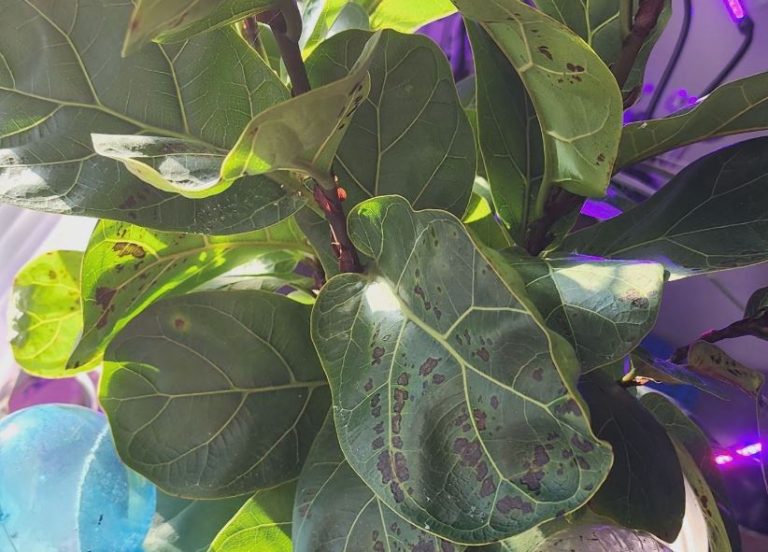
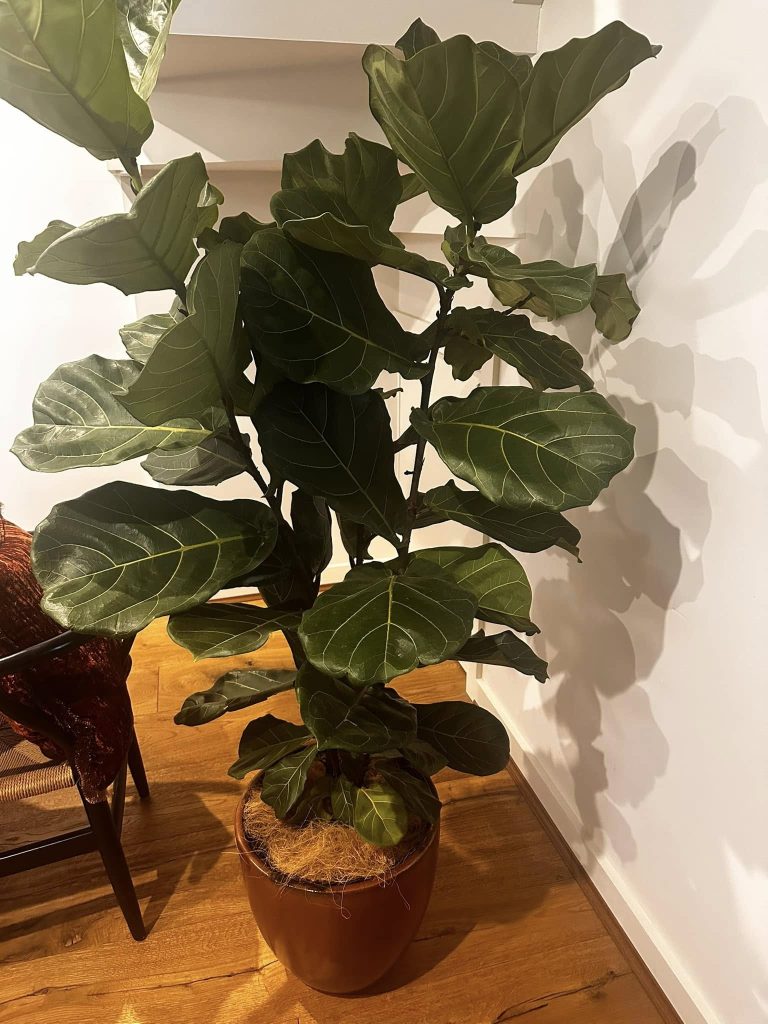
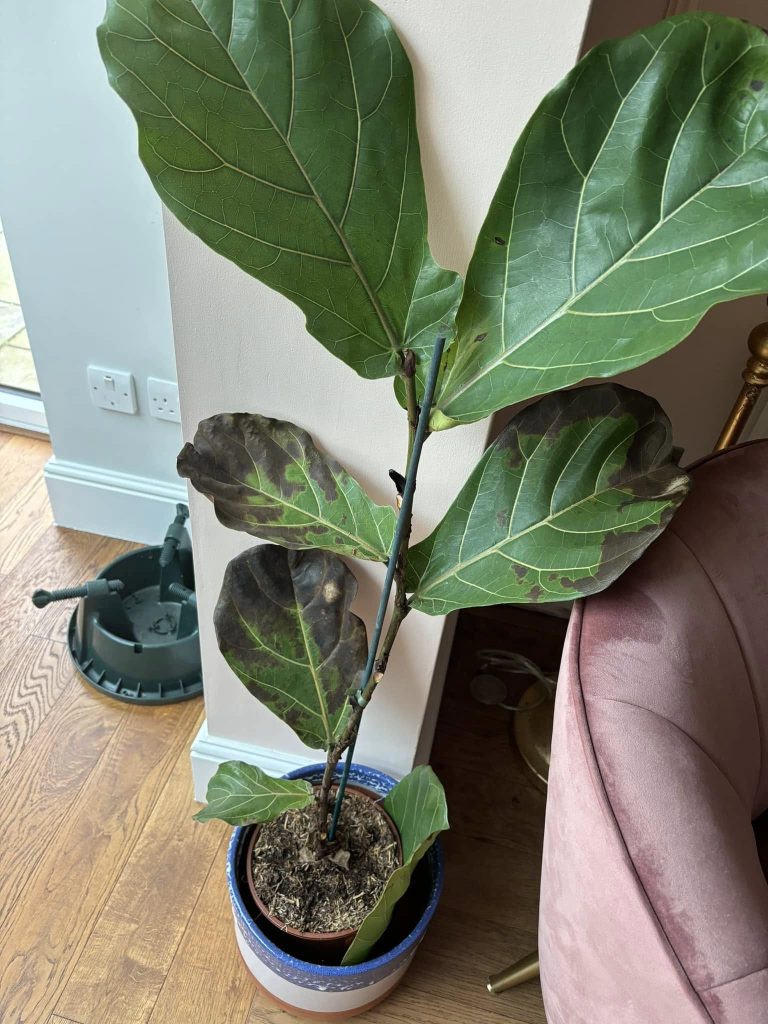
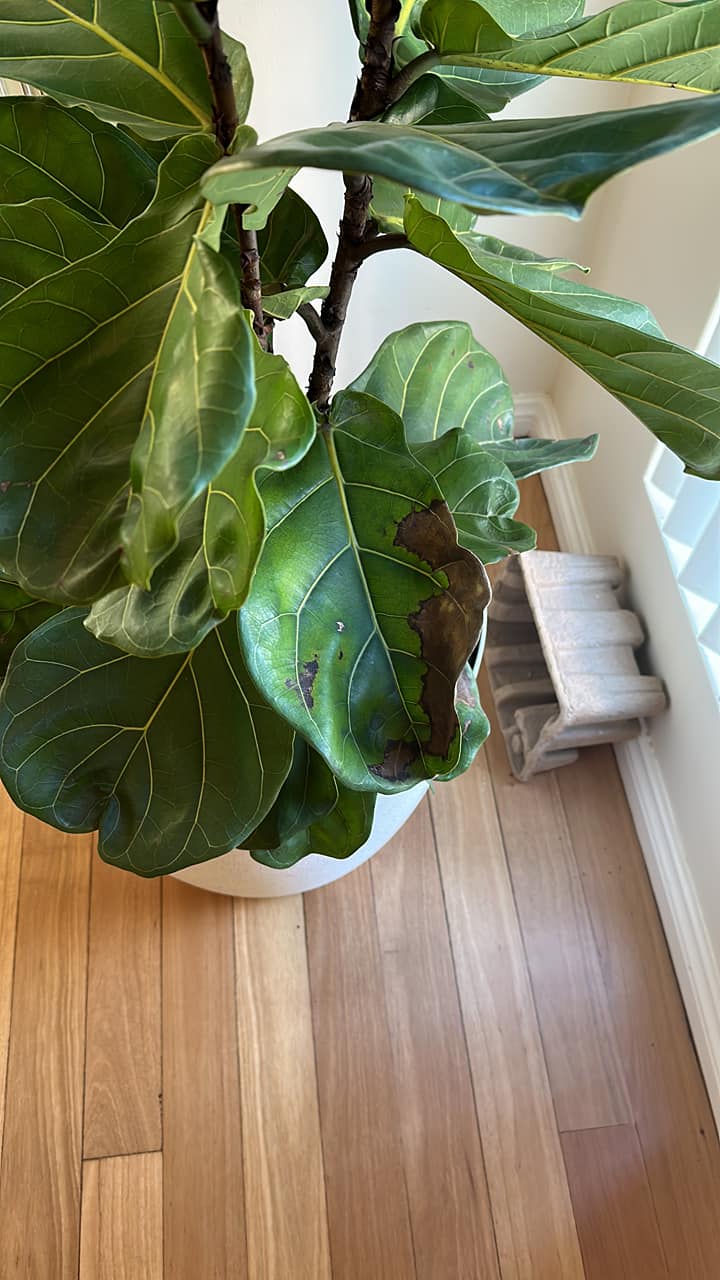
Fiddle Leaf Fig Leaves Curling? 8 Easy Fixes to Save Your Plant
I’ll never forget the moment I noticed my fiddle leaf fig’s leaves curling. It was my favorite plant, its big, glossy leaves making my living room feel like a tropical oasis. Then, one day, those perfect leaves started curling inward, looking sad and stressed.
Fiddle leaf figs (Ficus lyrata) are a darling of American homes. But curling leaves are a common issue that can leave plant parents scratching their heads. In this guide, I’ll share why your fiddle leaf fig leaves are curling, how to fix them, and how to keep your plant thriving.
What Causes Fiddle Leaf Fig Leaves to Curl?
Curling leaves are your plant’s way of saying, “Help, I’m stressed!” Here are the most common reasons for curling leaves on a fiddle leaf fig:
1. Underwatering: Thirsty Leaves Curl Inward
I learned this the hard way when I forgot to water my fiddle leaf fig for weeks. Underwatering causes leaves to curl inward as the plant tries to conserve water. Signs of underwatering include dry, crispy curled leaves, especially at the tips, with dry soil.
Quick fix: Water thoroughly until water drains from the pot’s bottom. Check soil weekly to maintain consistent moisture.
2. Overwatering: Soggy Roots Cause Trouble
I once overwatered my plant, thinking more water meant more love. Big mistake. Overwatering suffocates roots, leading to curling, yellowing, or drooping leaves. Signs of overwatered fiddle leaf fig include soft, curled leaves with yellowing or brown spots, and soggy soil.
Quick fix: Stop watering and let the soil dry out. Check for root rot and repot if needed.
3. Low Humidity: A Struggle in American Homes
Fiddle leaf figs are tropical plants that crave humidity. Many American homes, especially in dry climates or during winter with indoor heating, have low humidity, causing leaves to curl. Signs of low humidity include dry, inward-curling leaves, often with brown, crispy edges.
Quick fix: Use a humidifier or place a pebble tray with water near the plant to boost humidity.
4. Improper Lighting: Too Much or Too Little
Fiddle leaf figs love bright, indirect light. Too much direct sun or too little light can stress the plant, causing leaves to curl. Signs of light issues include leaves curling toward light (too little) or scorching with curled edges (too much direct sun).
Quick fix: Move to a spot with bright, indirect light, like near an east-facing window.
5. Pests: Tiny Culprits Causing Big Problems
Pests like spider mites or mealybugs can cause leaves to curl by sucking sap from the plant. I once found tiny webs under my leaves—spider mites were to blame! Common signs of pests include curled leaves with tiny dots, webbing, or sticky residue.
Quick fix: Wipe leaves with a damp cloth and treat with neem oil or insecticidal soap.
6. Temperature Stress: Drafts and Extremes
Fiddle leaf figs prefer temperatures between 65-85°F. Drafts from windows or air conditioners, common in American homes, can cause leaves to curl. Signs of temperature stress are curling leaves, especially when the plant is near drafts, heaters, or cold windows.
Quick fix: Move the plant to a stable, warm spot away from vents or drafty windows.
7. Nutrient Deficiency: Starving Your Plant
A lack of nutrients like nitrogen or magnesium can cause leaves to curl or yellow. I noticed this when I skipped fertilizing for too long. Common signs of nutrient deficiency are curling leaves with yellowing or slow growth.
Quick fix: Use a balanced liquid fertilizer every 4-6 weeks during the growing season.
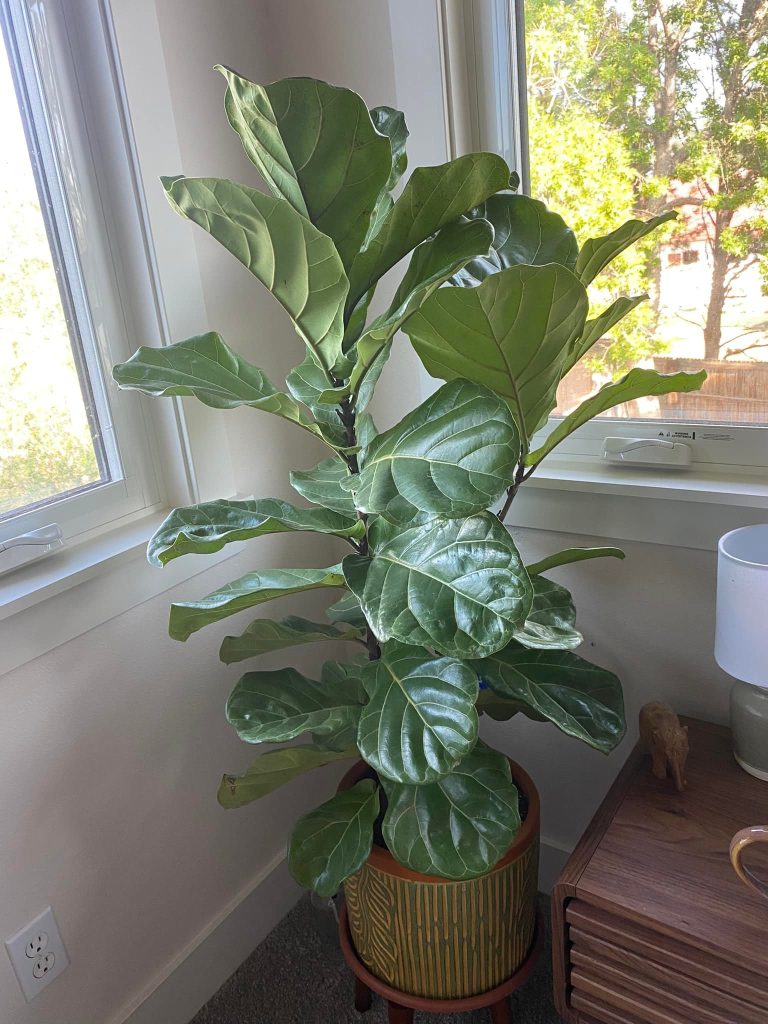
How to Diagnose Curling Leaves on Your Fiddle Leaf Fig
Before you can fix the curling, you need to pinpoint the cause. Here’s how I diagnose the problem:
- Check the soil: Stick your finger 1-2 inches into the soil. Is it dry (underwatering) or soggy (overwatering)?
- Inspect the leaves: Are they crispy and curled (underwatering or low humidity) or soft and yellowing (overwatering)?
- Look for pests: Use a magnifying glass to check for bugs or webbing under leaves.
- Evaluate light and temperature: Is the plant in direct sun, low light, or near a drafty window?
- Review your care routine: When did you last water, fertilize, or check humidity?
Once you’ve identified the cause, you can take action. Let’s explore how to fix those curling leaves.
How to Fix Curling Fiddle Leaf Fig Leaves
Here’s how I saved my fiddle leaf fig from curling leaves, step by step:
Step 1: Adjust Your Watering Routine
Watering is the foundation of fiddle leaf fig care. Here’s what I do:
- Underwatering fix: If the soil is dry, water thoroughly until water drains out. I check weekly and water when the top 1-2 inches are dry.
- Overwatering fix: If the soil is soggy, stop watering and let it dry out. Check roots for rot (see Step 2).
- Tools I love: A moisture meter takes the guesswork out of watering. It’s a must-have for plant parents!
Step 2: Treat Root Rot (If Overwatered)
If overwatering is the issue, root rot might be the culprit. Here’s what I did:
- Check roots: Gently remove the plant from its pot. Healthy roots are white; rotten roots are brown and mushy.
- Trim damaged roots: Use clean scissors to cut away rotten roots. I sterilized mine with rubbing alcohol.
- Repot: Use fresh, well-draining soil (2 parts potting soil, 1 part perlite, 1 part bark) and a pot with drainage holes.
- Water sparingly: After repotting, water lightly and wait for the soil to dry before watering again.
Step 3: Boost Humidity
Most American homes have humidity levels of 30-40%, but fiddle leaf figs prefer 50-60%. Here’s how I increase humidity:
- Humidifier: I use a small humidifier near my plant. It’s a game-changer.
- Pebble tray: Fill a tray with pebbles and water, then place the pot on top (not in the water).
- Group plants: Clustering plants creates a humid microclimate.
Step 4: Optimize Light
Fiddle leaf figs need bright, indirect light to thrive:
- Ideal spot: Place near an east-facing window or a few feet from a south- or west-facing window with a sheer curtain.
- Rotate the plant: I rotate my plant every few weeks for even light exposure.
- Avoid direct sun: If leaves are curling from sunburn, move the plant to indirect light.
Step 5: Treat Pests
If pests are causing the curling:
- Wipe leaves: Use a damp cloth to remove pests and residue.
- Neem oil: Mix neem oil as directed on the label and spray leaves weekly until pests are gone.
- Isolate the plant: Keep it away from other plants to prevent spreading.
Step 6: Stabilize Temperature
Keep your plant in a warm, stable environment:
- Ideal range: 65-85°F. Avoid placing near air vents, heaters, or drafty windows.
- Monitor drafts: In my Chicago apartment, I moved my plant away from a drafty window, and the curling stopped.
Step 7: Fertilize Properly
Feed your fiddle leaf fig during the growing season (spring and summer):
- Fertilizer type: Use a balanced liquid fertilizer (10-10-10 or 3-1-2 ratio).
- Frequency: Fertilize every 4-6 weeks. I dilute to half-strength to avoid root burn.
- Avoid over-fertilizing: Too much fertilizer can cause leaf curl, too!
Step 8: Prune and Clean
If curling leaves are damaged, prune them to encourage new growth:
- How to prune: Cut just above a leaf node with clean scissors. I removed a few curled leaves, and my plant bounced back.
- Clean leaves: Dust blocks light, so I wipe leaves with a damp cloth monthly.
Preventing Curling Leaves: Long-Term Care Tips
When I got my fiddle leaf fig, I was a newbie. I placed it in a dim corner, watered it randomly, and ignored humidity. The leaves started curling, and I thought I’d killed it. But after researching, adjusting my care routine, and being patient, my plant is now the star of my living room.
Curling leaves still pop up occasionally, but I catch them early. Now that your fiddle leaf fig is recovering, here’s how to prevent curling leaves in the future:
1. Stick to a watering schedule. Consistency is key. I check the soil weekly and water only when the top 1-2 inches are dry. A moisture meter keeps me on track.
2. Maintain humidity. Keep humidity above 50%. I use a hygrometer to monitor levels and a humidifier in winter when my heater dries the air.
3. Provide proper light. Bright, indirect light is ideal. I rotate my plant to ensure all sides get even exposure. In low-light conditions, use a grow light to supplement natural light.
4. Inspect for pests monthly. Check under leaves for pests. Early detection prevents curling and other damage.
5. Repot every 1-2 years. Fiddle leaf figs outgrow their pots, causing stress. I repotted mine last year with a well-draining mix, and it’s thriving.
Common Mistakes American Plant Owners Make
Living in the U.S., we face unique challenges with fiddle leaf figs. Here are mistakes I’ve made:
- Inconsistent watering: Watering on a set schedule without checking the soil leads to under- or overwatering.
- Ignoring humidity: Dry climates or heated homes zap moisture, causing curling.
- Wrong light placement: Too much sun burns leaves; too little causes curling toward the light.
- Drafty spots: Air conditioners or heaters in urban apartments stress plants.
- Skipping repotting: Cramped roots lead to stress and curling leaves.
FAQ
Q: Why are my fiddle leaf fig leaves curling inward?
A: Inward curling is often due to underwatering, low humidity, or pests. Check soil, humidity, and leaves for bugs.
Q: Can curled leaves recover?
A: If caught early, yes! Fix the cause (water, humidity, etc.), and new leaves will grow healthy. Damaged leaves may not uncurl.
Q: How often should I water my fiddle leaf fig?
A: Water when the top 1-2 inches of soil are dry, typically every 7-14 days, depending on light and season.
Q: Should I cut off curled leaves?
A: If they’re severely damaged or pest-infested, yes. Use clean scissors to cut above a leaf node.
Q: Can low humidity cause leaf curling?
A: Yes, especially in dry American homes. Boost humidity with a humidifier or pebble tray.
Q: How long does it take for a fiddle leaf fig to recover from curling?
A: Recovery can take 2-8 weeks, depending on the cause and care adjustments.
Suggested For You:
Brown Spots on Fiddle Fig Leaves: Identification and Fixes
7 Reasons: Why Is My Fiddle Leaf Fig Dropping Leaves?
7 Reasons: Why Are My Fiddle Leaf Fig Leaves Turning Yellow?
Fiddle Leaf Fig Cultivation: Your Ultimate Guide to Growing This Stunning Houseplant
Black Spots on Fiddle Leaf Fig Leaves: Causes, Fixes, and Prevention
Fiddle Leaf Fig Root Rot: Saving Your Plant From The Silent Killer
Final thought
Curling leaves on your fiddle leaf fig can be alarming, but they’re a fixable problem. I’ve been there, staring at my plant’s sad, curled leaves, wondering what I did wrong. By identifying the cause, you can save your plant and prevent future issues. Got questions or tips? Drop them in the comments, and let’s keep our plants flourishing!
References
- The Spruce. (2023). How to Care for a Fiddle Leaf Fig. https://www.thespruce.com
- University of Florida IFAS Extension. (2022). Ficus lyrata: Fiddle Leaf Fig. https://edis.ifas.ufl.edu
- Missouri Botanical Garden. (2021). Ficus lyrata Care Guide. https://www.missouribotanicalgarden.org
- Penn State Extension. (2020). Common Houseplant Pests and Diseases. https://extension.psu.edu
- American Horticultural Society. (2019). Plant Care: Tropical Houseplants.

Tim M Dave is a gardening expert with a passion for houseplants, particularly cacti and succulents. With a degree in plant biology from the University of California, Berkeley, he has vast experience in gardening. Over the years, he has cultivated a vast collection of desert plants and learned a great deal about how to grow and care for these unique companions.