7 Reasons: Why Is My Fiddle Leaf Fig Dropping Leaves?
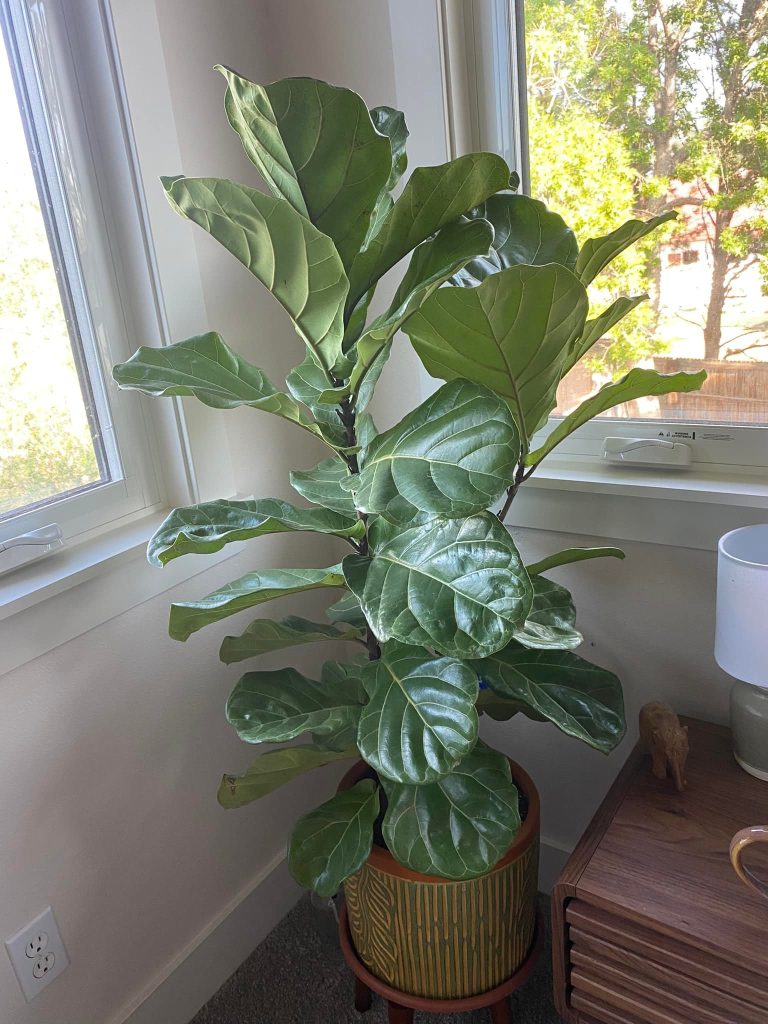
When I got my fiddle leaf fig, I thought it would be easy. I placed it in a dark corner, watered it randomly, and ignored its needs. Leaf drop was my wake-up call. After researching and adjusting my care routine, my plant is now the centerpiece of my living room.
So, if your fiddle leaf fig is shedding leaves, don’t despair. I’ve been there, staring at a pile of fallen leaves under my fiddle leaf fig, but I managed to save it. This guide will explore why it’s happening, how to stop it, and how to keep your plant flourishing in your home.
Why Is My Fiddle Leaf Fig Dropping Leaves?
When your fiddle leaf fig drops leaves, it’s sending an SOS. The most common reasons include:
- Overwatering: Too much water stresses the roots.
- Underwatering: Too little water leaves your plant thirsty.
- Lighting issues: Inadequate or excessive light can trigger leaf drop.
- Environmental stress: Drafts, temperature swings, or low humidity can upset your fig.
- Nutrient deficiency: Lack of nutrients can weaken your plant.
- Pests or diseases: Bugs or infections may cause leaves to fall.
- Shock from repotting or moving: Sudden changes can stress your plant.
Let’s break down each cause, understand how it affects your fiddle leaf fig, and share practical fixes to get your plant back on track.
1. Overwatering: The Top Culprit
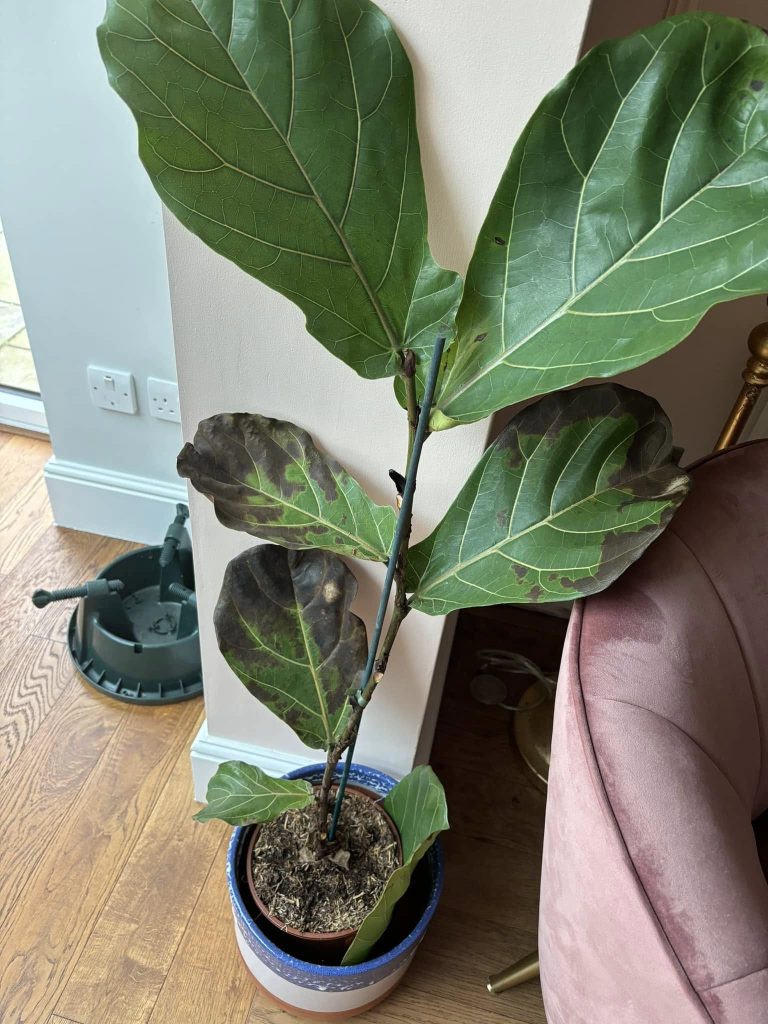
My first fiddle leaf fig was thriving until I got carried away with watering. Soon, leaves started dropping like confetti. Overwatering is the most common reason fiddle leaf figs lose leaves, especially in homes where decorative pots often lack proper drainage.
Why It Happens
Fiddle leaf figs (Ficus lyrata) thrive in well-draining soil. This is evident from their native habitats in the West African rainforests. Too much water causes root rot, cutting off oxygen and nutrients, which leads to leaf drop.
Signs of Overwatering
- Leaves dropping, especially lower ones.
- Yellowing leaves before they fall.
- Soggy soil that smells musty.
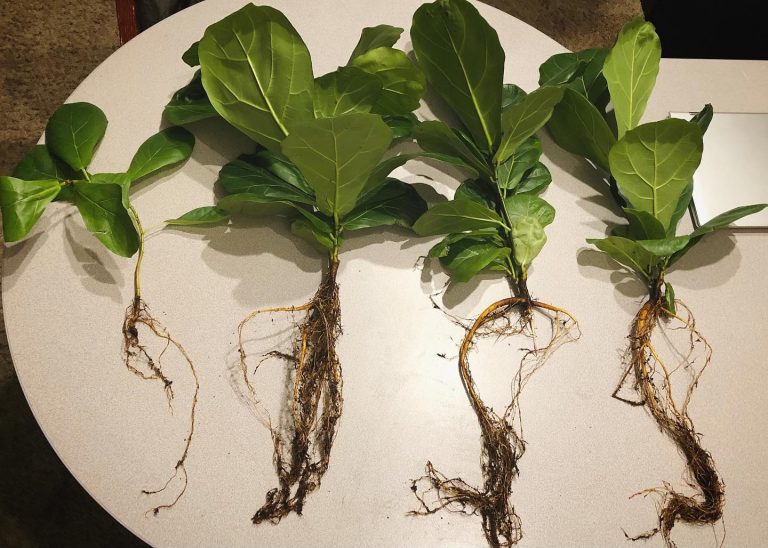
- Soft or mushy roots.
How to Fix It
- Check soil moisture level: Stick your finger an inch into the soil. If it’s wet, hold off watering. Use a soil moisture meter for precision.
- Adjust your watering: Water only when the top inch of soil is dry, typically every 1-2 weeks. In cooler months, like winter in Boston, water less often.
- Improve drainage: Use a pot with drainage holes. I switched to a terracotta pot to help manage moisture.
- Repot if needed: If roots are rotting, trim damaged ones with sterilized pruning shears and repot in fresh, well-draining soil. I use a mix of potting soil, perlite, and peat moss.
Pro Tip: In humid regions like Florida, be extra cautious about overwatering. Ensure good air circulation to prevent fungal issues.
2. Underwatering: When Your Plant Is Extremely Thirsty
Underwatering can also cause leaves to drop. I once went on a two-week trip and forgot to arrange care for my fiddle leaf fig. When I returned, the leaves were drooping and falling off. Too little water stresses the plant, making it drop leaves.
Why It Happens
Fiddle leaf figs need consistent moisture. When the soil dries out completely, the plant can’t transport water or nutrients, making it shed leaves to conserve energy.
Signs of Underwatering
- Dry, crispy leaves that fall off.
- Soil pulling away from the pot’s edges.
- Drooping or wilting leaves.
How to Fix It
- Water thoroughly: Water until it drains out the bottom. I give my plant a good soak in the sink every 1-2 weeks.
- Check the soil weekly: In hot, dry areas like Arizona, you may need to water more frequently.
- Boost humidity: Fiddle leaf figs prefer 40-60% humidity. Use a humidifier or mist the leaves in dry climates.
Pro Tip: If you’re forgetful like me, set a phone reminder to check your plant’s soil. It’s a lifesaver!
3. Improper Lighting: A Wrong Spot for Your Plant
Lighting is critical for fiddle leaf figs. I used to keep mine in a dim corner of my living room because it looked great there. Big mistake. The leaves started dropping due to insufficient light. On the flip side, too much direct sun can scorch leaves, causing them to fall.
Why It Happens
Fiddle leaf figs need bright, indirect light to mimic their rainforest habitat. Too little light slows photosynthesis, resulting in less production of sugars. On the other hand, too much direct sun burns leaves, leading to stress and leaf drop.
Signs of Lighting Issues
- Leaf drop in low-light areas, especially lower leaves.
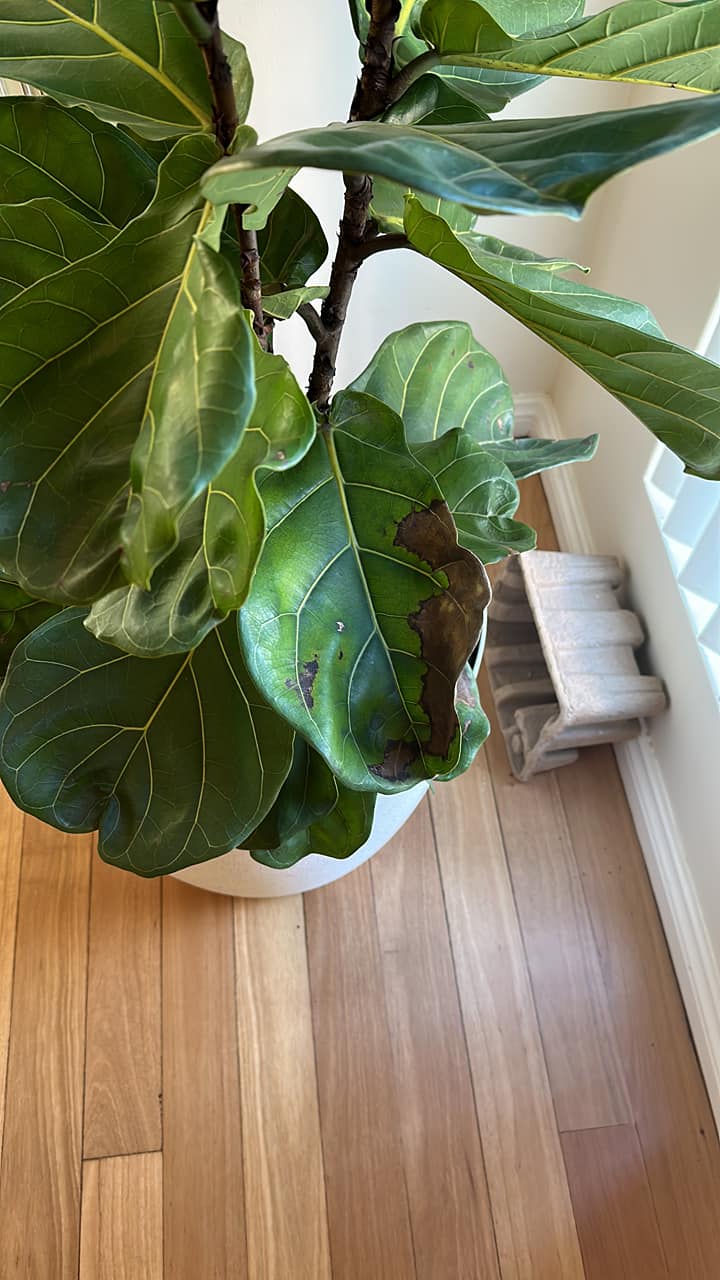
- Brown, crispy spots from direct sun.
- Plant leaning toward a light source.
How to Fix It
- Choose the right spot: Place your plant near an east, west, or north-facing window.
- Filter direct sun: Use sheer curtains for south-facing windows to prevent burning.
- Rotate regularly: Turn your plant every few weeks for even light exposure.
- Use grow lights: In darker regions like Seattle, a grow light can prevent leaf drop during winter.
Pro Tip: Aim for 200-400 foot-candles of light. A light meter helps you get it just right.
4. Environmental Stress: Not Keeping Your Plant Cozy
American homes can be tough on tropical plants. My fiddle leaf fig dropped almost all of its leaves when I placed it near a cold window in winter. Temperature swings, drafts, or low humidity can stress your plant, causing leaves to fall.
Why It Happens
Fiddle leaf figs prefer stable conditions: 65-75°F (18-24°C) and 40-60% humidity. Sudden changes, like drafts or moving the plant, can trigger leaf drop.
Signs of Environmental Stress
- Leaves dropping after moving the plant.
- Leaf loss near vents, heaters, or drafty windows.
- Wilting or curling leaves.
How to Fix It
- Keep your plant away from drafts, heaters, or AC vents. Mine does best near a bookshelf, away from my front door.
- Use a humidifier or a pebble tray with water to boost humidity. This is crucial in dry states like Nevada.
- If you must relocate your plant, do it gradually to minimize shock. Avoid sudden moves.
Pro Tip: Use a hygrometer to monitor humidity. It’s a small investment for a happy plant.
5. Nutrient Deficiency: Starving Your Fiddle Leaf Fig
Your fiddle leaf fig needs nutrients to stay strong. I didn’t realize this until my plant started dropping leaves despite proper watering. A lack of nutrients, especially nitrogen, potassium, and phosphorus, can weaken your plant, leading to leaf loss.
Why It Happens
Indoor plants deplete soil nutrients over time. Without regular feeding, your fiddle leaf fig struggles to support its large leaves, causing them to drop.
Signs of Nutrient Deficiency
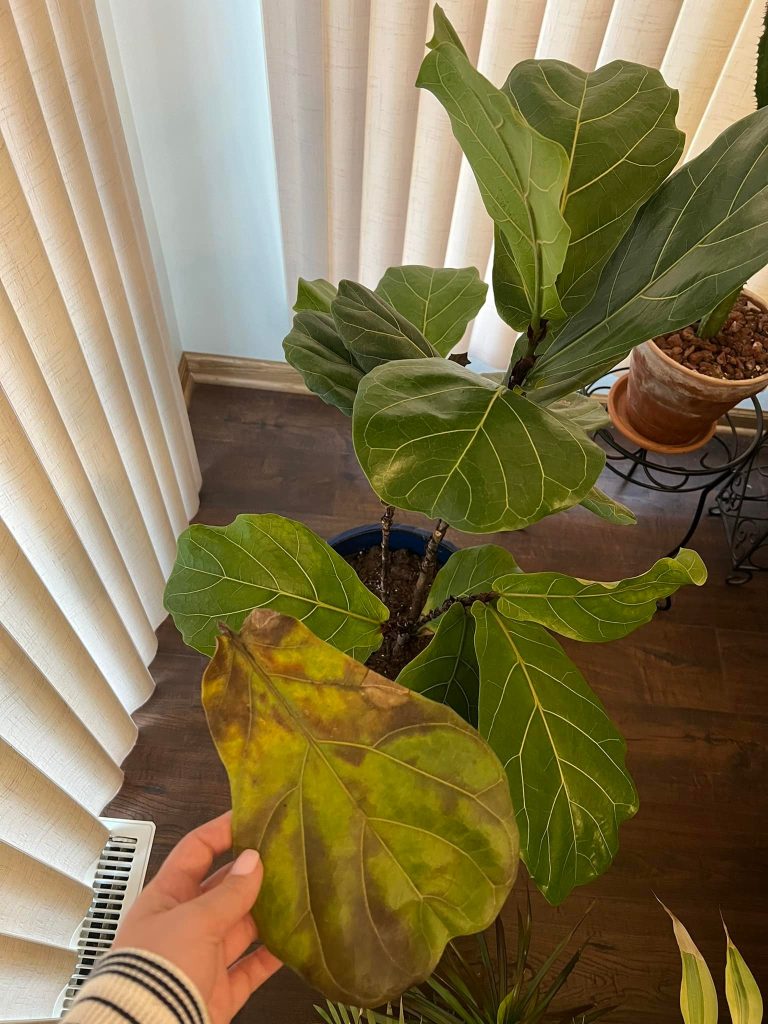
- Pale or yellow leaves before dropping.
- Slow growth or small new leaves.
- Weak stems.
How to Fix It
- Fertilize regularly with a balanced, water-soluble fertilizer like 3-1-2 NPK. I fertilize monthly during spring and summer.
- Don’t overdo it, as too much fertilizer can burn roots. Follow the package instructions.
- Repot every 2-3 Years. Fresh soil provides nutrients for better growth.
Pro Tip: Skip fertilizing in fall and winter when growth slows. It’s like giving your plant a rest.
6. Pests or Diseases: Unwanted Intruders
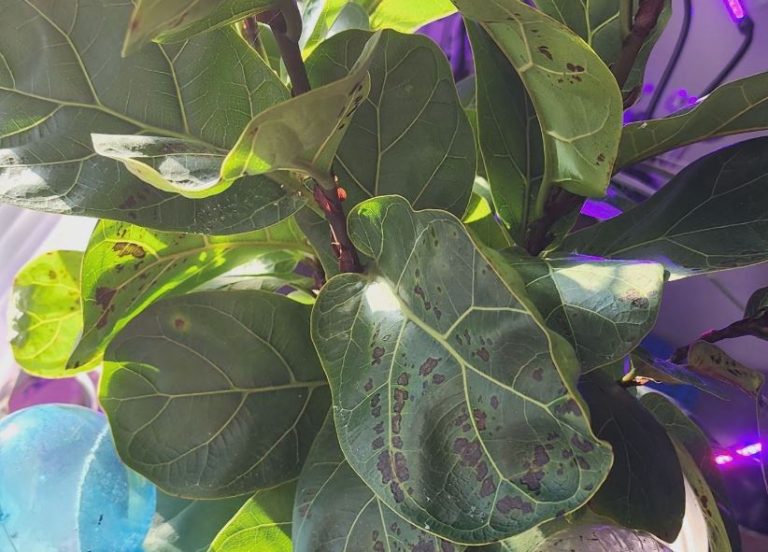
Pests and diseases can wreak havoc. I once found tiny webs on my fiddle leaf fig and nearly cried. Spider mites were causing leaves to drop. Infections like fungal leaf spot can also lead to leaf loss.
Why It Happens
Pests like spider mites, mealybugs, or scale feed on leaf sap. Being the major lifeline, the plant gets stressed. Fungal or bacterial diseases can develop in overly wet conditions, causing leaves to fall.
Signs of Pests or Diseases
- Tiny webs (spider mites).
- White, cottony spots (mealybugs).
- Sticky residue or small bumps (scale).
- Yellow or brown spots before leaves drop.
How to Fix It
- Regularly check leaves and stems for pests. You can use a magnifying glass to spot tiny bugs.
- Wipe leaves with a damp cloth or use neem oil to treat pests. I spray neem oil every few days until pests are gone.
- Keep your fig away from other plants to prevent spreading pests or diseases.
- Remove affected leaves and improve air circulation. Consult your local extension service for fungicide advice.
Pro Tip: Quarantine new plants for a few weeks to avoid introducing pests to your fiddle leaf fig.
7. Shock from Repotting or Moving: A Stressful Transition
Moving or repotting your fiddle leaf fig can cause it to drop leaves. I repotted mine too quickly, and it shed leaves like it was autumn. Sudden changes shock the plant, leading to leaf loss.
Why It Happens
Fiddle leaf figs are sensitive to change. Repotting or moving disrupts their roots or environment, causing stress.
Signs of Shock
- Leaves dropping shortly after repotting or moving.
- Healthy leaves falling without yellowing.
- Slow recovery after a change.
How to Fix It
- Repot only when necessary (every 1-2 years). Use a pot 2-3 inches larger with drainage holes.
- If relocating your plant, pre-expose it to the new environment for a few hours over days to adjust to the new light or temperature.
- Water lightly after repotting and avoid fertilizing for a month.
Pro Tip: Repot in spring when your plant is actively growing. It recovers faster.
Extra Care Tips Based on Your Geolocation
Fiddle leaf figs are popular across the U.S., but care varies by region. Here’s how to adapt to your climate:
- Northeast (e.g., New York, Boston): Dry winter air from heating can cause leaf drop. Use a humidifier and avoid cold drafts.
- South (e.g., Florida, Texas): High humidity is great, but watch for overwatering. Ensure good drainage and air circulation.
- West Coast (e.g., California, Washington): Bright, indirect light is easy to find, but coastal fog can dim winter light. Use a grow light if needed.
- Midwest (e.g., Chicago, Minneapolis): Temperature swings are common. Keep your plant in a stable spot away from heaters or AC units.
- Southwest (e.g., Arizona, Nevada): Low humidity can stress your fig. Use a humidifier or pebble tray.
FAQs
Q: Why is my fiddle leaf fig dropping leaves suddenly?
A: Sudden leaf drop is often due to shock from moving, overwatering, or environmental stress. Check water, light, and location.
Q: Can dropped leaves grow back?
A: Yes, with proper care, your plant can grow new leaves. Focus on fixing the underlying issue.
Q: Should I remove dropped leaves?
A: Clean up fallen leaves to prevent pests or disease. Trim yellow leaves with clean scissors.
Q: Is my fiddle leaf fig dying if it’s dropping leaves?
A: Not necessarily. Leaf drop is a stress response, but your plant can recover with proper care.
Q: Can I use tap water for my fiddle leaf fig?
A: Tap water is usually fine, but if it’s high in chlorine, let it sit for 24 hours or use filtered water.
Q: How do I know if my plant is getting enough light?
A: If new leaves are growing and existing ones are green, your light is likely sufficient. Use a light meter for accuracy.
Suggested For You:
Fiddle Leaf Fig Leaves Curling? 8 Easy Fixes to Save Your Plant
Brown Spots on Fiddle Fig Leaves: Identification and Fixes
7 Reasons: Why Are My Fiddle Leaf Fig Leaves Turning Yellow?
Fiddle Leaf Fig Cultivation: Your Ultimate Guide to Growing This Stunning Houseplant
Black Spots on Fiddle Leaf Fig Leaves: Causes, Fixes, and Prevention
Fiddle Leaf Fig Root Rot: Saving Your Plant From The Silent Killer
Conclusion
Leaf drop on your fiddle leaf fig can feel like a crisis, but it’s often fixable. Whether it’s overwatering, lighting issues, or pests, pinpointing the cause is the first step. With the right care, your fiddle leaf fig can thrive for years, adding beauty and greenery to your home.

Tim M Dave is a gardening expert with a passion for houseplants, particularly cacti and succulents. With a degree in plant biology from the University of California, Berkeley, he has vast experience in gardening. Over the years, he has cultivated a vast collection of desert plants and learned a great deal about how to grow and care for these unique companions.