Elephant Bush (Portulacaria afra): Cultivation, Care and Common Problems
I have kept a massive Elephant Bush (Portulacaria afra) on my balcony for over eight years. I can tell you this South African native is one of the most forgiving, beautiful, and versatile succulents you can own.
Known by many names, including Elephant Food, Dwarf Jade, or Spekboom, this plant has gained massive popularity over the last decade, and for good reason. My original cutting came from a friend in 2017. Today it’s a 5-foot bonsai-style tree in a 24-inch pot.
Let’s understand a little more about this succulent, learn how to grow and care for it, and find solutions to some of its common problems.
Brief History and Key Features
The name “Portulacaria” comes from the Latin portula (little door) and the related genus Portulaca, while “afra” simply means “from Africa.”
Elephant Bush has been part of South African ecosystems for millions of years. Local legend says its name comes from the fact that elephants (and black rhinos, kudus, and even tortoises) love eating the soft, juicy leaves — hence “Elephant Food.”
Key Features at a Glance
| Feature | Details |
| Scientific name | Portulacaria afra |
| Common names | Elephant Bush, Spekboom, Elephant Food, Dwarf Jade |
| USDA Hardiness Zones | 9–11 (can survive brief dips to 25 °F / -4 °C with protection) |
| Mature size (outdoors) | 8–15 ft tall × 4–10 ft wide (2.5–4.5 m × 1.2–3 m) |
| Mature size (indoors) | Usually kept 1–6 ft (30 cm–1.8 m) depending on pot and pruning |
| Growth rate | Moderate to fast (12–24 inches per year in optimal conditions) |
| Lifespan | 50–200+ years (specimens over 100 years old exist in South Africa) |
| Sun exposure | Full sun to partial shade (4–8+ hours direct sun ideal) |
| Watering | Drought tolerant – water thoroughly, then let soil dry completely |
| Soil | Very well-draining cactus/succulent mix or sandy loam |
| Toxicity | Non-toxic to humans, dogs, cats, and horses (ASPCA & Poison Control) |
| Propagation | Extremely easy from stem cuttings or leaves |
Appearance and Popular Varieties
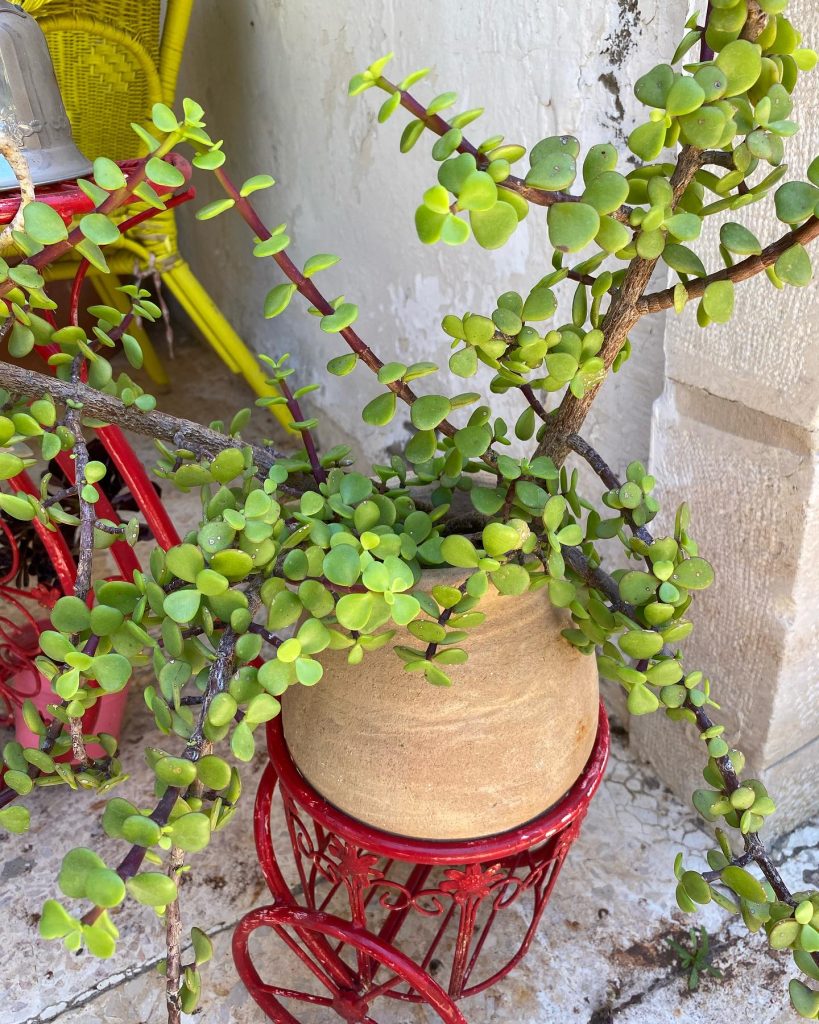
The classic Portulacaria afra has bright apple-green, obovate (inverted egg-shaped) leaves about ½–¾ inch long on reddish-brown stems. New growth is often bright lime green, aging to deeper green.
Popular cultivars and forms:
- Portulacaria afra ‘Variegata’ (Rainbow Bush) – creamy white and pink variegation
- Portulacaria afra ‘Aurea’ – chartreuse/yellow new growth
- Portulacaria afra ‘Prostrata’ – low trailing form perfect for hanging baskets
- Portulacaria afra ‘Mediopicta’ (Midstripe Rainbow) – green leaves with white center stripe
- Portulacaria afra ‘Cascade’ or ‘Pendula’ – weeping habit
- Portulacaria afra macrophylla – larger leaves, slower growth
- Portulacaria afra ‘Foliis Variegatis’ – another variegated form with more pink flushing
- Mini Jade Bonsai – heavily pruned specimens that look centuries old
In strong light, the stems turn mahogany-red, creating gorgeous contrast. In winter or stress, many cultivars blush red or purple on leaf margins.
Toxicity and Pet Safety
Officially listed as non-toxic to cats, dogs, and humans by ASPCA, Poison Control, and numerous veterinary sources. Many cat owners report their cats nibbling leaves with no ill effects (though it may cause mild vomiting if eaten in huge quantities, simply from stomach irritation).
Flowering and Fruit
In late winter to early spring, mature plants produce tiny pink star-shaped flowers in dense clusters. They are not showy but loved by bees. In South Africa, tiny peach-like fruits follow.
Care Requirements – How to Grow
Elephant bush is pretty easy to grow once you have mastered its care requirements. Here is what makes this plant thrive:
Ideal Light and Temperature
I learned the hard way that light is the single biggest factor in keeping an Elephant Bush happy. This plant prefers full sun (6–8+ hours direct). This helps in creating compact growth, red stems, and maximum flowering.
Growing Elephant bush in low light can result in leggy, pale, stretched stems (etiolation) and eventual decline and leaf drop. So, outdoors in zones 9–11, plant in full morning sun with afternoon shade in the hottest climates.
Indoors, a south or west window is essential. I supplement with a 6500K grow light in winter, and my plant never stops growing.
Temperature tolerance:
- Ideal: 65–85 °F (18–29 °C)
- Minimum: 25–30 °F (-4 to -1 °C) for short periods if completely dry
- Avoid frost — leaves turn black and mushy within hours below 28 °F
Watering and Soil Requirements
Elephant Bush is a classic “soak and dry” succulent. Water only when the soil is bone-dry down to 3–4 inches (test with a wooden chopstick or moisture meter). In summer on my hot balcony, that can be every 7–10 days. In winter indoors, sometimes once every 5–6 weeks.
Overwatering symptoms: yellow, translucent, mushy leaves that fall off easily.
Underwatering symptoms: wrinkled, thin, drooping leaves (but the plant bounces back amazingly fast once watered).
Best soil mix I’ve ever used:
50 % pumice or perlite
30 % cactus soil
20 % coarse sand or chicken grit
A handful of worm castings for slow-release nutrients
Fertilizing Schedule
Elephant bush grows perfectly fine without fertilizer. If you want faster growth or recovery after heavy pruning, fertilize during the growing season (April–September). Use half-strength balanced liquid fertilizer such as 10-10-10 or 5-5-5 once a month.
I use a diluted seaweed extract every 6 weeks in summer, and my variegated ones stay bright and colorful.
Pruning and Shaping (Including Bonsai)
This is where the plant really shines. Portulacaria afra back-buds pretty well on old wood. You can:
- Trim lightly anytime for bushiness
- Hard-prune in early spring — I once cut mine back to 6-inch stumps and it was fuller than ever in 9 months
- Create bonsai, topiary, standards, or hedges
Caution: Wear gloves as the sap can irritate sensitive skin.
Propagation – How to Turn One Elephant Bush into a Hundred
If there’s one thing that makes Portulacaria afra legendary among plant people, it’s how ridiculously easy it is to propagate. I’ve taken a single 4-foot mother plant and produced more than 100 new plants in one season — all from cuttings I would have thrown away anyway.
Here’s every method that actually works, ranked from fastest and most reliable to “fun experiment when you’re bored.”
Stem Cuttings (98–100 % success rate)
This is the way 99 % of all commercial growers and serious collectors do it.
Step-by-step:
- Choose your cutting. Any healthy stem works, but 4–10 inches (10–25 cm) with at least 3–4 leaf pairs is ideal. Thicker, woodier stems root slightly slower but give you an instant mini-tree look.
- Make a clean cut. Use sharp, sterilized pruners or a craft knife. Cut just below a node if possible (the little bump where leaves emerge).
- Strip the lower leaves. Remove the bottom 2–4 pairs of leaves so you have at least 1½–2 inches of bare stem to go into the soil. Do NOT leave any leaves that would be buried — they will rot.
- Let it callous (very important!). Place the cuttings in a dry, shaded spot for 2–10 days. In warm, dry weather I wait only 48 hours; in humid or cool conditions I wait a full week. You want a dry scab over the cut end.
- Stick the calloused end about 1–2 inches deep into dry or barely moist, extremely well-draining soil (pure pumice, 50/50 cactus mix + perlite, or even pure coarse sand works). Do NOT water yet.
- Place in bright indirect light or morning sun. For the first 2–4 weeks, mist the soil very lightly once a week if it looks completely powder-dry, but honestly most people succeed by doing literally nothing. After 2–5 weeks you’ll feel resistance when you tug gently — roots!
- Provide first real watering. Once rooted, give it a proper soak and treat it like an established plant.
Pro tips from my eight years of doing this obsessively:
- In summer heat (above 80 °F / 27 °C) I often skip callousing entirely and stick fresh cuttings straight into dry soil — they root in 8–12 days with zero rot.
- Variegated cultivars root just as easily as the green ones, but give them slightly brighter light so they don’t fade.
- You can root 50 cuttings in a single 10-inch community pot and separate them later — saves space.
Water Propagation (Yes, it works — surprisingly well)
I used to think succulents and water propagation didn’t mix, but Elephant Bush laughs at that rule.
Procedure
Take the same stem cuttings, remove lower leaves, and suspend them in a jar so only the bottom ½ inch touches water (I use plastic bottles with holes poked in the lid or those little propagation stations). Change water every 4–5 days.
Roots appear in 7–18 days — often faster than in soil. When roots are 2–3 inches long, plant into dry soil and wait a week before watering.
Bonus: You get to watch the roots grow. Kids (and plant nerds) love it.
Downside: The transition from water to soil can shock some cuttings. I lose maybe 10 % this way, versus almost 0 % with the dry-soil method.
Leaf Propagation (Slow but ridiculously productive)
Every single leaf can make a new plant. Yes, really.
How to do it:
- Gently twist or cut leaves off cleanly — never tear.
- Lay them flat or slightly buried (just the cut end) on dry cactus mix.
- Put in bright indirect light. Mist the soil surface every 10–14 days if it’s bone-dry.
- After 4–10 weeks you’ll see tiny pink roots and then a miniature plantlet forming at the base.
One mature plant can drop or provide hundreds of leaves. I once filled a 20 × 30-inch tray with leaves and ended up with almost 200 plantlets. It takes 4–8 months to get something pot-sized, but it’s basically free plants forever.
Division (Separating Offsets)
Mature outdoor specimens often produce basal shoots or suckers. Just dig around the base, cut the connecting root with a clean blade, and pot up the new clump instantly — no callousing needed because they already have roots.
Common Problems and Solutions
Even though Elephant Bush is one of the toughest succulents I’ve ever grown, it’s not completely bulletproof. Over the years I’ve seen (and caused) almost every issue possible, so here are the most frequent problems people run into and exactly what to do about them.
1. Leggy, stretched-out growth (etiolation)
This is by far the number-one complaint I hear. If your plant starts reaching desperately toward the window with long, weak stems and wide spaces between leaves, it’s begging for more light. Indoors, this happens when people keep it in east or north windows or too far from the glass.
The fix is simple but requires courage: move it to the brightest spot you have (ideally a south or west window) and then prune it back hard—sometimes all the way to the main trunk. It will look brutal for a few weeks, but within a month or two you’ll have a compact, bushy plant again.
2. Sudden leaf drop
Perfectly healthy-looking Elephant Bushes can drop dozens of leaves overnight. In most cases, it’s caused by one of three things: overwatering, a dramatic change in temperature or light (like bringing it inside for winter), or moving the pot to a completely different location.
The plant is just sulking. Stop watering, give it stable conditions, and it almost always recovers on its own. Older leaves near the base naturally yellow and fall off with age—that’s normal and nothing to worry about.
3. Black, mushy stems or leaves
This is the only problem that can actually kill the plant quickly. If you see soft black spots at the base or the whole stem turns to mush, root rot has set in. It almost always happens because the soil stayed wet for too long (heavy potting mix, no drainage holes, or watering too often before the soil dries out completely.
Act fast: unpot the plant, cut away every black or brown section with a clean blade until you see only white, firm tissue. Let the cuttings dry for a few days, and restart them in fresh, gritty soil. I’ve saved plants that were 90 % rotten this way.
4. Wrinkled, shrivelled leaves
People often panic and think the plant is dying, but severe underwatering is actually easier to fix than overwatering. The leaves look thin and papery, sometimes curled. Give it a good, deep drink and you’ll usually see it perk up within 24–48 hours.
Just don’t make the mistake of keeping it constantly wet afterward—that swings the pendulum straight to root rot.
5. Mealybugs and spider mites
Because the leaves are soft and juicy, pests love Elephant Bush. Mealybugs look like tiny bits of cotton in the leaf axils. Spider mites create fine webbing and stippling on the tops of leaves. Catch them early, and a strong spray of water knocks most of them off.
For stubborn infestations, I dip a cotton swab in 70 % isopropyl alcohol and dab each bug. Use a systemic insecticide if the plant is large. Do it outside—trust me.
6. Corky brown scars on leaves (edema)
These raised, rust-colored bumps appear when the plant takes up water faster than it can transpire. This usually happens after a long dry spell followed by heavy watering. It’s cosmetic only and doesn’t hurt the plant, but it’s a sign your watering rhythm is erratic.
To solve this, aim for more consistent “soak and dry” cycles instead of letting it get bone-dry for weeks and then drowning it.
7. Variegated varieties turning solid green
If you have ‘Variegata’, ‘Mediopicta’, or Rainbow Bush and notice completely green shoots popping up, that’s reversion. The plant is trying to outgrow its slower, less-efficient variegated parts.
To fix this, you have to be a bit ruthless. Cut those all-green branches all the way back to the trunk as soon as you spot them. If you leave them, they’ll eventually take over the whole plant, and you’ll lose the pretty coloration.
The beautiful thing about Portulacaria afra is that almost every problem (except advanced rot) is completely reversible. I’ve brought back plants that looked like bare brown sticks, and six months later, they were fuller than ever. That resilience is exactly why it remains one of my all-time favorite succulents.
Frequently Asked Questions (FAQ)
Here are quick answers to the frequently asked questions about Portulacaria afra.
Q: Is Elephant Bush the same as Jade Plant (Crassula ovata)?
A: No. They look similar but are completely different species. Jade has thicker, rounder leaves and is toxic if ingested in large amounts. Elephant Bush is safer and grows faster.
Q: Why is my Elephant Bush dropping leaves like crazy?
A: 90 % of the time it’s either overwatering or a sudden change in light/temperature. Let it dry out completely and stabilize conditions.
Q: Can Elephant bush live indoors year-round?
A: Absolutely — just give it the brightest window possible or supplemental grow light.
Q: How big will it get indoors?
A: Depends entirely on pot size and pruning. I’ve seen 8-foot indoor specimens, but most people keep them 2–4 ft.
Q: Does Elephant food need dormancy?
A: No true dormancy. Growth slows in winter due to lower light, not temperature.
Q: My variegated one is turning all green — help!
A: Variegated cultivars often revert. Prune out any all-green stems completely as soon as you see them.
Q: Can I plant Elephant bush directly in the ground in zone 9a?
A: Yes, but provide frost protection (blanket or burlap) the first 1–2 winters until established.
Final thoughts
Elephant bush is more than a beauty in our gardens. One mature hectare of Spekboom can remove 4–15 tons of CO₂ per year — comparable to subtropical forest. Because of this, millions are being planted in the “Spekboom Thicket” restoration projects. You can actually buy carbon offsets tied to Spekboom planting!

Tim M Dave is a gardening expert with a passion for houseplants, particularly cacti and succulents. With a degree in plant biology from the University of California, Berkeley, he has vast experience in gardening. Over the years, he has cultivated a vast collection of desert plants and learned a great deal about how to grow and care for these unique companions.