8 Common ZZ Plant Problems (And Their Troubleshooting Tips)
The ZZ plant, or Zamioculcas zamiifolia, is a superstar in the houseplant world. Its glossy, dark green leaves and near-indestructible nature make it a favorite for beginners and seasoned plant parents alike.
I’ve had my ZZ plant for years, and it’s been a low-maintenance companion that adds a touch of tropical elegance to my living room.
But even this tough plant can face issues if its needs aren’t met. In this article, I’ll dive into the most common ZZ plant problems and offer practical solutions to keep your Zanzibar Gem thriving. Before we dive into the problems, let’s talk about why ZZ plants are such a hit.
Native to East Africa, this drought-tolerant plant thrives in low light, low humidity, and even neglect. It’s perfect for busy American households, from bustling city apartments to suburban homes with less-than-ideal lighting.
The ZZ plant’s shiny, upright leaves and slow growth make it a stylish, low-effort addition to any space.
But even the hardiest plants can struggle if conditions aren’t right. Below, I’ll break down the most common ZZ plant problems, why they happen, and how to fix them. I’ll also share some personal experiences to help you avoid the mistakes I made when I first brought my ZZ home.
Common ZZ Plant Problems
Here are common ZZ plant problems and their solutions.
1. Yellowing Leaves – The overwatering trap
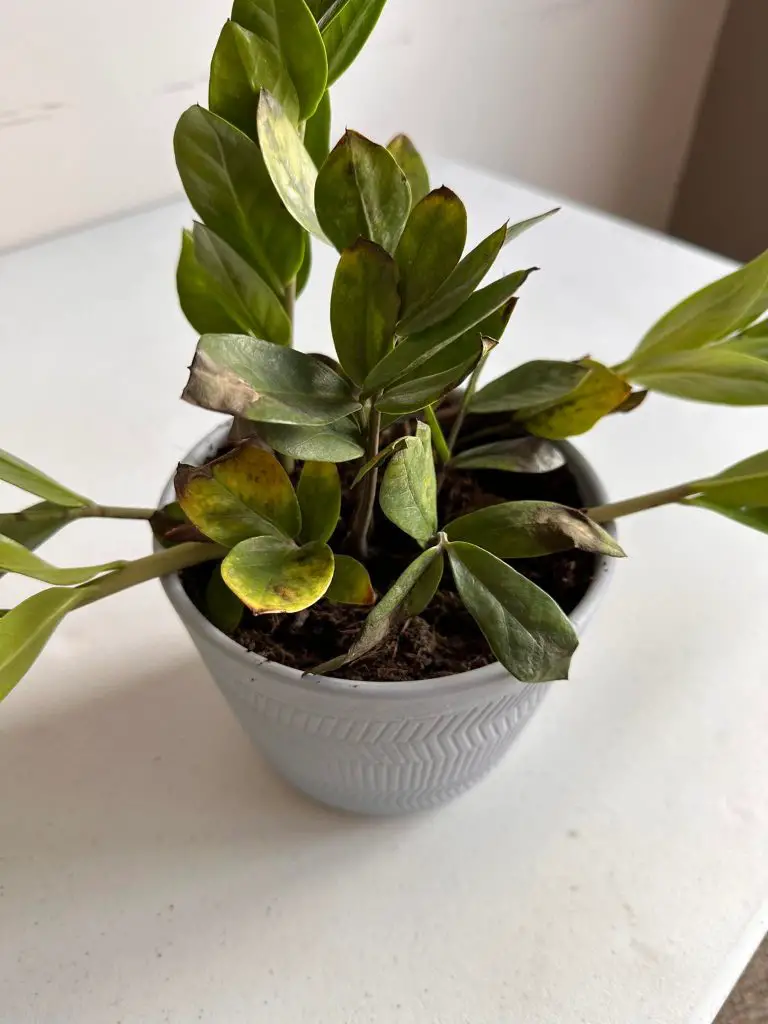
Yellow leaves are the most common issue ZZ plant owners face. I learned this the hard way when I overwatered my ZZ plant, thinking it needed frequent drinks like my other houseplants. The lower leaves started turning yellow, and some even dropped.
Overwatering is the primary culprit, but insufficient light or acclimation stress can also cause this.
Why it happens
ZZ plants store water in their rhizomes, making them drought-tolerant. Too much water leads to soggy roots, which can cause root rot. This shows up as yellowing leaves, especially on older foliage. Bacteria and fungi that cause rot thrive in excessively damp soil.
Newly purchased plants may also yellow as they adjust to your home’s conditions, a process that can take 4-6 weeks. Too little light can weaken the plant, leading to pale or yellow leaves as well.
How to fix it
- Check the soil: Stick your finger an inch into the soil. If it’s wet, hold off watering. I use a soil moisture meter to be sure.
- Adjust watering: Water only when the top inch of soil is dry, typically every 2-3 weeks. In winter, reduce it to once a month. I now water my ZZ every three weeks in summer, and it’s thriving.
- Improve drainage: Ensure your pot has drainage holes. I switched to a terracotta pot, which dries out faster, preventing root rot.
- Increase light: Move your ZZ to a spot with bright, indirect light. A north or east-facing window works well. If you’re short on natural light, consider a grow light.
Prevention Tips
- Use a well-draining potting mix, like one designed for succulents.
- Avoid tap water with high chlorine or fluoride content, which can cause yellowing. I use filtered water for my ZZ.
- Be patient with new plants. Give them time to acclimate without overwatering.
Helpful: Learn more about yellow leaves on ZZ plants.
2. Drooping stems – A Sign of thirst or too much love
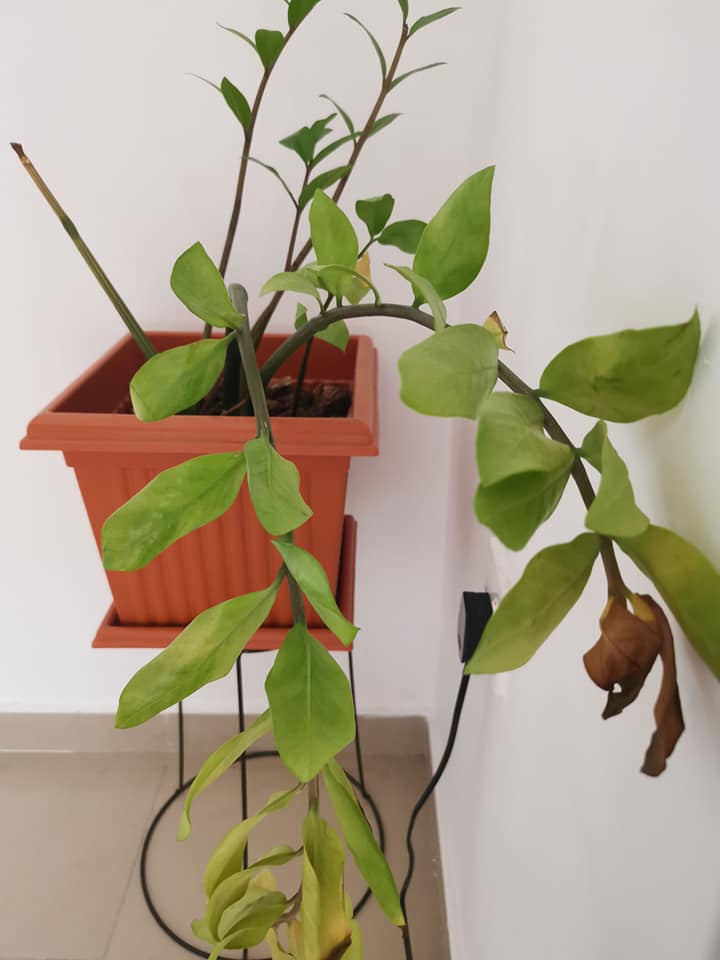
Drooping stems can make your ZZ plant look sad and wilted. I noticed this when I left my ZZ in a dark corner and forgot to water it for a month. But drooping can also happen from overwatering, which confused me at first.
Why it happens
- Underwatering: ZZ plants are drought-tolerant, but prolonged dryness causes stems to droop as the plant conserves water.
- Overwatering: Excess moisture weakens and attracts fungi that cause root rot. Damaged roots stop the plant from taking up water and nutrients. This weakens stems, making them unable to support the plant’s weight.
- Low light: Insufficient light causes stems to stretch and weaken, leading to drooping.
- Temperature stress: Drafts or temperatures below 45°F can shock the plant, causing stems to sag.
How to fix it
- Check soil moisture. If dry, give the plant a deep soak until water drains out. If wet, let it dry out completely and inspect for root rot. I once had to trim mushy roots and repot my ZZ in fresh soil to save it.
- Move the plant to a spot with bright, indirect light. I placed mine near an east-facing window, and the stems perked up within a week.
- Keep your ZZ away from cold drafts or air vents. Ideal temperatures are 60-80°F.
- For severe drooping, tie stems to a bamboo stake for support while they recover.
Prevention Tips
- Water only when the soil is dry 3 inches down.
- Rotate the pot weekly to ensure even light exposure.
- Keep your ZZ in a stable, warm environment.
Helpful: Read more on why ZZ plants droop and how to fix it.
3. Brown leaf tips – A Cry for better conditions
Brown, crispy leaf tips can make your ZZ plant look less vibrant. I noticed this on my plant during a dry winter when my heater was running nonstop.
Why It Happens
- Low humidity: ZZ plants tolerate average household humidity, but very low humidity can cause browning.
- Overwatering: Excess water leads to root rot, which shows up as brown tips on new growth.
- Tap water issues: Chlorine or fluoride in tap water can cause browning. I switched to rainwater after noticing this.
- Excess light or heat: Direct sunlight or proximity to heat sources like radiators can scorch leaves.
How to fix it
- Group your ZZ with other plants to increase humidity, or place it on a pebble tray with water. I avoid misting, as it can lead to water pooling and rot.
- Ensure the soil dries out between waterings. Use filtered or rainwater to avoid chemical buildup.
- Move the plant away from direct sun or heat sources. My ZZ now sits 5 feet from a sunny window, and the browning stopped.
- Use clean scissors to snip the brown tips, cutting at an angle to maintain the leaf’s shape.
Prevention tips
- Use a humidifier in dry climates, especially during winter.
- Water with soft or distilled water.
- Keep your ZZ in bright, indirect light.
4. Stunted growth – When your ZZ stops growing
If your Zanzibar Gem plant isn’t producing new shoots, it might be stuck in a growth rut. My ZZ went months without new growth when I kept it in a dim hallway.
Why it happens
- Insufficient light: ZZ plants need bright, indirect light to grow. Low light slows or stops growth.
- Stress: Drafts, pests, or repotting shock can halt growth.
- Nutrient deficiency: Lack of fertilizer can limit new leaf production.
How to fix it
- Move your ZZ to a brighter spot or use a grow light. I added a small LED grow light, and new shoots appeared within two months.
- Inspect for pests like spider mites or mealybugs. I once found tiny webs under my ZZ’s leaves and treated them with neem oil.
- Fertilize sparingly with a balanced liquid fertilizer diluted to 1/4 strength every 4-6 weeks during spring and summer. I fertilize my ZZ twice a season, and it’s enough.
Prevention tips
- Place your ZZ in a well-lit area, like near a north-facing window.
- Inspect regularly for pests and treat early.
- Avoid frequent repotting to minimize stress.
5. Root rot – The silent killer
Root rot is a serious issue that can kill your ZZ plant. I nearly lost mine when I left it in a pot without drainage holes, and the roots turned mushy and brown. Overwatering or poor drainage causes roots to sit in water, leading to rot.
Symptoms include yellow leaves, drooping stems, a foul odor, and mushy roots.
How to fix it
- Gently take your ZZ out of its pot and shake off the soil.
- Inspect roots. Healthy roots are firm and white. Trim black, mushy roots with clean pruners.
- Repot in a fresh, well-draining potting mix and a pot with drainage holes. I switched to a succulent potting mix for better aeration.
- Wait at least a week before watering again, and ensure the soil dries out completely.
Prevention tips
- Always use pots with drainage holes.
- Water infrequently, checking soil moisture first.
- Use a well-draining mix, like one for cacti or succulents.
Helpful: This detailed guide explains how to prevent root rot.
6. Leaf curling – A Sign of water stress
Curling leaves are a ZZ plant’s way of conserving water. It reduces the surface area for transpiration. I saw this when I overexposed my plant to direct sunlight. Leaves curled inward to reduce water loss. It can also happen when the plant is overwatered.
Why it happens
- Overwatering or underwatering: Both can stress the plant, causing leaves to curl.
- Low humidity: Dry air can trigger curling, especially in heated homes.
- Excess light: Direct sun increases water loss, prompting curling.
How to fix it
- Water when the top inch of soil is dry. I use a moisture meter to avoid guesswork.
- Move your ZZ to indirect light to reduce water loss.
- Place a pebble tray nearby or group with other plants to boost humidity.
Prevention tips
- Maintain consistent watering based on soil dryness.
- Keep your ZZ in bright, indirect light.
- Monitor humidity, especially in winter.
Helpful:This guide covers more ZZ plant leaf curling causes.
7. Pests – Unwanted guests on your ZZ
ZZ plants are resistant to pests, but they’re not immune. I once found spider mites on my ZZ, leaving tiny webs and spots on the leaves. Common zz Plant pests include spider mites, mealybugs, and aphids, often attracted to stressed or dusty plants.
Low humidity or poor air circulation can make your ZZ more vulnerable.
How to fix it
- Inspect regularly. Check under leaves for webs, spots, or sticky residue.
- Clean leaves. Wipe leaves with a damp cloth to remove dust and pests.
- Treat infestations. Use neem oil or insecticidal soap.
- Isolate the plant. Keep it away from other plants to prevent spreading.
Prevention tips
- Wipe leaves monthly to remove dust.
- Maintain good air circulation.
- Quarantine new plants before adding them to your collection.
8. Leggy growth – Stretching for light
Leggy, stretched stems make your ZZ look sparse. My ZZ got leggy when I left it in a dim corner for too long. Low light causes the plant to stretch toward light sources, resulting in long, weak stems. This scenario is common during cloudy winters or in homes with dim light.
How to fix it
- Move your ZZ to a brighter spot or add a grow light.
- Turn the pot weekly to promote even growth.
- Cut back stretched stems to encourage bushier growth. I propagated the cuttings to start new plants!
Prevention tips
- Place your ZZ in bright, indirect light from the start.
- Rotate regularly to avoid uneven growth.
FAQs
Here are quick answers to the frequently asked questions about ZZ plant problems:
Q: How often should I water my ZZ plant?
A: Water every 2-3 weeks in summer when the top inch of soil is dry. In winter, reduce it to once a month. Always check soil moisture first.
Q: Why is my ZZ plant not growing new leaves?
A: Insufficient light is the most likely cause. Move it to a brighter spot or use a grow light. Stress from drafts or pests can also halt growth.
Q: Is my ZZ plant toxic to pets?
A: Yes, ZZ plants are toxic to cats, dogs, and humans if ingested, causing irritation or discomfort. Keep them out of reach of pets and kids.
Q: Can I revive a ZZ plant with root rot?
A: Yes, if caught early. Trim affected roots, repot in fresh soil, and adjust watering habits. I saved mine by acting quickly.
Q: How do I propagate my ZZ plant?
A: You can propagate by division or leaf cuttings. For leaf cuttings, snip a leaf with a small stem, plant it in soil, and keep it moist in bright, indirect light. It takes months, but it works!
Final Thoughts
ZZ plants are forgiving, but they’re not invincible. By understanding their needs—bright, indirect light, infrequent watering, and well-draining soil—you can prevent most problems. My ZZ plant has been a resilient companion, surviving my early overwatering mistakes and thriving with minimal care.
With the tips above, you can troubleshoot yellow leaves, drooping stems, and other issues to keep your Zanzibar Gem looking its best.
For more plant care advice, check out these trusted resources:
- The Spruce
- Pennington
- Homes & Gardens
Have you faced any ZZ plant problems? Share your experiences in the comments below, and let’s keep our plants thriving together!

Tim M Dave is a gardening expert with a passion for houseplants, particularly cacti and succulents. With a degree in plant biology from the University of California, Berkeley, he has vast experience in gardening. Over the years, he has cultivated a vast collection of desert plants and learned a great deal about how to grow and care for these unique companions.