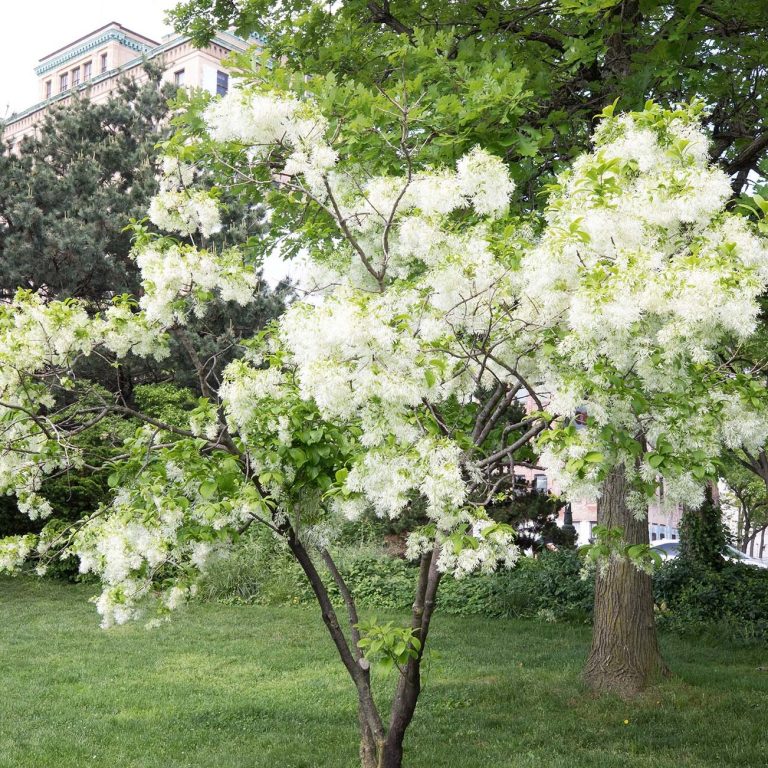
Understanding Black Locust (Robinia pseudoacacia): Identification, Growth Rate, Uses, Problems, and More
The Black Locust (Robinia pseudoacacia) is one of the most useful trees ever to grow on American soil and one of the most aggressively naturalized species on the planet. It builds the finest natural fence posts available. It produces honey of exceptional quality.
Its flowers are edible and exquisitely fragrant. Its wood outlasts almost every other American hardwood in ground contact. It fixes nitrogen and improves degraded soils. You will find it spreading relentlessly across roadsides, abandoned fields, forest edges, and embankments.
Whether you are a landowner, a beekeeper, a forager, a timber producer, a gardener, or simply a curious naturalist, this is the most complete reliable resource on Robinia pseudoacacia. It covers everything to know about the black locust trees.
| Feature | Detail |
| Scientific Name | Robinia pseudoacacia |
| Family | Fabaceae (Legume family) |
| Common Names | Black Locust, False Acacia, Yellow Locust, Post Locust |
| Native Range | Central Appalachians and Ozark Plateau; naturalized worldwide |
| Mature Height | 40–70 feet |
| Growth Rate | Very fast (3–5 feet/year in youth) |
| Bark | Deeply furrowed, rope-like texture |
| Thorns | Present on most wild trees; thornless cultivars available |
| Flowers | White, fragrant racemes; May–June |
| Edible Parts | Flowers only — all other parts toxic |
| Honey Value | Exceptional — “acacia honey” of European markets |
| Wood | Extremely hard and rot-resistant; 50–80+ years in ground |
| Nitrogen Fixation | 50–150 lbs per acre per year |
| Hardiness Zones | USDA Zones 3–8 |
| Invasive Potential | High outside native range — site deliberately |
What Is the Black Locust?
The Black Locust belongs to the family Fabaceae — the legume family — and to the tribe Robinieae, a group of nitrogen-fixing trees and shrubs native to the Americas. Its genus, Robinia, was named in honor of Jean Robin and his son Vespasien Robin.
These French royal herbalists and gardeners grew the species in Paris in the early seventeenth century — some of the first cultivated specimens outside North America.
The species name pseudoacacia is Latin for “false acacia” — a reference to the tree’s superficial resemblance to true acacias (Acacia spp.) of Africa and Australia, which share the compound leaves and thorny stems but are unrelated.
The confusion was common among early European botanists encountering North American flora for the first time.
Common names for this tree are numerous and regionally varied:
- Black Locust — the universal standard in North America; the origin of “black” is somewhat contested — possibly referring to dark inner bark, dark seed pods, or simply dark wood coloration
- False Acacia — the most common name in Europe, a direct translation of pseudoacacia; widely used in the UK, France (robinier faux-acacia), Germany (Robinie), and Eastern Europe
- Yellow Locust — used in parts of Appalachia, referencing the yellowish-green wood color
- White Locust — occasionally used, distinguishing it from the unrelated Honey Locust (Gleditsia triacanthos)
- Post Locust — an older regional name referencing the wood’s use for fence posts
- Acacia — used colloquially throughout Europe, where “acacia honey” invariably refers to Black Locust honey despite the botanical misnomer
The name “acacia honey” — ubiquitous in European grocery stores and specialty food markets — is one of the most commercially important botanical misnomers in the world.
When a European label says “acacia honey,” it means Black Locust honey, harvested from trees descended from introductions made in the seventeenth century. This honey is among the finest and most highly valued varietal honeys produced anywhere in the world.
Native Range and Natural Habitat
The Black Locust is native to a relatively restricted area of the eastern United States — specifically the central Appalachian Mountains and the Ozark Plateau, encompassing parts of Pennsylvania, Virginia, West Virginia, Kentucky, Tennessee, North Carolina, Georgia, Alabama, Missouri, Arkansas, and Oklahoma.
Through centuries of deliberate planting and aggressive natural spread, Black Locust now grows across virtually the entire North American continent and has naturalized extensively across Europe, Asia, South America, and parts of Africa — making it one of the most widely distributed trees in the world.
Within its native range, Black Locust grows on dry, rocky slopes and ridges, forest margins, disturbed areas, and stream banks on soils that are typically acidic, shallow, and nutrient-poor.
This tree is a pioneer species — one of the first woody plants to colonize bare, disturbed ground after logging, mining, fire, or agricultural abandonment.
Its ability to fix atmospheric nitrogen through symbiotic bacteria in root nodules (Mesorhizobium spp.) allows it to thrive on the nutrient-poor soils that exclude most other trees — and simultaneously to enrich those soils for subsequent plant communities.
Outside its native range, Black Locust colonizes roadsides, old fields, forest edges, power line rights-of-way, and disturbed embankments with remarkable energy.
In the northeastern United States, much of Europe, and parts of East Asia, it is considered an invasive or naturalizing species — spreading beyond managed areas and displacing native plant communities in some contexts.
Physical Characteristics
Size and Form
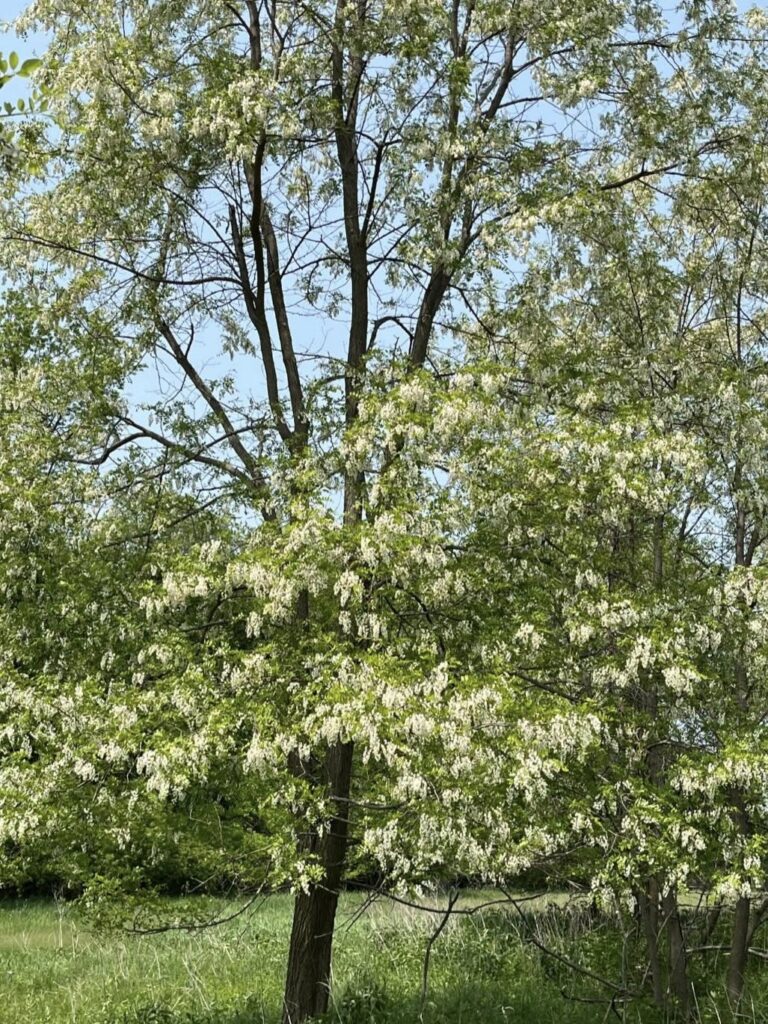
The Black Locust is a medium to large deciduous tree, typically reaching 40 to 70 feet (12–21 meters) in height under favorable conditions, with trunk diameters of 1 to 2 feet common in mature trees. In optimal conditions — deep, moist, fertile soils with full sun — it can reach 80 to 100 feet.
The crown is narrow and irregular, with an open, somewhat sparse branching pattern that admits considerable light to the interior and ground beneath.
The trunk is often twisted and deeply furrowed on older trees — not a graceful, architectural silhouette in the manner of oaks or elms, but a rugged, characterful one with genuine visual interest.
Young trees grow extremely rapidly — one of the fastest growth rates of any North American hardwood, adding 3 to 5 feet per year under good conditions.
This rapid growth is a primary reason for the tree’s success as a colonizer and a primary reason it is planted commercially for timber, biomass, and soil stabilization in regions far outside its native range.
Bark — Deeply Furrowed and Distinctive
The bark is one of the most recognizable features of the mature Black Locust. On young stems, it is smooth and greenish-gray. As the tree matures, it develops into a deeply and intricately furrowed pattern of interlacing ridges — thick, rough, and deeply grooved in a rope-like or cable-like texture that is quite unlike the bark of any other common North American tree.
The furrows run diagonally and intersect in patterns that landscape designers describe as “basket-weave” — a dramatic, textural bark that is ornamentally striking on older specimens, particularly in winter when foliage is absent.
The inner bark is yellowish-green — a feature occasionally noted in older botanical descriptions and sometimes used in traditional medicine, though the inner bark contains toxic compounds (discussed below).
Thorns
Most wild Black Locust trees bear pairs of stiff, sharp thorns at the base of each leaf — technically stipular thorns, modified from the stipules (small appendages) at the leaf base. They are ¼ to ½ inch long, white to pale gray, and persistent on older wood.
In dense stands and on vigorous young growth, these thorns make Black Locust nearly impenetrable — a quality that contributes to its value as a wildlife thicket plant and natural barrier, and a practical consideration when working among young trees.
Some cultivars have been selected for reduced or absent thorns, which are discussed in the cultivar section.
Leaves — Pinnately Compound and Distinctive
The leaves are pinnately compound — each leaf divided into 7 to 21 oval leaflets, each approximately 1 to 1.5 inches (2.5–4 cm) long, arranged in opposite pairs along the central rachis.
The overall leaf is 6 to 12 inches long, creating a light-textured, fine-grained canopy that casts dappled shade rather than the deep shade of large-leaved trees.
In autumn, the leaves turn a clean, pale yellow — not dramatic, but pleasant and airy. Leaf drop occurs relatively early in the autumn season.
The leaflets are sensitive to light — they fold at night and in overcast conditions, a movement called nyctinasty that is common in the legume family and can be observed in real time in appropriate conditions.
The Flowers — Fragrant, Spectacular, and Ecologically Critical
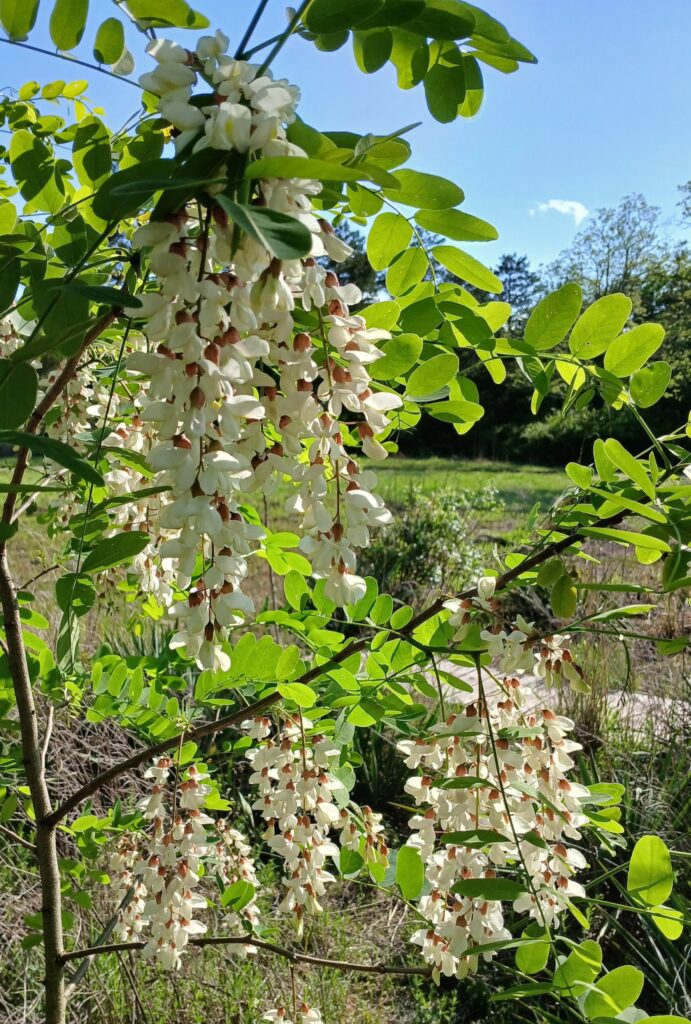
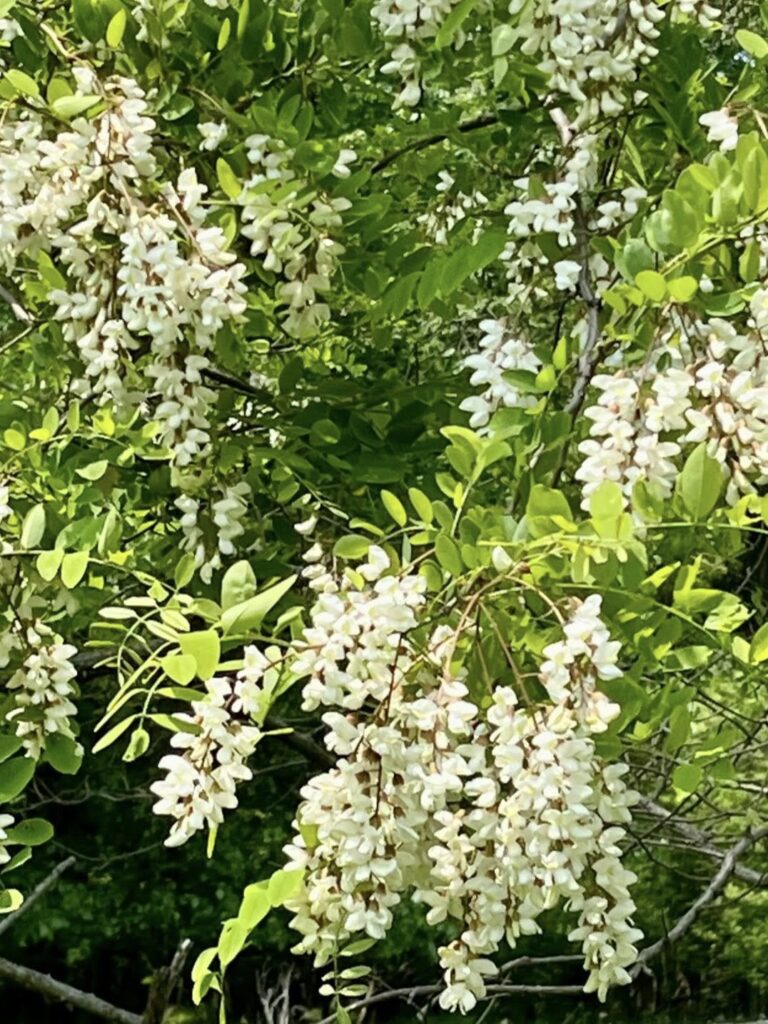
The flowers are among the most celebrated features of the Black Locust — and with good reason. In late May through June across most of the range, the tree produces hanging clusters (racemes) of white, pea-shaped flowers that hang in dense, 4 to 8-inch pendulous sprays from the branches.
Each individual flower is approximately ¾ inch (2 cm) — the characteristic butterfly shape of legume flowers, with a broad upper petal (the standard), two lateral petals (wings), and two lower petals fused into a keel.
The flowers are pure white with a single yellow spot on the upper petal — sometimes described as having the appearance of refined white pea blossoms.
The fragrance is extraordinary. Dense, sweet, vanilla-like, and carrying remarkable distance on warm still air — the scent of Black Locust flowers in full bloom is one of the finest floral fragrances produced by any North American tree.
I have driven past a Black Locust grove in bloom with the car window open and been stopped by the scent before I even identified the trees — that is how powerful and beautiful it is.
Bloom period is 10 to 14 days — relatively brief, but intensely fragrant and visually dramatic during that window.
The Wood: Extraordinary Durability and Versatility
The wood of the Black Locust is one of the most remarkable produced by any North American tree — and one of the most underappreciated.
Hardness and Durability
Black Locust produces some of the hardest, densest, and most decay-resistant wood in North America. Key characteristics include:
- Janka hardness of 1,700 lbf — harder than white oak (1,360 lbf), hickory (1,820 lbf), and most commonly used domestic hardwoods
- Natural decay resistance — the heartwood contains flavonoid compounds (primarily robinetin and acacetin) that make it genuinely rot-resistant in contact with soil and moisture; research has documented in-ground service life of 50 to 80 years or more for untreated Black Locust posts — comparable to pressure-treated lumber
- High density and strength — among the strongest woods by weight of any North American species
- Attractive appearance — the heartwood is pale yellowish-brown to golden-green, often with attractive grain patterns; it takes finish well and polishes to a fine surface
Historical and Traditional Uses
Black Locust has been one of the most utilized hardwoods in American history, prized for specific applications where durability and strength are paramount:
- Fence posts — the tree’s most traditional use; untreated Black Locust fence posts regularly outlast pressure-treated pine by decades; a defining reason the tree was planted so extensively across the eastern United States in the eighteenth and nineteenth centuries
- Wooden treenails (trunnels) — wooden fasteners used in ship construction; Black Locust was the preferred species for connecting wooden ship timbers due to its strength and resistance to rot in saltwater
- Railroad ties — widely used before treated softwoods became standard
- Mine timbers — used in Appalachian coal mining for shaft supports
- Agricultural tool handles — axe handles, hoe handles, and similar
- Wooden pegs and wooden wheels
- Fuel wood — despite its hardness, Black Locust produces exceptional firewood with a BTU rating comparable to coal on a per-cord basis; it is among the highest-energy firewood species available in North America
Modern Uses and Sustainable Timber
In Europe — particularly Hungary, Romania, and Germany — Black Locust has been managed as a commercial timber species since its introduction in the seventeenth century. Hungary alone has approximately 23% of its forested land under Black Locust cultivation — one of the most significant managed Black Locust timber economies in the world.
Modern applications include:
- Outdoor decking and furniture — highly sought after as a naturally durable, chemical-free alternative to pressure-treated lumber or tropical hardwoods
- Playground equipment — rot resistance and hardness make it ideal
- Vineyard posts and stakes — widely used in European wine regions
- Flooring — attractive appearance and exceptional hardness
- Biomass energy production — fast growth and high energy density make it a significant biomass crop in Europe
Sustainably grown Black Locust from managed stands is increasingly marketed as an eco-friendly alternative to tropical hardwoods — combining exceptional durability with rapid renewal cycles that no slow-growing tropical species can match.
Black Locust Honey: The World’s Finest Varietal Honey
No discussion of Black Locust is complete without addressing what is, by the assessment of much of the world’s honey industry, one of the finest honey varietals on Earth.
Characteristics of Black Locust Honey
Black Locust honey is produced from nectar gathered almost exclusively from Black Locust flowers during the brief but intensely productive bloom in late May and June. Its characteristics are distinctive and consistently exceptional:
- Water-white to pale golden color — among the lightest-colored honeys produced anywhere
- Exceptionally mild, clean, floral sweetness — a refined flavor with vanilla and floral notes that lacks the strong character of darker honeys
- Very slow crystallization — due to high fructose content; some Black Locust honey remains liquid for years, a property prized in commercial markets
- High fructose-to-glucose ratio — makes it suitable for diabetic dietary management in moderation, per some nutritional guidelines
- Moderate to low pollen content — making it a lower-allergy option among honey varietals
In Europe, where it is sold as “acacia honey,” Black Locust honey commands premium prices and is one of the most commercially sought-after honey varieties. Hungary is one of the world’s leading producers, exporting significant volumes to Germany, Austria, and other European markets annually.
For beekeepers across the Black Locust’s range, the bloom represents a critical nectar flow — one of the most productive two-week windows in the entire beekeeping calendar. A strong hive positioned near flowering Black Locust can gain 3 to 5 pounds of honey per day during peak bloom under good weather conditions.
Edible Uses Beyond Honey
The Black Locust offers edible uses beyond its honey, though important toxicity caveats apply to this species and must be understood before any foraging.
The Flowers — Edible and Delicious
The flowers of Black Locust are edible, and this is one of the more delightful foraging discoveries in the eastern North American spring. Fresh flowers can be:
- Eaten raw — added to salads as a garnish; flavor is sweet and mildly floral
- Made into fritters — dipped in light batter and fried; a traditional preparation in parts of Appalachia and in French cuisine (beignets de robinier)
- Infused into beverages — flower-infused water, lemonade, or simple syrup captures the fragrance effectively
- Used to flavor baked goods — flower-infused milk or cream transfers the vanilla-floral fragrance to baked preparations
The flowers are the only commonly edible part of the tree. All other parts — bark, leaves, seeds, seed pods, and roots — contain toxic compounds including robin (a phytotoxin) and robitin and should not be consumed.
Toxicity Warning
The Black Locust is a toxic plant in most of its parts. The bark, leaves, seeds, and inner wood contain robin (a toxalbumin related to ricin), robitin, and related compounds that cause nausea, vomiting, weakness, and more serious symptoms in livestock and humans if consumed in quantity.
Livestock poisoning — particularly in horses and cattle that consume the bark or leaves — is documented and can be serious. Land managers with grazing animals should be aware of this risk.
Only the flowers are considered safe for human consumption. This toxicity profile should be clearly understood before any foraging or grazing management involving this species.
Ecological Value and Wildlife Benefits
Despite its invasive tendencies outside its native range, the Black Locust provides meaningful ecological services wherever it grows.
Nitrogen Fixation and Soil Improvement
This is the Black Locust’s most significant ecological contribution. Through its symbiotic relationship with Mesorhizobium loti bacteria in root nodules, Black Locust fixes 50 to 150 pounds of atmospheric nitrogen per acre per year — equivalent to a moderate application of commercial fertilizer, delivered for free.
This nitrogen enrichment dramatically improves soil fertility on degraded sites — reclaimed mine lands, eroded hillsides, and nutrient-depleted agricultural soils. The fallen leaves are nitrogen-rich and decompose rapidly, creating a sustained soil improvement cycle.
In strip-mined land reclamation programs across Appalachia, Black Locust has been the most widely used tree species for initial planting — its capacity to establish on raw spoil material and progressively improve soil conditions makes it invaluable for ecological restoration on sites where almost nothing else will grow.
Pollinators
The flowers are a major nectar source for honeybees and native bees during the May-June bloom. The combination of abundant nectar, accessible flower structure, and typically warm bloom-season temperatures makes Black Locust one of the most productive single-species nectar sources in eastern North America.
Birds and Wildlife
The dense, thorny thickets formed by Black Locust stands provide excellent nesting cover and protection from predators for songbirds. Yellow warblers, Northern cardinals, American goldfinches, and various sparrows nest in Black Locust thickets with notable frequency.
The seed pods persist through winter, providing a food source for bobwhite quail, wild turkey, and various small mammals that consume the seeds — despite their mild toxicity, which appears to be tolerated by many wildlife species in normal quantities.
Invasive Behavior: The Management Challenge
Outside its native range, Black Locust spreads aggressively through both seed and vigorous root sprouting. In the northeastern United States — far beyond its Appalachian-Ozark native range — it has naturalized extensively, displacing native plant communities in some settings.
In Europe, where it has been present for four centuries, it is managed as a productive timber and honey tree but is also classified as invasive in certain habitat types — particularly dry, sandy soils in Germany, Poland, and the Netherlands where it displaces native heathland and grassland communities.
The management challenge is that Black Locust is extremely difficult to eliminate once established. Cutting stimulates vigorous resprouting. Standard herbicide treatments are only partially effective.
Repeated cutting, combined with targeted herbicide application to fresh-cut stumps, is the most effective conventional management approach.
Tip: plant Black Locust intentionally and deliberately, in settings where its spreading behavior is acceptable or manageable — not adjacent to native plant communities you intend to preserve.
Landscape and Garden Uses
Despite its management challenges, the Black Locust has genuine landscape value — and several cultivars have been developed specifically for ornamental use.
Ornamental Applications
- ‘Frisia’ — golden-yellow foliage throughout the growing season; one of the most widely planted ornamental Black Locust cultivars in European gardens; striking and unusual foliage color; flowers freely
- ‘Umbraculifera’ — rounded, umbrella-like crown; thornless; compact; widely used as a street tree in European cities; minimal flowering
- ‘Tortuosa’ — strongly twisted, contorted branches; unusual architectural form for specimen planting
- ‘Bessoniana’ — narrow, oval crown; thornless; commonly planted as a street tree in France and Central Europe
- ‘Purple Robe’ — pink to rose-purple flowers; a significant color departure from the standard white; one of the most ornamentally distinctive flowering tree cultivars available
Street and Urban Tree
Black Locust is widely used as a street tree in European cities — particularly Paris, where it has been planted along boulevards for centuries.
Its tolerance of urban soils, air pollution, drought, and compaction makes it one of the more durable street tree options available. Several thornless, compact cultivars have been developed specifically for this application.
Reclamation and Erosion Control
For reclamation plantings on mine land, road cuts, eroded slopes, and nutrient-depleted soils, Black Locust is among the most practical and effective tools available. Its combination of nitrogen fixation, rapid establishment, and tolerance of harsh conditions makes it difficult to replace in these applications.
Windbreaks and Shelterbelts
The rapid growth and dense branching make Black Locust effective as a windbreak component, particularly in agricultural settings where its thorns are not a management problem.
Hardiness Zones
Black Locust is hardy in USDA Zones 3 through 8 — one of the broadest cold hardiness ranges of any significant American hardwood — making it accessible to gardeners and land managers across virtually the entire continental United States and most of Canada’s agricultural zone.
How to Plant and Grow Black Locust
Soil and Site Requirements
Black Locust is exceptionally soil-tolerant — it grows in sandy, rocky, clay, and loamy soils across a wide pH range (4.6–8.0). It performs best in well-drained sites with full sun but tolerates partial shade and moderately poor drainage.
The primary site requirements are:
- Full sun — at least 6 hours daily for best growth and flowering
- Good drainage — avoids permanently waterlogged soils
- Space for spread — root suckers will colonize adjacent ground; plan accordingly
Planting Instructions
- Plant container-grown or bare-root transplants in spring or autumn.
- No soil amendment is typically necessary — Black Locust establishes in poor soils without intervention.
- Dig the hole to root ball depth and two to three times wider.
- Set at correct grade — root flare at or slightly above soil level.
- Mulch with 3 to 4 inches of organic material extending beyond the root ball.
- Water at planting — once established, irrigation is rarely needed.
Managing Spread
If controlling spread is a priority, mow suckers regularly during the growing season to exhaust root reserves over time. In garden settings, root barriers slow but do not fully prevent suckering.
Plan planting locations with the expectation of some lateral spread and choose sites accordingly.
Pests, Diseases, and Common Problems
Locust Borer
The Locust Borer (Agrilus striatus / Megacyllene robiniae) is the most serious pest of Black Locust in North America. The adult beetles lay eggs in bark, and larvae bore into the wood, creating tunnels that structurally weaken stems and branches.
Heavily infested trees develop characteristic broken-topped, hollowed stems.
Healthy, vigorously growing trees tolerate moderate infestations better than stressed trees. Maintaining site conditions that support vigorous growth is the primary management strategy.
Locust Leaf Miner
The Locust Leaf Miner (Odontota dorsalis) creates characteristic pale, blotchy mines within leaf tissue, giving heavily infested trees a scorched, papery appearance by midsummer. Defoliation in severe years may reduce growth but rarely kills established trees.
No treatment is typically necessary — populations are regulated by natural predators over time.
Heart Rot and Wood Decay
Older trees — particularly those damaged by borers or mechanical injury — are susceptible to heart rot fungi that hollow the central wood. This structural weakness is a long-term management concern in urban settings where tree failure could cause injury.
Final Thoughts
The Black Locust is a tree that resists simple categorization — and that resistance is precisely what makes it so worth understanding.
It is native and invasive. Useful and toxic. Beloved by beekeepers and problematic for ecologists. It builds the finest natural fence posts available and colonizes roadsides with equal energy.
Undoubtedly, it produces honey of extraordinary quality and wood of extraordinary durability and spreads into native plant communities with extraordinary persistence.
The honest conclusion is this: the Black Locust is one of the most genuinely useful trees in the temperate world — for timber, honey, soil reclamation, erosion control, and pollinator support.
Used thoughtfully — in reclamation planting, managed timber stands, beekeeping operations, or ornamental applications with named cultivars — it is among the most valuable trees a landowner can establish.
If planted carelessly adjacent to native plant communities, it becomes a management problem that is difficult and expensive to resolve. Know what you are planting. Respect what it can do. Place it accordingly.
References
- Virginia Tech Department of Forest Resources and Environmental Conservation — Dendrology Fact Sheet: Robinia pseudoacacia https://dendro.cnre.vt.edu/dendrology/syllabus/factsheet.cfm?ID=7
- USDA Forest Service — Silvics of North America — Robinia pseudoacacia L. — Black Locust https://www.srs.fs.usda.gov/pubs/misc/ag_654/volume_2/robinia/pseudoacacia.htm
- North Carolina State University Cooperative Extension — Robinia pseudoacacia Plant Profile https://plants.ces.ncsu.edu/plants/robinia-pseudoacacia/
- University of Florida IFAS Extension — EDIS — Robinia pseudoacacia: Black Locust https://edis.ifas.ufl.edu/publication/ST558
- Penn State Extension — Black Locust: Invasive Plant Management https://extension.psu.edu/black-locust

Tim M Dave is a gardening expert with a passion for houseplants, particularly cacti and succulents. With a degree in plant biology from the University of California, Berkeley, he has vast experience in gardening. Over the years, he has cultivated a vast collection of desert plants and learned a great deal about how to grow and care for these unique companions.