Understanding Black Cherry (Prunus serotina): Identification, History, Uses, Problems, Nad Full Cultivation Details
There are native trees that blend quietly into the landscape — useful, unassuming, easy to overlook. And then there is Black Cherry.
Black Cherry (Prunus serotina) is one of the most ecologically generous, economically significant, and botanically fascinating trees in North America. It feeds wildlife, funishes American homes, and has treated ailments in traditional medicine for generations.
In late summer, its small dark fruits hang in drooping clusters — deep red turning to black — drawing birds from across the region in a feeding frenzy that can last for weeks.
While treasured so much, this plant spreads aggressively in disturbed landscapes and has become invasive in parts of Europe. Further, under certain conditions, which I will explain later, some parts of the plant are highly toxic to humans and other animals.
This guide covers everything worth knowing about Black Cherry: its identity, ecology, timber value, medicinal history, toxicology, cultivation, and its significance to the landscapes of eastern North America.
Taxonomy and Classification
Black Cherry belongs to the rose family (Rosaceae), making it a botanical relative of apples, pears, almonds, plums, and domestic cherries. It is the largest native cherry species in North America.
Scientific classification:
- Kingdom: Plantae
- Order: Rosales
- Family: Rosaceae
- Genus: Prunus
- Subgenus: Padus
- Species: P. serotina
- Full name: Prunus serotina Ehrh.
- Common names: Black Cherry, Wild Black Cherry, Rum Cherry, Mountain Black Cherry, Cabinet Cherry
The species name serotina comes from the Latin serotinus, meaning “late” or “of late season” — a reference to its relatively late flowering time compared to other cherries. Indeed, Black Cherry blooms in mid to late spring, well after most other Prunus species have finished flowering.
Recognised subspecies and varieties include:
- P. serotina subsp. serotina — the widespread eastern North American form
- P. serotina subsp. virens (Southwestern Chokecherry) — found in Texas, New Mexico, Arizona, and Mexico
- P. serotina subsp. capuli (Capulin Cherry) — native to Mexico and Central America; cultivated for its larger, sweeter fruit
Physical Description: How to Identify Black Cherry
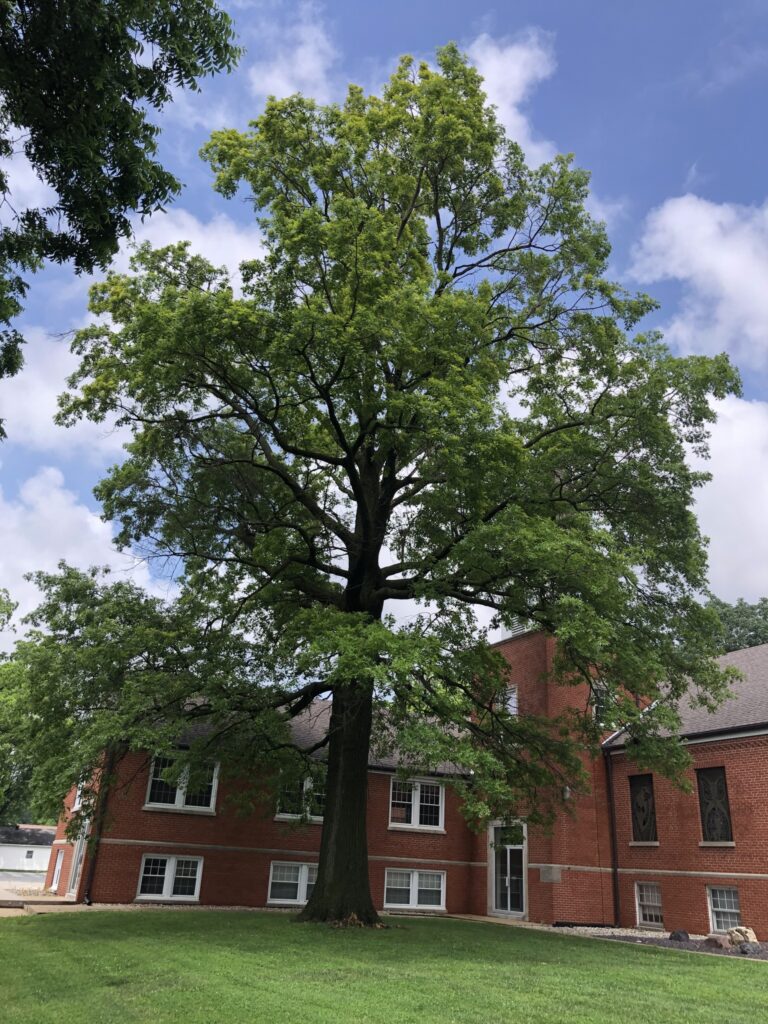
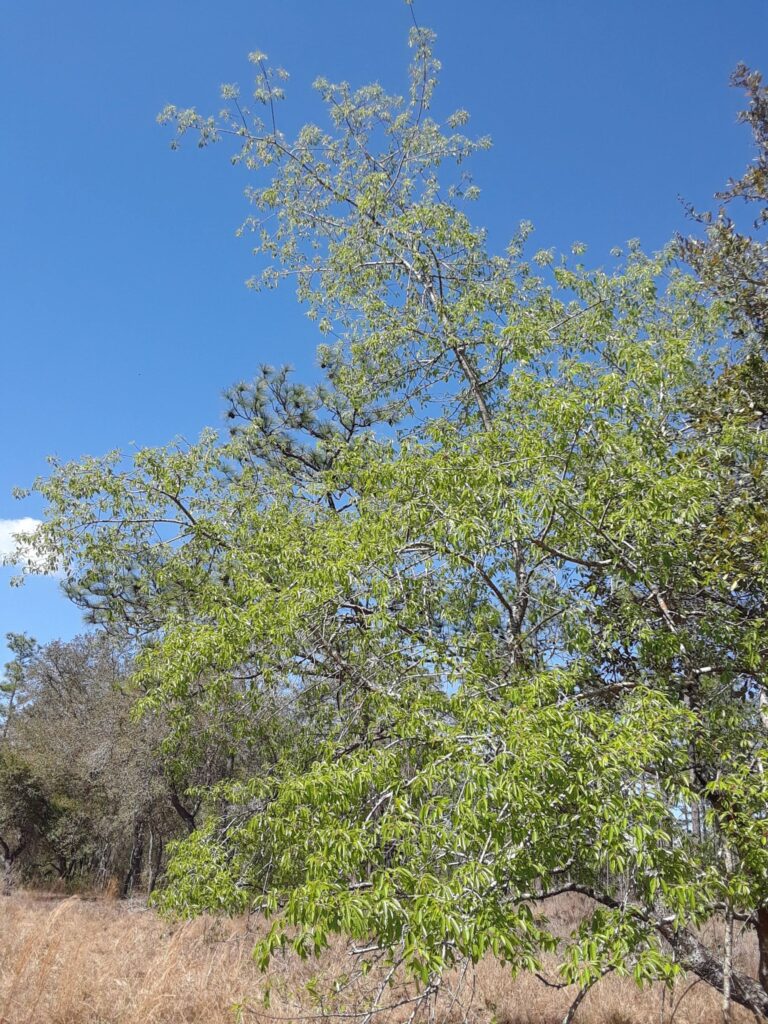
Black Cherry is a medium to large deciduous tree, typically reaching 18 to 27 metres (60–90 feet) in height, with trunk diameters of 30–90 cm at maturity. Exceptional specimens in old-growth forests have exceeded 30 metres and lived for over 250 years.
In open settings, it forms a broad, somewhat irregular crown; in forests, it grows straight and tall, self-pruning its lower branches in the competition for light.
Bark
Bark is one of the most reliable identification features and it changes dramatically with age.
On young trees and branches, the bark is smooth, reddish-brown to dark grey, with conspicuous horizontal white lenticels (pores) — a pattern that strongly resembles birch bark and can cause confusion in the field.
On mature trunks, the bark transforms completely. It becomes dark greyish-black, broken into irregular, rough, scaly plates — often described as resembling burnt cornflakes or dark potato chips curling away from the trunk. This distinctive mature bark is one of the most reliable identification features in eastern North American forestry.
When the bark is scratched or broken, it emits a distinctive bitter almond or cherry-like aroma — caused by hydrocyanic acid (cyanide) compounds in the tissue. Experienced foresters recognise this smell immediately.
Leaves
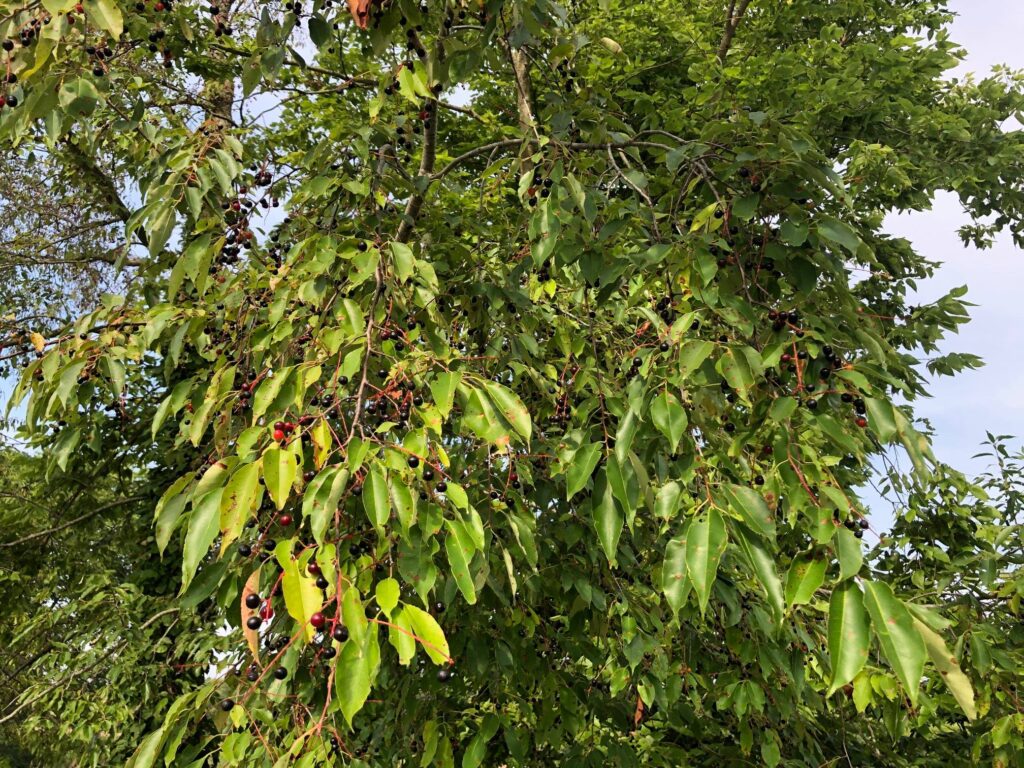
Leaves are simple, alternate, and lance-shaped to narrowly oblong, 5–13 cm long, with finely toothed margins. The upper surface is dark, lustrous green; the underside is paler, with a notable feature: a row of reddish-brown or orange hairs along the midrib near the base of the leaf.
This hair fringe is a definitive identification characteristic that distinguishes Black Cherry from closely related species.
In autumn, the leaves turn yellow to orange-red before dropping.
Flowers
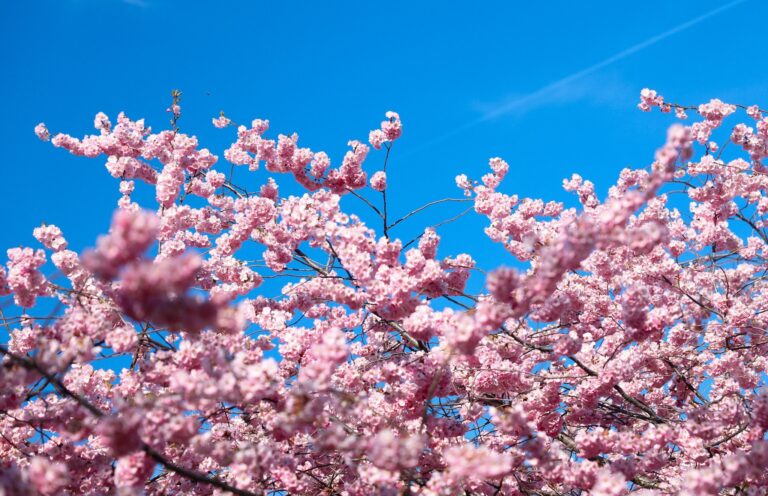
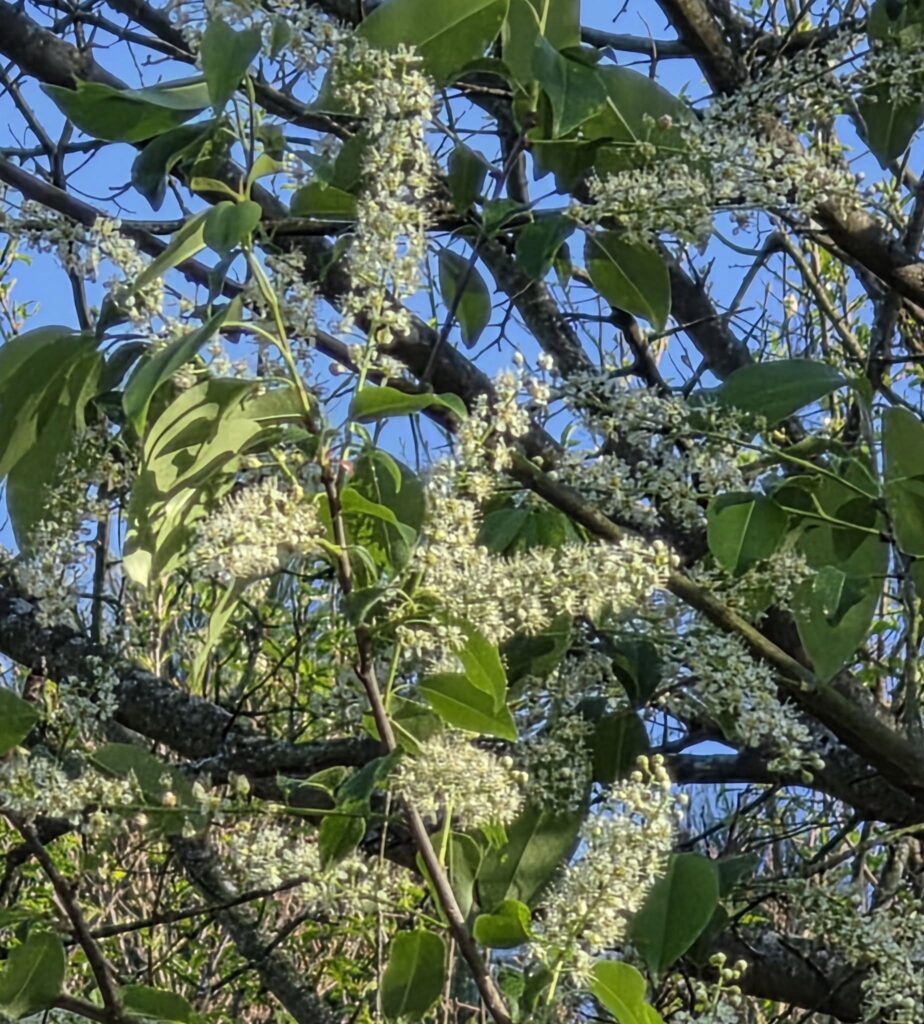
The flowers are small, white, five-petalled, and borne in elongated, drooping racemes (clusters) 10–15 cm long, appearing in mid to late spring. The raceme form — a long, dangling cluster — immediately distinguishes Black Cherry from other native cherries, which bear flowers in shorter, more compact clusters.
The flowers are fragrant and attract a wide range of pollinators.
Fruit
The fruit is a small, round drupe — 7–10 mm in diameter — borne in pendant clusters. Fruit passes through green, then red, to deep purplish-black when fully ripe in late summer (August–September across most of the range).
Ripe fruit has a bittersweet, astringent flavour — edible but not sweet like domestic cherries. The flavour has a distinctive winey depth, which explains the common name “Rum Cherry.”
Each fruit contains a single hard stone (pit) — like all Prunus species — which, along with the leaves and bark, contains toxic compounds and should not be consumed.
Native Range and Natural Distribution
Black Cherry has one of the broadest native distributions of any eastern North American tree, spanning an enormous geographic range.
Range boundaries:
- Northern limit: Nova Scotia and Quebec in the east; Ontario and Minnesota in the west
- Southern limit: Central Florida in the east; Texas and Mexico in the southwest
- Eastern boundary: The Atlantic coast from Maine to Georgia
- Western limit: The Great Plains edge, with disjunct populations in the Southwest and Mexico
This range covers virtually the entire eastern half of North America, as well as isolated populations in the mountains of Mexico and Central America. It is one of the most widely distributed tree species on the continent.
Habitat preferences:
Black Cherry is highly adaptable and colonises a wide range of environments. It is most productive in moist, fertile, well-drained soils of forest gaps, hillsides, and bottomlands. However, it also colonises:
- Abandoned agricultural fields and roadsides
- Forest edges and disturbed woodlands
- Fencerows and hedgerows
- Secondary growth forests
- Upland slopes and ridges
It grows across USDA Hardiness Zones 3–9 and is notably tolerant of a wide range of soil types, though it grows best in deep, loamy soils.
Ecology: A Keystone Tree for Eastern Wildlife
Black Cherry’s ecological significance is difficult to overstate. It supports an extraordinary breadth of wildlife interactions across multiple seasons.
As a Food Source
The fruit crop is one of the most important late-summer wildlife food sources in eastern North America. More than 70 bird species have been recorded feeding on Black Cherry fruit, including:
- Cedar Waxwings — among the most enthusiastic and visible consumers
- American Robins
- Eastern Bluebirds
- Gray Catbirds
- Brown Thrashers
- Wild Turkeys
- Ruffed Grouse
- Northern Mockingbirds
- Rose-breasted Grosbeaks
- Scarlet and Summer Tanagers
Mammals are equally dependent on the fruit: black bears, foxes, raccoons, opossums, white-tailed deer, skunks, chipmunks, and squirrels all consume Black Cherry fruit in large quantities when it ripens.
The hard pit passes intact through digestive systems, making birds and mammals the tree’s primary seed dispersers — and explaining its remarkable ability to colonise new areas quickly.
The foliage is a significant caterpillar host. Research by entomologist Dr. Doug Tallamy has identified Prunus species collectively as among the top three most important caterpillar host genera in eastern North America — supporting the larvae of more than 450 moth and butterfly species.
This makes Black Cherry an extraordinarily valuable plant in the context of bird nesting success, since nearly all terrestrial songbirds feed caterpillars to their nestlings.
Notable species that depend on Prunus foliage include:
- Promethea Silkmoth (Callosamia promethea)
- Tiger Swallowtail (Papilio glaucus)
- Coral Hairstreak (Satyrium titus)
- Spring Azure (Celastrina ladon)
- Eastern Tiger Swallowtail
- Dozens of underwing and prominent moth species
As a Pioneer and Forest Succession Species
Black Cherry is a fast-growing, light-demanding pioneer species that plays a specific successional role in eastern forests.
It establishes rapidly in old fields, logging gaps, and disturbed areas — growing quickly in its early years, canopy-shading competitors, and eventually giving way to more shade-tolerant species in older forests.
The seeds are widely dispersed by birds and mammals, which is why it so frequently appears in fencerows, under utility lines, and along woodland edges — anywhere birds perch and deposit seeds.
Timber Value: America’s Premier Native Cabinet Wood
This is where Black Cherry earns a particularly distinguished reputation.
Black Cherry wood is considered the finest native hardwood for furniture and cabinetry in North America. It has been prized by American craftsmen since the colonial era and remains highly sought after today.
Wood characteristics:
- Colour: Light reddish-brown when freshly cut, deepening to a rich, warm reddish-brown with age and light exposure — a process called patination that enhances rather than diminishes the wood’s beauty
- Grain: Fine, straight, and even, with a smooth, satiny texture
- Hardness: Janka hardness of 950 lbf — moderately hard; easier to work than maple or oak but durable enough for furniture
- Weight: Approximately 560 kg/m³ — moderately heavy
- Workability: Excellent — machines cleanly, takes nails and screws well, glues readily, finishes to a beautiful lustre
Primary timber uses:
- Fine furniture and cabinetry — the premier use; Shaker-style and American colonial furniture traditionally used Black Cherry
- Interior panelling and millwork
- Flooring — durable and visually stunning; mellows beautifully over decades
- Kitchen cabinets — one of the most popular domestic cabinetry species in the United States
- Musical instruments — guitar bodies, drum shells
- Veneer and plywood — high-quality face veneer for architectural interiors
- Turned objects and small crafts
- Gunstocks — historically used before walnut became the dominant choice
Black Cherry lumber commands a premium price in American hardwood markets. It is produced primarily in the Allegheny Plateau region of Pennsylvania, New York, and West Virginia — the core of American Black Cherry timber production.
Edible and Culinary Uses
Despite the toxicity of its seeds and leaves (addressed separately below), the flesh of ripe Black Cherry fruit is edible and has been used in food and beverage preparation throughout the tree’s native range.
Indigenous and Traditional Uses
Many Native American peoples harvested Black Cherry fruit as part of their seasonal food gathering. The Cherokee, Iroquois, Chippewa, and Potawatomi nations, among others, used the fruit for:
- Fresh eating — despite the astringency, ripe fruit was eaten raw
- Drying — fruit was dried for winter storage and mixed with other foods
- Pemmican — incorporated into pemmican alongside meat and other fruits
- Beverages — fruit was crushed and fermented into mildly alcoholic drinks
- Flavouring — added to soups, porridges, and other preparations
Bark preparations were used medicinally as a cough suppressant and fever reducer — uses that would eventually find their way into formal American pharmacopoeia.
Modern Culinary Applications
Today, Black Cherry is used in:
- Jams and jellies — the bittersweet flavour makes excellent preserves when sweetened
- Syrups and liqueurs — Black Cherry syrup and homemade “rum cherry” spirits are regional traditions in Appalachia and the Northeast
- Pies and baked goods — combined with sweeter fruits to balance the astringency
- Wine — Black Cherry wine is produced commercially and by home winemakers
- Flavouring — the distinctive “wild cherry” flavour in many commercial foods, cough syrups, and candies is modelled on the Black Cherry flavour profile
Medicinal History and the American Pharmacopoeia
Black Cherry bark holds an important place in the history of American botanical medicine.
The inner bark (Wild Cherry Bark) was listed in the United States Pharmacopoeia from 1820 to 1975 — one of the longest tenures of any plant medicine in official American pharmaceutical reference. This is not a folk tradition of marginal significance; it is formally documented medical history.
Traditional and historical medicinal uses of the bark:
- Cough suppressant and expectorant — the primary and most enduring use; “Wild Cherry Bark syrup” was a standard preparation for bronchitis, coughs, and respiratory inflammation
- Sedative — mild sedative properties were used in treating anxiety and nervous conditions
- Fever reduction — bark decoctions were used as a febrifuge in frontier medicine
- Digestive tonic — bitter compounds in the bark were used to stimulate appetite and aid digestion
The active compounds responsible for these effects include prunasin and related cyanogenic glycosides, which release small amounts of hydrocyanic acid (HCN) in controlled, diluted preparations — a concentration carefully managed in pharmacopoeial preparations to provide sedative and antispasmodic effects without toxicity.
Wild Cherry flavour — that distinctive bittersweet cherry taste — remains one of the most recognisable flavours in commercial cough syrups to this day, though modern formulations use artificial flavouring rather than actual bark extract.
Toxicology: Understanding the Risks
This section is important, and it deserves straightforward, clear treatment.
Black Cherry is toxic — but the toxicity is specific, dose-dependent, and manageable with basic knowledge.
The Toxic Mechanism
All parts of the plant — leaves, bark, twigs, and seeds (pits) — contain cyanogenic glycosides, primarily prunasin. When plant tissue is damaged, crushed, or wilted, an enzyme called prunasin hydrolase converts prunasin to hydrocyanic acid (HCN) — hydrogen cyanide.
The ripe fruit flesh itself is safe — it contains minimal cyanogenic compounds and has been consumed by humans and wildlife for millennia. The danger lies in the pit (stone), the leaves, and the bark.
The Wilted Leaf Danger
This is the most practically important toxicology point for anyone with livestock.
Wilted Black Cherry leaves are the most dangerous form of the plant. When leaves wilt — as they do after a branch is broken by wind or ice, or when branches are cut and left on the ground — the cyanogenic compounds concentrate and become far more toxic than in fresh or fully dried leaves.
A wilted Black Cherry branch on the ground is a serious poisoning risk for horses, cattle, sheep, and goats.
Symptoms of cyanide poisoning in livestock appear rapidly after ingestion and include:
- Difficulty breathing and gasping
- Muscle tremors
- Staggering
- Convulsions
- Collapse and death in severe cases
Livestock management rule: Never allow wilted or fallen Black Cherry branches to remain accessible to animals. Remove them promptly.
Human Safety
For humans, the primary risks are:
- Swallowing the pit — contain significant cyanogenic compounds; should never be crushed and eaten
- Handling large quantities of bark or leaves and then touching the mouth — a risk primarily for foragers
- Children eating large quantities of unripe fruit — unripe fruit has higher cyanogenic content than ripe fruit
Ripe Black Cherry flesh, consumed in reasonable quantities, is safe for healthy adults.
Black Cherry as an Invasive Species in Europe
Outside its native North America, Black Cherry presents a significant ecological management challenge.
Introduced to Europe in the 17th century as an ornamental and game-cover shrub, Black Cherry has become invasive across much of central and western Europe — particularly in the Netherlands, Belgium, Germany, Poland, and parts of Scandinavia.
It spreads aggressively in European forests, where it has no significant natural enemies or pathogens to suppress its growth.
In these regions, Black Cherry:
- Out-competes native understory species for light and soil resources
- Invades and alters the composition of native temperate forests
- Produces large quantities of seeds dispersed widely by birds
- Sprouts vigorously from cut stumps, making mechanical control difficult
The Dutch and German forestry agencies spend significant resources on management and control of Black Cherry in nature reserves and production forests. It is classified as an invasive alien species in the European Union and is the subject of ongoing management research.
This is an important reminder that even a valuable and ecologically essential native tree can become problematic when removed from the ecosystem where it evolved.
Cultivation and Landscape Use
For North American gardeners and land managers within the tree’s native range, Black Cherry is a valuable and ecologically generous addition to larger properties, naturalistic gardens, and restoration plantings.
Growing Conditions
- Hardiness zones: USDA Zones 3–9
- Soil: Adapts to a wide range, but grows best in moist, fertile, well-drained loam; tolerates clay and sandy soils
- pH: Slightly acidic to neutral (pH 5.5–7.5)
- Sunlight: Full sun to partial shade; fastest growth and best fruit production in full sun
- Moisture: Moderate; tolerates brief drought when established; not suitable for permanently wet or waterlogged sites
Landscape and Ecological Value
Black Cherry is best suited to larger properties, naturalistic landscapes, woodland garden edges, and wildlife gardens. It is not typically a suburban street tree — its aggressive root sprouting, litter, and bird-attracted fruit can be challenging in confined urban settings.
In a wildlife garden, Black Cherry is among the highest-value trees you can plant — offering spring blossom for pollinators, summer fruit for birds and mammals, caterpillar host habitat for insects, and autumn colour. Few native trees match its ecological return per square metre.
Livestock owners should note the wilted leaf toxicity risk and position Black Cherry away from paddocks and animal enclosures.
Planting from Seed
Seeds require cold stratification to germinate — a period of moist cold mimicking winter. To grow from seed:
- Collect ripe fruit in late summer; remove flesh
- Clean and dry the pits briefly
- Cold-stratify in moist sand or peat in the refrigerator for 8–16 weeks
- Sow in spring after stratification; germination typically occurs within 2–4 weeks in warm soil
Young trees are fast-growing and establish readily in sunny, open conditions.
Final Thoughts
Prunus serotina is not a plant of quiet modesty. It is large, fast-growing, and assertive — a tree that shapes the landscapes it inhabits, feeds the wildlife communities around it, and leaves its mark on the ecosystems it enters, for better or worse depending on where it finds itself.
In its native range, it is a foundational ecological asset: a caterpillar host for hundreds of species, a food source for dozens of wildlife populations, a timber resource of genuine beauty, and a plant with deep roots in American medical and culinary history.
Understanding it fully — its gifts and its dangers, its value and its risks — is part of understanding the ecology and natural history of eastern North America itself. It is, in every respect, a tree worth knowing.
References
- USDA Forest Service — Silvics of North America Prunus serotina Ehrh. — Black Cherry: Complete Silvicultural and Ecological Profile https://www.srs.fs.usda.gov/pubs/misc/ag_654/volume_2/prunus/serotina.htm
- Cornell University — College of Agriculture and Life Sciences (CALS) — Wildlife Food Sources Native Trees for Wildlife: Prunus serotina (Black Cherry) Ecological Value and Caterpillar Host Data https://www.nwf.org/NativePlantFinder/Plants/25
- Penn State Extension — College of Agricultural Sciences Black Cherry (Prunus serotina): Timber Value, Identification, and Management in Pennsylvania Forests https://extension.psu.edu/black-cherry
- University of Florida, Institute of Food and Agricultural Sciences (UF/IFAS) — Edis Prunus serotina: Black Cherry Tree — Identification, Ecology, and Wildlife Use https://edis.ifas.ufl.edu/publication/ST528
- USDA Natural Resources Conservation Service (NRCS) — PLANTS Database Prunus serotina Ehrh. — Full Species Profile: Classification, Distribution, and Ecological Data https://plants.usda.gov/home/plantProfile?symbol=PRSE2

Tim M Dave is a gardening expert with a passion for houseplants, particularly cacti and succulents. With a degree in plant biology from the University of California, Berkeley, he has vast experience in gardening. Over the years, he has cultivated a vast collection of desert plants and learned a great deal about how to grow and care for these unique companions.