Understanding Basswood Tree (Tilia americana): Size, Growth Rate, Problems, and Cultivation Details
Walk through a rich, moist eastern hardwood forest in late June or early July. Look up and you will find it: a massive, broad-crowned tree carrying thousands of small, cream-colored flowers, every one of them buzzing with bees. Undoubtedly that is a basswood tree (Tilia americana)
The basswood tree is one of eastern North America’s most ecologically generous trees. It produces more nectar per flower than almost any other native tree. It provides food for hundreds of insect species, shelter birds, mammals, and invertebrates in its creviced bark and hollow trunks.
This tree has clothed, healed, and fed human beings for thousands of years. And it grows into one of the most beautiful and stately shade trees imaginable. Despite all this, basswood is frequently overlooked for oaks, maples, and hickories in the landscape discussions.
This guide is here to correct that oversight. It covers everything about the basswood tree — its identity, ecology, landscape uses, care, wildlife value, traditional uses, wood characteristics, and much more.
Before we dive in, let me quickly introduce this valuable tree:
| Common Names | Basswood, American Basswood, American Linden, Bee-Tree, Whitewood, Bast Tree |
| Scientific Name | Tilia americana |
| Plant Family | Malvaceae (formerly Tiliaceae) |
| Plant Type | Deciduous broadleaf tree |
| Native Range | Eastern and central North America |
| Mature Height | 60 – 120 feet (18 – 37 m) |
| Mature Spread | 30 – 60 feet (9 – 18 m) |
| Growth Rate | Moderate to fast (13 – 24 inches per year) |
| Lifespan | 200 – 400+ years |
| Crown Form | Broad, rounded to oval; dense canopy |
| Leaf Shape | Large, heart-shaped (cordate); 3 – 6 inches long |
| Leaf Color | Dark green above; paler beneath; yellow in fall |
| Flowers | Small, creamy-yellow; intensely fragrant; June – July |
| Fruit | Small, round, nutlet; attached to distinctive strap-like bract |
| Bark | Gray-brown; furrowed with flat-topped ridges on mature trees |
| USDA Hardiness Zones | 3 – 8 |
| Sun Requirement | Full sun to partial shade |
| Soil Type | Moist, fertile, well-drained; loam preferred |
| Soil pH | 5.5 – 7.5 (adaptable) |
| Watering Needs | Moderate; moist soil preferred |
| Drought Tolerance | Moderate once established |
| Deer Resistance | Low — browsed frequently by deer |
| Wildlife Value | Extremely high — critical nectar, insect, and nesting resource |
| Honey Value | Exceptional — basswood honey is considered premium quality |
| Wood Uses | Carving, musical instruments, veneer, pulp, beehive components |
| Best Landscape Uses | Shade tree, street tree, wildlife garden, naturalized areas |
Botanical Identity: What Is Basswood?
American basswood (Tilia americana) belongs to the family Malvaceae — the mallow family — in its current taxonomic placement. Older references place it in the family Tiliaceae, which has since been merged into Malvaceae by modern taxonomy.
Either designation you encounter in literature refers to the same plant family lineage.
The genus Tilia contains approximately 30 species distributed across the temperate regions of the Northern Hemisphere. In North America, Tilia americana is the primary native species, though several naturally occurring varieties and closely related species add complexity to the picture.
The name “basswood” comes from the word “bast” — referring to the fibrous inner bark of the tree, which Indigenous peoples and early European settlers used extensively for making rope, cordage, mats, and other woven materials.
“Bast” is a well-established botanical term for the phloem fiber layer of a plant’s bark, and the basswood was among the most bast-rich trees accessible to northeastern North American peoples.
It is also widely called American linden — reflecting its close relationship to the European linden or lime tree (Tilia europaea and related species), which has been a beloved park and street tree in Europe for centuries.
Closely Related Species and Varieties
Several taxa are closely related to Tilia americana and sometimes treated as varieties or separate species depending on the botanical authority consulted:
- Tilia americana var. heterophylla — the white basswood or mountain basswood; distinguished by dense white hairs on the underside of leaves; found primarily in the Appalachians and Ozarks
- Tilia americana var. caroliniana — the Carolina basswood; southeastern distribution; smaller leaves
- Tilia cordata — the littleleaf linden, native to Europe; widely planted as a landscape and street tree in North America; much smaller leaves and more compact form
- Tilia tomentosa — the silver linden; European species with silvery leaf undersides; commonly planted in North American urban settings
For this article, the focus is on native American basswood (Tilia americana) in its primary form, though notes on the white basswood variety and European species are included where relevant to landscape use.
Physical Characteristics and Identification
Leaves
Basswood leaves are among the most distinctive of any eastern North American hardwood. They are large — 3 to 6 inches long — heart-shaped (cordate), with an asymmetrical base where the two sides of the leaf do not mirror each other where they meet the leaf stem.
This asymmetrical base is one of the most reliable identification features of the linden/basswood group.
The leaf margins are coarsely and sharply toothed, and the overall texture is slightly rough on the upper surface. The upper surface is dark green and relatively smooth, while the undersurface is paler green with tufts of rust-colored or tan hair in the vein axils (junctions of major veins).
In autumn, basswood leaves turn a clean, clear yellow — not as dramatic as sugar maple’s red-orange or sweet gum’s purple, but warm and pleasant nonetheless.
Flowers
The flowers are the basswood’s most celebrated feature. They emerge in June to early July in most of its range — small, creamy-yellow to pale white, and produced in drooping clusters of 6 to 20 flowers. What makes them extraordinary is their fragrance and nectar production.
The scent is often described as sweet, honeyed, and slightly citrus-touched — distinctive enough that on a still summer evening, a single mature basswood can perfume the air for a considerable distance.
I have smelled a large basswood in full bloom from over 100 feet away. It is genuinely one of the most pleasurable tree fragrances in all of North American botany.
Each flower cluster is attached to a distinctive, strap-like, pale green bract — an elongated leaf-like structure that serves as a “wing” and helps with wind dispersal of the attached fruits later in the season.
This bract-attached flower cluster is one of the most reliable identification features of Tilia species at any stage.
Fruit
The fruit of basswood is a small, round to oval, hard nutlet about ¼ inch in diameter, covered in short, gray-brown hairs. Clusters of 2 to 3 nutlets hang from the distinctive papery bract that persisted from the flowering stage.
When the fruits ripen in late summer and fall, the bract acts as a wing — when the cluster detaches from the tree, the bract causes it to autorotate like a helicopter blade, slowing descent and improving wind dispersal.
The fruits are eaten by birds, squirrels, and small mammals, though they are not a primary food source compared to acorns or hickory nuts. Their primary ecological value is seed dispersal rather than wildlife nutrition.
Bark
Young basswood trees have smooth, gray bark that gradually develops into the characteristic adult pattern: grayish-brown bark with long, flat-topped, interlacing ridges separated by irregular furrows. On very old trees, the furrows deepen and the ridges become more pronounced and somewhat corky in texture.
The inner bark (bast) is particularly notable — it is fibrous, flexible, and tough, separating in long strips when the outer bark is peeled back. This inner bark has been used for fiber, cordage, and basketry for thousands of years and remains one of the defining practical characteristics of the species.
Form and Structure
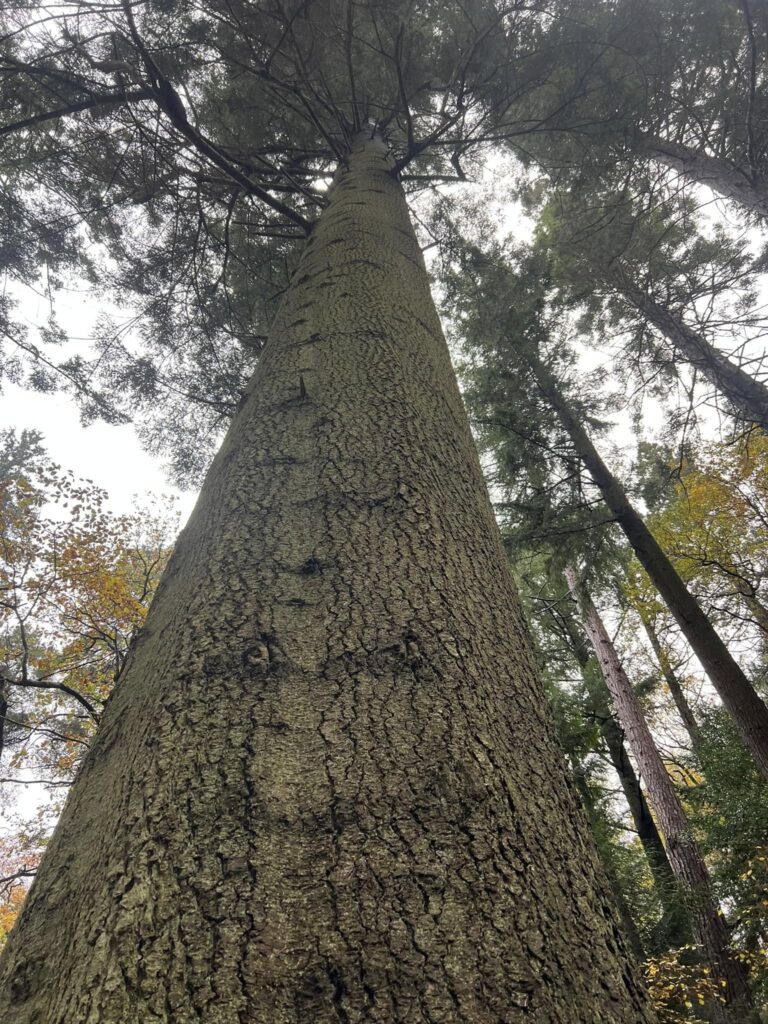
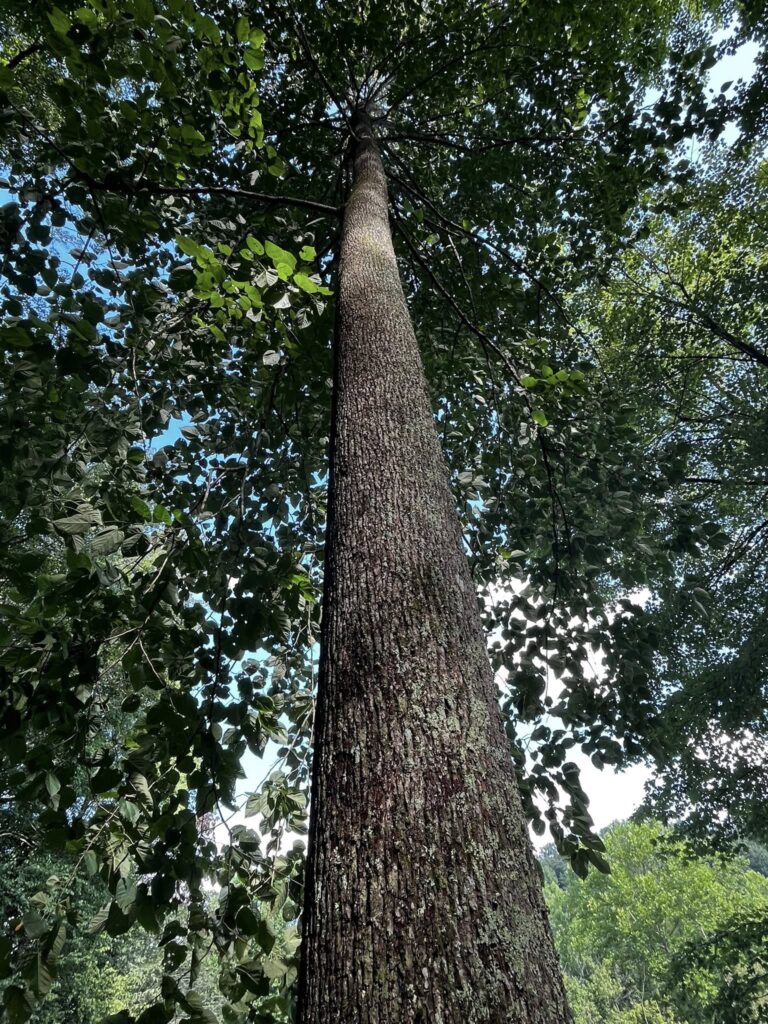
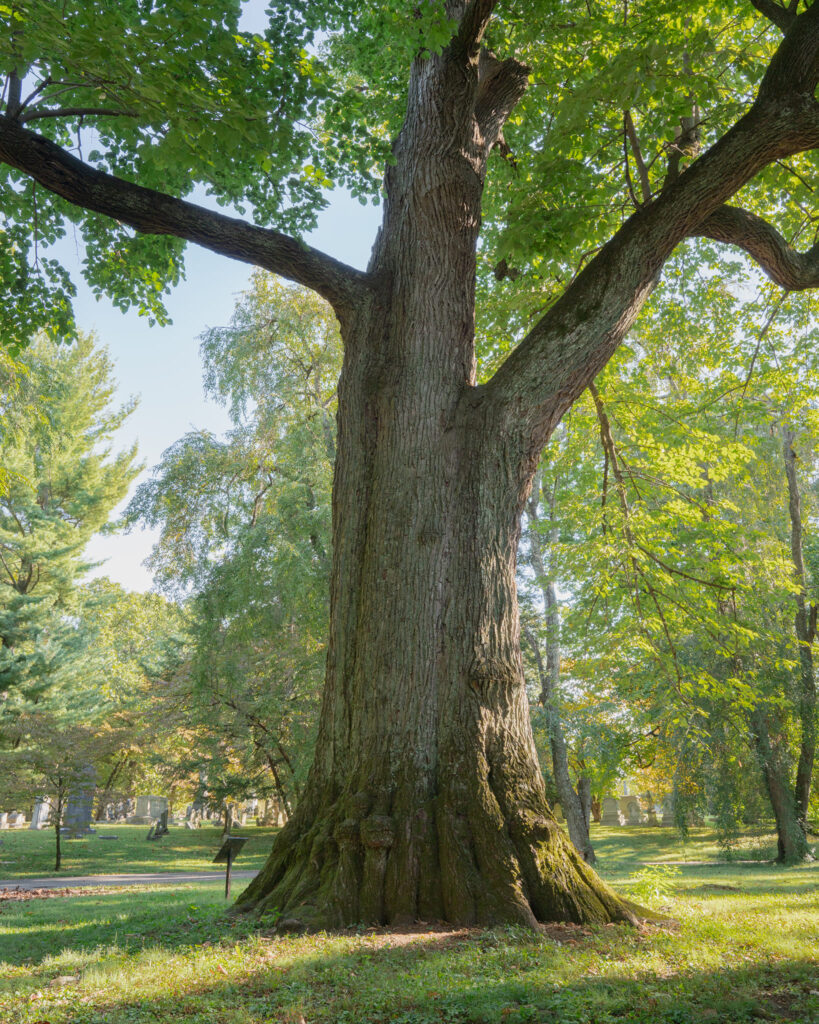
Mature basswood develops a broad, rounded to oval crown with a dense canopy that provides exceptional shade. The trunk is often large and straight on forest-grown trees but tends to divide into multiple large ascending limbs on open-grown specimens.
Old basswood trees commonly develop hollow trunks — a result of their relatively soft wood and susceptibility to heart rot fungi. Rather than being a flaw, these hollow trunks are among the most ecologically valuable structural features in the eastern forest.
They provide nesting cavities for wood ducks, owls, raccoons, opossums, and dozens of cavity-nesting bird species.
Native Range and Habitat
American basswood has a broad native range covering most of eastern and central North America. From New Brunswick and Nova Scotia in the northeast, west to Manitoba and the eastern Dakotas, and south through the Great Plains margin to Oklahoma, Arkansas, and the mid-Atlantic states.
It reaches its southeastern limits in the Appalachian highlands of Georgia and Alabama.
Within this range, basswood is most abundant and vigorous in the rich, moist, well-drained soils of:
- Mixed hardwood forest valleys and lower slopes
- Floodplain margins and moist bottomlands
- North- and east-facing slopes where moisture and organic matter accumulate
- Ravines and sheltered coves in Appalachian forests
It is less common on dry ridges, sandy soils, and sites with poor nutrient status. Basswood is a site-quality indicator — its presence in a forest stand is a reliable signal that the soils are deep, fertile, and moist.
Forest associates include sugar maple (Acer saccharum), yellow birch (Betula alleghaniensis), black cherry (Prunus serotina), American elm (Ulmus americana), eastern white pine (Pinus strobus), northern red oak (Quercus rubra), and white ash (Fraxinus americana).
Climate and Hardiness for Basswood
Basswood performs well across USDA Hardiness Zones 3 through 8 — a wide range that makes it one of the most climate-adaptable native deciduous trees for North American landscapes.
- Zone 3 (-40°F minimum): Basswood is fully hardy; common in Minnesota, Wisconsin, Ontario, and the northern prairie provinces
- Zones 4–6: Optimal performance zone — the heart of its native range and most common landscape application
- Zones 7–8: Grows well but may show heat stress in areas with prolonged extreme heat and drought; adequate moisture is critical
In Zone 8 and warmer, littleleaf linden (Tilia cordata) or silver linden (Tilia tomentosa) may perform better as landscape trees due to their greater heat tolerance.
However, for native-plant gardeners in the warmer portions of Zone 8, white basswood (T. americana var. heterophylla) — found naturally in the warmer southern Appalachians — is more appropriate than the standard species.
Sunlight Requirements
Basswood is adaptable across a range of light conditions:
- Full sun (6+ hours daily): Produces the fastest growth, fullest crown, and heaviest flowering — optimal for landscape specimens and honey production plantings
- Partial shade (3–6 hours daily): Grows well; slightly slower and less densely crowned; appropriate for woodland edge plantings
- Full shade: Young trees tolerate it and establish in forest understories, but mature basswood is fundamentally a sun-demanding species that requires light to reach full stature and flowering potential
In natural forests, basswood often establishes in partial shade beneath a canopy of older trees but requires gap openings — from fallen trees or natural disturbance — to grow into the upper canopy. In the landscape, full to partial sun sites should be chosen for maximum value.
Soil Requirements
Basswood thrives in moist, fertile, deep, well-drained soils — ideally loam or clay-loam with good organic matter content. It is notably more nutrient-demanding than oaks, hickories, or pines, and this is reflected in its natural preference for rich forest soils.
Soil pH range is 5.5 to 7.5 — broader than many native trees. Basswood tolerates slightly alkaline conditions moderately well, which is unusual for an eastern forest species and makes it more useful in urban soils that tend toward neutral to slightly alkaline pH.
Soil texture: Basswood grows best in medium-textured loam soils. It tolerates clay-loam and adapts to silty soils. Sandy, excessively drained soils are its weakest performance context, particularly during summer heat.
Compaction sensitivity: Like most large deciduous trees, basswood is sensitive to soil compaction in urban settings. When used as a street tree or in urban planting, structural soil cells or similar techniques that preserve root zone volume significantly improve long-term performance.
Flooding: Basswood tolerates brief periodic flooding (1 to 2 weeks) during dormancy but is not suited to chronically wet, waterlogged soils. In floodplain settings, it naturally occupies the slightly elevated, better-drained positions rather than the lowest, wettest spots.
Watering Needs
Basswood prefers consistent moisture throughout the growing season. While established trees develop some drought tolerance, they are not drought-adapted plants and will show leaf scorch, premature leaf drop, and reduced growth during extended dry periods.
Newly planted trees require diligent irrigation:
- Water every 2 to 3 days for the first 4 weeks after planting
- Transition to once-weekly deep watering through the first two growing seasons
- Apply 2 to 4 inches of organic mulch in a wide circle to conserve soil moisture
Established trees benefit from supplemental watering during summer droughts — particularly in Zone 6 and warmer regions. A deep, slow watering every 10 to 14 days during dry stretches is generally adequate for trees beyond their third year.
Avoid overhead irrigation on the foliage in hot, humid weather — this can encourage foliar fungal diseases, particularly anthracnose.
Basswood Tree Ecological and Wildlife Value
If I had to name a single native tree that contributes most broadly to the ecological health of eastern North American forests, basswood would be a very strong candidate. Its wildlife value is exceptional across multiple dimensions — food, shelter, nesting, and insect habitat.
Pollinator and Bee Value
American basswood is widely considered the premier nectar-producing tree in North America. The flowers, though individually small, are produced in enormous quantities and generate nectar with a combination of volume and sugar concentration that is extraordinary among temperate trees.
Honeybees are particularly attracted to basswood. The phenomenon of a large tree in full bloom being audibly and visibly alive with bees is one of the most memorable experiences anyone can have. The hum of tens of thousands of bees in a single tree is both impressive and strangely calming.
Basswood honey — produced by honeybees foraging on basswood flowers — is considered a premium artisanal honey with a distinctive, sharp, minty-aromatic flavor that is unlike any other American honey.
It is light to water-white in color, rapidly granulating, and highly prized by honey connoisseurs and chefs.
Beyond honeybees, basswood flowers support hundreds of native bee species, including bumble bees, mining bees, sweat bees, and specialist bees in the genus Andrena that are closely associated with Tilia flowers.
Birds
Basswood provides multiple layers of bird habitat value:
- Insect-eating birds — the tree supports a rich arthropod community in its foliage and bark, feeding warblers, vireos, flycatchers, nuthatches, and woodpeckers throughout the growing season
- Cavity-nesting birds — the hollow trunks and large dead branches common in old basswood provide nesting sites for wood ducks, eastern screech owls, great crested flycatchers, and pileated woodpeckers
- Red-tailed hawks and great horned owls — nest in the broad forks of large, open-grown basswood trees
- Baltimore orioles and American robins — nest in the outer canopy branches and feed on insects in the foliage
Mammals
- White-tailed deer browse basswood twigs and leaves intensively — one reason basswood can be difficult to establish in deer-heavy landscapes without protection
- Black bear feed on basswood flowers and fruits when available
- Squirrels consume the nutlets and cache them for winter
- Rabbits and hares browse young bark in winter
- Bats roost in the bark crevices and hollow trunks of old trees
Insects Beyond Pollinators
Beyond its spectacular value for bees, basswood supports a rich community of specialist insects. Several caterpillar species feed almost exclusively on Tilia leaves, including the basswood leafminer, the linden looper, and several species of prominent moths.
These caterpillars, in turn, are critical protein sources for migrating and breeding songbirds — particularly wood warblers during their spring migration.
Basswood Wood
Basswood produces one of the softest, lightest, most easily worked hardwoods in North America. The wood is:
- Creamy white to pale brown in color, often with no clear distinction between heartwood and sapwood
- Fine-grained and uniform in texture — extremely consistent and easy to cut in any direction
- Low in resin and odor — important for food-contact applications and musical instruments
- Moderate in strength — not suitable for structural use but excellent for applications where strength is not the primary requirement
Wood Carving
Basswood is the premier wood for hand carving in North America. Its soft, consistent grain cuts cleanly in any direction with sharp tools, holds fine detail exceptionally well, and is resistant to splitting along the grain during carving.
The lack of pronounced grain pattern allows painted and stained finishes to apply evenly.
Carving guilds, woodcraft schools, and folk art traditions across the eastern United States and Canada have long used basswood as their standard material. Whittling knives move through it with a resistance that is satisfying but not taxing — ideal for beginners and professionals alike.
Musical Instruments
The acoustic properties of basswood — its low density, consistent structure, and moderate resonance — make it a preferred wood for electric guitar bodies, particularly in the mid-range and lower-price segments of the guitar market.
Many popular electric guitars use basswood bodies due to its workability, consistent supply, and tonally neutral character that allows pickups and electronics to define the instrument’s sound rather than the wood.
Other Industrial and Traditional Uses
- Beehive components — basswood’s low resin content and lack of odor make it the traditional and preferred wood for beehive boxes and frames; the irony of using the bee tree’s wood to house bees is not lost on anyone
- Wooden spoons and kitchen utensils — traditional and modern use; non-toxic, odorless, easy to shape
- Veneer and plywood — light, smooth face veneer for interior applications
- Pulpwood — used in paper production, though not a primary pulp species
- Millwork and molding — paints well and accepts nails without splitting
- Toys and model making — lightweight and easy to work; popular in the hobby market
Traditional and Ethnobotanical Uses
Basswood has one of the richest histories of human use of any North American tree. Dozens of Indigenous nations across its range developed extensive knowledge of the tree’s materials and medicinal properties.
Bast Fiber and Cordage
The inner bark (bast) of basswood is one of the finest natural fiber sources in North America. It can be stripped from the tree in long, flexible sheets, pounded, soaked, and processed into fibers that are then twisted or braided into:
- Rope and cordage of considerable strength
- Fishing nets and lines
- Woven mats and bags
- Snowshoe netting and lacings
- Woven clothing and footwear
Among the Ojibwe, Potawatomi, Menominee, and many other Great Lakes and northeastern peoples, basswood bark fiber was among the most important plant materials in the material culture.
The spring season — when bark could be most easily peeled in long strips from the cambium — was associated with fiber collection.
Medicinal Uses
Traditional medicinal applications varied by nation and region but commonly included:
- Flower tea — used to treat colds, fevers, headaches, and nervous conditions; the flowers contain flavonoids and aromatic compounds with mild sedative and diaphoretic (sweat-inducing) properties
- Bark poultice — applied to burns, ulcers, and skin inflammations; the mucilaginous inner bark has soothing properties
- Charcoal from basswood wood — used as a digestive remedy
- Leaf poultice — applied to headaches and fevers in some traditions
Modern phytochemistry has confirmed that basswood flowers contain tiliroside, quercetin, and other flavonoids along with volatile aromatic compounds — supporting some of the traditional medicinal applications as pharmacologically plausible.
In European herbal tradition, linden flower tea (Tilia species) has been used for centuries as a remedy for anxiety, insomnia, and cold symptoms. This tradition continues today — dried linden flowers are widely available in herbal tea blends across North America and Europe.
Growing Basswood in the Landscape
Landscape Value
Basswood is a superb large shade tree for properties with adequate space. Its qualities include:
- Dense, broad canopy providing deep, reliable summer shade
- Exceptional fragrance during the June–July flowering period — unmatched by any other common shade tree
- Striking wildlife value — flowers, insects, birds, and hollow trunks create year-round ecological activity visible from the home
- Reasonable fall color — clean yellow that brightens the autumn landscape
- Adaptability across a wide hardiness range and soil pH range
Space Requirements
Basswood is a large tree. At maturity, it typically reaches 60 to 80 feet in height in landscape settings, with a crown spread of 30 to 50 feet. It is not appropriate for small suburban lots where its ultimate size would crowd structures, power lines, or neighboring properties.
It is best suited to:
- Large residential properties where it can be placed at an appropriate distance from buildings
- Parks and large institutional grounds
- Farm properties where it can serve as a windbreak, shade tree, or bee tree
- Riparian buffers along streams and waterways
- Naturalized areas and wildlife gardens
For smaller properties where the American basswood’s ultimate size is a concern, littleleaf linden (Tilia cordata) offers a more compact alternative — typically 40 to 50 feet tall with smaller leaves and similar fragrant flowers.
Street Tree Use
Basswood and littleleaf linden have long traditions as street and urban trees, particularly in the upper Midwest and Great Plains. Their tolerance for urban soils, moderate drought once established, and adaptability to alkaline pH make them useful in municipal plantings.
Concerns in street tree applications:
- Honeydew from aphids (discussed in pest section) can accumulate on vehicles parked beneath — a perennial complaint in urban settings
- Large size at maturity can conflict with utility lines if not properly sited
- Deer browsing of young trees requires protection in areas with high deer populations
Planting Guide
1. Select the right site. Full sun to partial shade; moist, fertile soil; adequate space for a 60 to 80-foot-tall, 40 to 50-foot-wide tree.
2. Choose the right time. Spring or early fall planting are ideal. Fall planting in Zones 5 and colder should be completed at least 6 weeks before the ground freezes.
3. Prepare the planting hole. Two to three times the width of the root ball, and exactly as deep as the root ball. Never plant deeper than the root flare.
4. Amend conservatively. In poor soils, work compost into the backfill at a ratio of no more than 20 to 25 percent by volume. Avoid over-amending, which can create a moisture differential between the planting hole and surrounding soil.
5. Position and backfill. Set the tree so the root flare is at or just above grade. Backfill with native soil mix, firming gently to eliminate air pockets.
6. Water immediately and deeply. Saturate the entire root zone at planting and for the following weeks on a regular schedule.
7. Mulch generously. Apply 3 to 4 inches of wood chip or bark mulch in a wide circle (as wide as possible — 6 feet or more in diameter), keeping mulch 3 to 4 inches away from direct contact with the trunk.
8. Stake only if necessary. In exposed, windy sites, stake for one season and remove stakes promptly once roots are established. Do not leave stakes in place beyond one year.
Fertilization
Basswood in fertile, organically rich soils generally does not require routine fertilization. In landscape settings with depleted urban soils, applications of a balanced, slow-release fertilizer (10-10-10 or similar) in early spring can improve growth and canopy density.
Soil pH management is often more impactful than fertilization. If soil pH is outside the 5.5 to 7.5 range, address pH first — nutrient uptake is dependent on the availability created by correct pH.
Annual top-dressing with compost beneath the canopy (matched to the drip line) is a low-impact, highly effective way to improve soil organic matter and long-term tree health without the risks of over-fertilization.
Pruning
Basswood requires minimal structural pruning beyond the standard practices applicable to most large deciduous trees:
- Remove dead, damaged, or diseased wood as needed throughout the year
- Establish clear branch structure in young trees during the first 10 to 15 years — maintaining a single central leader and removing weak, narrow-angled crotches early prevents structural failures in the large, heavy crown of mature trees
- Lift the canopy by removing lower limbs gradually if pedestrian or vehicle clearance is needed
- Avoid heavy pruning in spring when the tree is pushing new growth and most vulnerable to desiccation of fresh wounds
Basswood is a vigorous sprouter. Cut stumps and the base of pruned trees produce abundant basal sprouts. These sprouts should be removed regularly if a single-trunk form is desired; alternatively, they can be used to regenerate the tree through coppicing — a traditional management practice (discussed below).
Coppicing
One of the most fascinating aspects of basswood management is its historical use in coppice systems — a silvicultural practice of cutting trees to the ground on a regular rotation to produce a continuous supply of straight poles and shoots from the regenerating stump (called a “coppice stool”).
Basswood’s vigorous sprouting response to cutting makes it ideally suited to coppice management. Traditional uses of coppiced basswood include:
- Producing straight poles for basket frames and structural use
- Generating fresh bast fiber for cordage from young shoots
- Providing browse habitat for deer and other wildlife (the dense regrowth after cutting is intensively used by wildlife)
In traditional European woodland management, related linden species (Tilia cordata and Tilia platyphyllos) were managed as coppice for centuries. Some European linden coppice stools are believed to be thousands of years old — among the oldest living plant structures on Earth.
Common Problems (Pests and Diseases)
Aphids — particularly the Linden Aphid (Eucallipterus tiliae)
Aphids are the most commonly noticed pest of basswood in landscape settings. Large colonies of linden aphids feed on the undersides of leaves, excreting a sticky, sugary substance called honeydew. This honeydew drips onto surfaces below and supports the growth of black sooty mold fungi.
In most cases, aphid populations on established trees do not cause serious long-term damage. Natural predators — ladybugs, lacewings, parasitic wasps — typically bring populations under control by midsummer.
Management is primarily cosmetic: move vehicles from beneath trees during heavy aphid seasons, and rinse outdoor furniture regularly.
If control is warranted on high-value specimen trees, insecticidal soap or neem oil applied to the leaf undersides in late spring is effective and safe for pollinators when applied in the evening after flowers have closed.
Japanese Beetle (Popillia japonica)
This invasive beetle, introduced from Asia in the early 20th century, feeds heavily on basswood leaves, skeletonizing them. Heavy infestations can defoliate portions of the canopy. While unsightly, established trees generally recover from defoliation and push new growth.
Avoid using Japanese beetle traps near valuable trees — research consistently shows that traps attract more beetles than they capture, increasing damage to nearby plants.
Linden Borer (Saperda vestita)
This native longhorned beetle larva bores into the wood of basswood at and below the soil line, weakening the structural base of affected trees. Heavy infestations can cause basal girdling and tree death.
Maintaining tree vigor is the best prevention — stressed trees are far more susceptible than healthy ones. Avoid wounding the base of trees during lawn and landscape maintenance, as wounds provide entry points for egg-laying females.
Anthracnose (Apiognomonia tiliae)
This fungal disease causes brown, irregular spots or blotches on leaves, premature leaf drop, and twig dieback in cool, wet spring conditions. Most established trees recover without treatment as conditions dry out.
In persistently affected specimens, improving air circulation through selective pruning and raking infected leaves reduces the overwintering fungal inoculum for subsequent years.
Verticillium Wilt (Verticillium dahliae, V. albo-atrum)
This soilborne fungal pathogen causes sudden wilting and dieback of individual branches or sections of the crown. The vascular tissue (sapwood) of affected branches shows a characteristic olive-brown discoloration when cut in cross section.
There is no cure — affected branches should be pruned out and the tree’s overall vigor supported through proper watering and nutrition. Avoid planting basswood in sites where verticillium wilt has previously affected other susceptible plants (tomatoes, strawberries, many ornamentals).
Powdery Mildew
A white, powdery fungal coating on leaf surfaces is common in basswood in late summer, particularly in conditions of warm days and cool nights with low air circulation. It is primarily cosmetic and rarely affects tree health seriously.
In severe cases, a single application of horticultural oil or sulfur-based fungicide provides adequate control.
Companion Plants for Basswood
In naturalized and wildlife-focused landscapes, basswood pairs beautifully with:
- Sugar maple (Acer saccharum) — the classic eastern forest companion; together they define the rich northern hardwood forest
- Black cherry (Prunus serotina) — excellent wildlife value; shares native range and site preferences
- Elderberry (Sambucus canadensis) — shrub layer companion producing wildlife food in midsummer
- Wild ginger (Asarum canadense) — native groundcover thriving in the moist, shaded conditions beneath a basswood canopy
- Ostrich fern (Matteuccia struthiopteris) — large native fern for moist, shaded areas beneath the tree
- Jack-in-the-pulpit (Arisaema triphyllum) — woodland wildflower that naturalizes beautifully in moist basswood shade
- Native violets (Viola spp.) — groundcover layer providing early-season pollinator food
- Spicebush (Lindera benzoin) — fragrant native shrub for the woodland understory; outstanding wildlife value
Frequently Asked Questions
How fast does basswood grow?
Basswood grows at a moderate to fast rate — typically 13 to 24 inches per year in good conditions. In fertile, moist soils with full sun, growth at the upper end of this range is common. Growth slows as the tree reaches maturity.
Is basswood a good tree to plant near a house?
Given its potential height of 60 to 80+ feet and spread of 40 to 50 feet, basswood should be planted at least 30 to 40 feet from any structure. The hollow trunks of old trees and heavy branch load make proximity to homes a structural concern. For smaller properties, littleleaf linden (Tilia cordata) is a better choice.
Can you eat basswood flowers?
Yes. Basswood flowers are edible and have a pleasant, sweet, slightly mucilaginous texture. They can be eaten raw in salads or steeped in hot water to make linden flower tea — one of the most pleasant herbal teas available from a native North American tree. The flowers should be harvested when they are freshly open for best flavor.
Why does my basswood tree have sticky leaves?
The stickiness is from honeydew produced by aphids feeding on the leaf undersides. Look for clusters of small, soft-bodied insects on leaf undersides — these are the linden aphids responsible. Natural predators usually control them by midsummer.
Is basswood the same as linden?
Yes, in practical terms. American basswood (Tilia americana) is the North American equivalent of European linden (Tilia spp.). Both belong to the genus Tilia and share the same characteristic fragrant flowers, heart-shaped leaves, and bract-attached fruits.
Final Thoughts
The basswood tree is one of eastern North America’s finest gifts to anyone willing to pay attention to it. It feeds hundreds of bee species. It shelters dozens of bird species. It produces wood that carvers and woodworkers prize above all others.
This tree has clothed, healed, and nourished human communities for thousands of years. And it rewards the gardener who plants it correctly with decades of deep shade, extraordinary summer fragrance, and a living ecosystem visible from the kitchen window.
If you have the space and the right climate, there are few native trees more worthy of a place in your landscape. Plant it in moist, fertile soil, give it full sun, protect it from deer in its early years, and stand back.
Within a decade, you will have a tree that matters — to your property, to your local ecology, and in all likelihood, to you personally. That combination of beauty, utility, fragrance, and ecological generosity is rare in any tree. In the basswood, they all arrive together.
References
- University of Tennessee Extension – Native Trees for Tennessee Landscapes UT Extension provides regionally focused planting guides and botanical profiles for native deciduous trees — including basswood — suited to Tennessee and the broader mid-South region. https://extension.tennessee.edu/publications/Pages/default.aspx
- Michigan State University Extension – Trees of Michigan: American Basswood MSU Extension provides botanical descriptions, ecological role profiles, and landscape use guidance for Michigan’s native tree species, with detailed coverage of American basswood in Great Lakes region settings. https://www.canr.msu.edu/forestry/index
- NC State University Extension – Tilia americana Plant Profile NC State’s Plants Database offers comprehensive botanical, ecological, and horticultural data for Tilia americana — covering hardiness zones, soil requirements, wildlife value, and landscape applications across North America. https://plants.ces.ncsu.edu/plants/tilia-americana/

Tim M Dave is a gardening expert with a passion for houseplants, particularly cacti and succulents. With a degree in plant biology from the University of California, Berkeley, he has vast experience in gardening. Over the years, he has cultivated a vast collection of desert plants and learned a great deal about how to grow and care for these unique companions.