Battling Aphid Problem on Hibiscus in Colorado: Your Ultimate Guide to Saving Your Blooms
As a passionate gardener in Colorado, I vividly recall the morning I discovered aphids on my hibiscus. My vibrant pink hibiscus, the centerpiece of my Denver backyard, was under attack. The leaves curled, buds refused to open, and a sticky residue coated the stems, attracting ants like a magnet.
It was disheartening, but through research and persistence, I turned the tide. If you’re facing an aphid problem on your hibiscus in Colorado, you’re not alone. These tiny pests thrive in our unique climate and can wreak havoc on your plants.
In this detailed guide, I’ll share everything you need to know about identifying, controlling, and preventing aphid infestations on hibiscus, tailored specifically for Colorado’s challenging conditions. Let’s get your garden blooming again.
Why Aphids Are a Major Threat to Hibiscus in Colorado
Colorado’s climate, with its sunny days, cool nights, and low humidity, creates an ideal environment for hibiscus but also for aphids. These small, soft-bodied insects feed by sucking sap from plants, weakening them significantly.
Hibiscus, with their tender new growth, are particularly vulnerable. In Colorado, where the growing season is short and summers can be dry, stressed plants become prime targets for aphids. I learned this the hard way when I ignored early signs and lost an entire branch to these pests.
Aphids reproduce rapidly, with females giving birth to live clones without needing males. A single aphid can produce dozens of offspring daily, leading to explosive populations during Colorado’s warm spells.
The honeydew they excrete—a sticky, sugary substance—attracts ants and fosters sooty mold, turning your hibiscus into a mess. Left unchecked, aphids can stunt growth, yellow leaves, and prevent flowering, robbing your garden of its beauty.
Identifying Aphid Infestations on Your Hibiscus
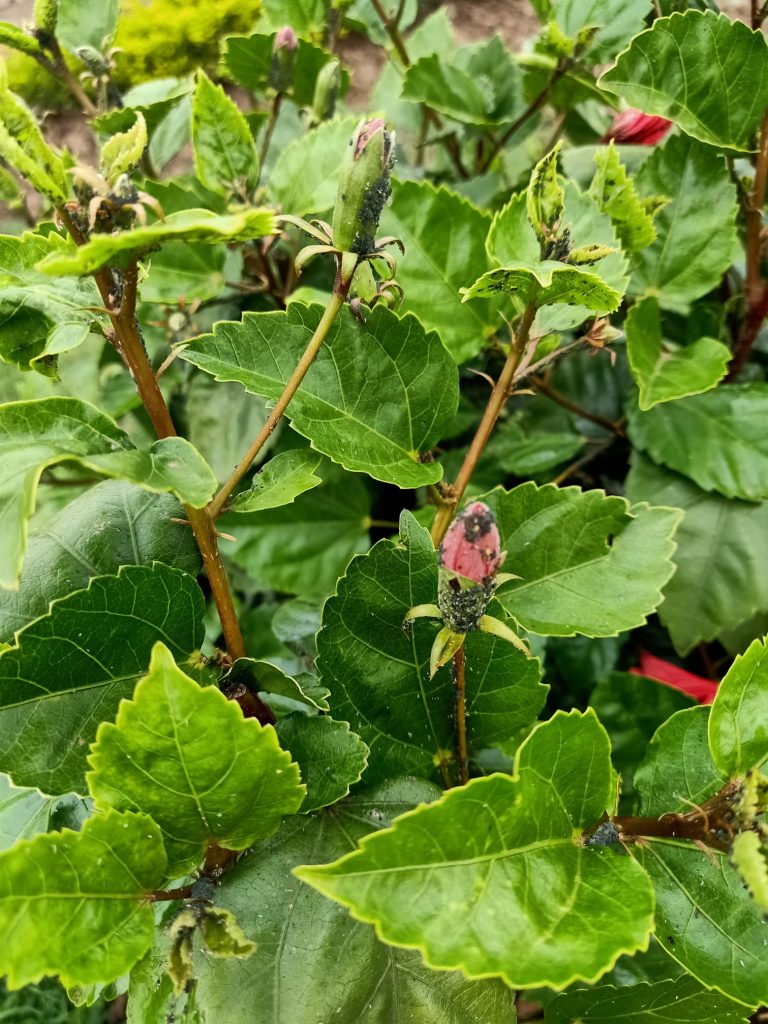
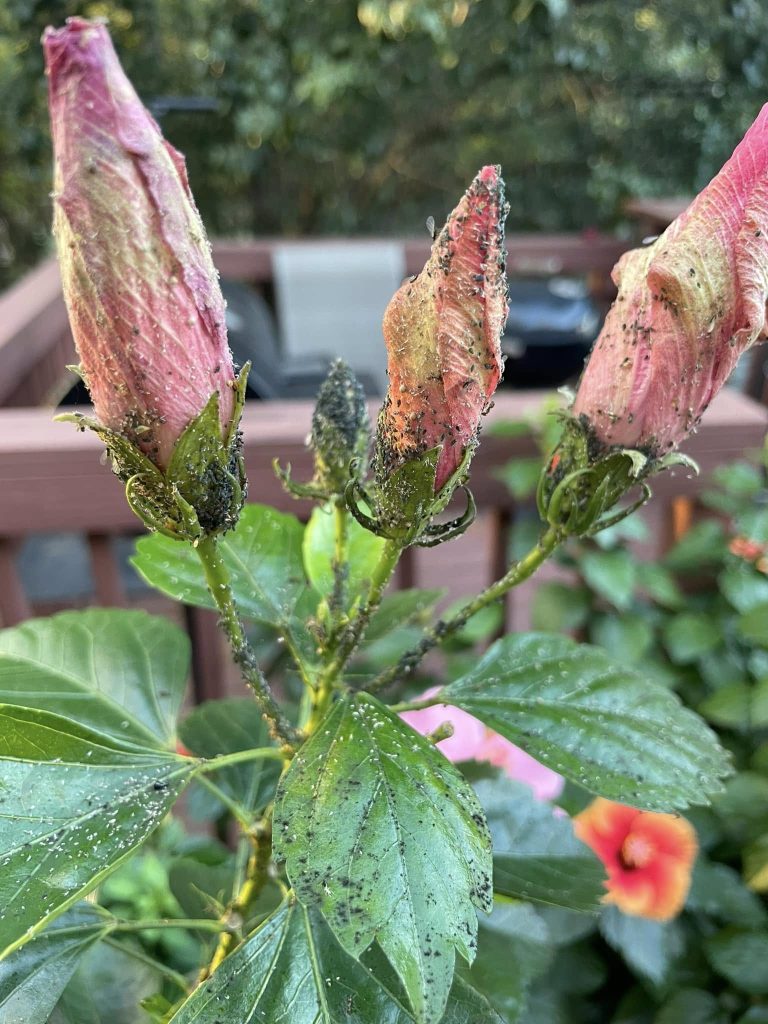
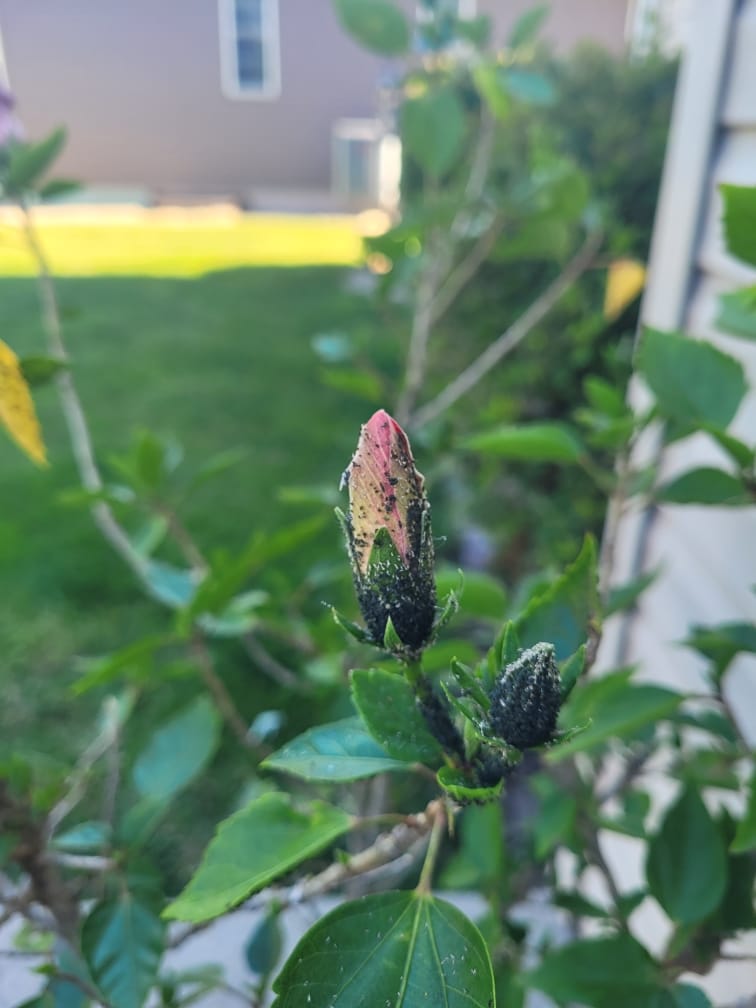
Catching aphids early is critical to saving your hibiscus. These pests, about 1/8 inch long, come in colors like green, black, or white, with green being common on hibiscus. They cluster on the undersides of leaves, buds, and new shoots.
In my Fort Collins garden, I missed them initially because they hide so well. A magnifying glass helped me spot them after that.
Here are the key signs of an aphid infestation:
- Curled or distorted leaves: Aphids inject saliva while feeding, causing leaves to twist and buds to deform. I noticed this during a Boulder heatwave, and it was a clear warning.
- Yellowing foliage: Sap loss starves the plant, leading to pale, dropping leaves, especially in Colorado’s intense sun.
- Sticky honeydew: This tacky residue on leaves or under the plant is aphid excrement. It often leads to black sooty mold.
- Ant activity: Ants farm honeydew and protect aphids from predators. Seeing ants on your hibiscus is a red flag.
- Wilted tips: Heavy infestations cause shoots to droop, even with adequate water.
In Colorado, aphids peak in late spring and early summer, particularly May and June. Check your plants weekly, especially after rain, as humidity boosts their numbers. Indoor hibiscus, common in Colorado for overwintering, are also at risk.
I once brought an infested plant indoors, and it spread to others. Don’t make that mistake.
Understanding the Aphid Life Cycle in Colorado
To effectively combat aphids, it’s helpful to understand their life cycle. Aphids are prolific reproducers. Females give live birth to clones, producing up to 40 generations in a single Colorado summer. Eggs overwinter on plant debris, hatching in spring to feed on new growth.
Nymphs mature in 7-10 days, and winged aphids emerge when populations get crowded, spreading to nearby plants. Colorado’s windy Front Range makes this dispersal easy.
Hibiscus are perfect hosts because of their juicy stems and sweet sap.
Our dry climate doesn’t deter aphids; they thrive in protected spots like leaf undersides. Indoors, without natural predators, populations explode. Outdoors, cool nights slow them down, but heatwaves trigger rapid growth. Timing your control efforts early in the cycle, before they establish, is key.
Why Hibiscus Are Vulnerable in Colorado
Hibiscus, both tropical (Hibiscus rosa-sinensis) and hardy (Hibiscus moscheutos), are popular in Colorado gardens. Tropical varieties are grown in pots and brought indoors for winter, while hardy ones thrive in beds. Both attract aphids due to their tender growth.
Colorado’s alkaline soils and low humidity stress plants, making them more susceptible. Over-fertilizing with nitrogen, a common mistake, promotes lush growth that aphids love.
I once planted hibiscus near my vegetable garden, and aphids jumped from tomatoes to my plants. Companion planting can help or hurt—marigolds repel aphids, but nearby infested crops invite them.
Hibiscus need full sun, but shaded areas can harbor aphids. Proper care, like balanced watering and avoiding over-fertilization, strengthens plants against infestations.
The Damage Aphids Cause to Hibiscus
Aphids don’t just annoy; they cause serious harm. By sucking sap, they starve the plant, leading to yellowed leaves, stunted growth, and deformed or absent flowers. In Colorado’s short growing season, this can ruin your display.
Aphids also transmit viruses, like hibiscus mosaic virus, which causes permanent leaf curling. I saw this in a friend’s Grand Junction garden, where the plant never fully recovered. Honeydew promotes sooty mold, blocking photosynthesis and weakening roots, especially in our heavy clay soils.
Ants exacerbate the problem by protecting aphids from predators. If left unchecked, aphids can spread to other plants, disrupting your entire garden ecosystem. Acting quickly can reverse the damage, as I learned after saving a heavily infested bush in Aurora.
Organic Control Methods for Colorado Gardens
Colorado gardeners often prefer organic solutions, and they’re effective against aphids. Here are some proven methods:
- Water blast: A strong stream from a hose dislodges aphids, drowning or starving them. I used this approach, targeting the undersides of leaves daily for a week. Do it in the morning to avoid fungal issues.
- Insecticidal soap: Mix 1 teaspoon of dish soap per quart of water and spray thoroughly. It suffocates aphids but requires repeat applications every 3 days. Test on a small area first—hibiscus can be sensitive.
- Neem oil: This natural pesticide disrupts aphid feeding and kills eggs. Mix 1 teaspoon of neem oil, 1 teaspoon of soap, and a quart of water, then spray in the evening to avoid leaf burn. It worked wonders in my garden.
- Diatomaceous Earth (DE): Food-grade DE, dusted on leaves, dehydrates aphids. Reapply after rain and avoid harming pollinators.
- Essential oils: Rosemary or peppermint oils, mixed with soapy water, repel aphids and smell pleasant.
These methods suit Colorado’s dry climate and are safe for pollinators. Consistency is key—don’t let up until the aphids are gone.
Beneficial Insects: Nature’s Aphid Predators
Harnessing natural predators is a game-changer. Colorado’s native insects can help control aphids:
- Ladybugs: These devour hundreds of aphids daily. Release 1,500 per plant and plant dill to keep them around. They saved my Fort Collins hibiscus.
- Lacewings: Their larvae are voracious aphid eaters. Attract adults with yarrow or fennel.
- Syrphid Flies: Hoverfly larvae consume aphids. Plant alyssum to draw them.
- Parasitic Wasps: These lay eggs inside aphids, turning them into mummies. Release them in the evening for best results.
Avoid broad-spectrum sprays that kill these allies. In my garden, ladybugs and lacewings restored balance naturally.
Chemical Controls: A Last Resort
If organic methods fail, chemical options exist but should be used cautiously. Imidacloprid, a systemic applied as a soil drench, kills aphids through treated sap but can harm bees. Bifenthrin, a contact spray, works on touch, requiring weekly reapplication.
Acephate is effective for severe cases but is toxic. Always follow labels and test on a small area, as recommended by Colorado State University Extension. I used imidacloprid once in desperation, but I prefer organics for long-term health.
Preventing Aphid Infestations on Hibiscus
Prevention is easier than control. Keep your hibiscus healthy with these tips:
- Choose the right Site: Plant in full sun (6+ hours) with wind protection. Use covers during Colorado’s hailstorms.
- Water properly: Deep, infrequent watering with mulch retains moisture. Avoid overhead watering to prevent aphid-friendly humidity.
- Fertilize wisely: Use low-nitrogen, high-phosphorus fertilizer to promote blooms without attracting aphids.
- Prune regularly: Remove suckers and improve airflow. Dispose of debris to eliminate aphid eggs.
- Inspect new plants: Quarantine nursery purchases to avoid introducing pests.
- Companion planting: Marigolds or nasturtiums deter or trap aphids.
My Colorado Springs routine—weekly checks, hosing, and ladybug releases—has kept aphids at bay for years.
Common Mistakes to Avoid
Even experienced gardeners slip up. Here’s what to watch for:
- Over-spraying: Harms beneficial insects. Start with the least toxic option.
- Ignoring ants: Use bait or Tanglefoot on trunks to stop them from protecting aphids.
- Poor timing: Spray in the evening to avoid leaf burn in Colorado’s sun.
- Incomplete coverage: Always target leaf undersides where aphids hide.
- Neglecting indoor plants: Check overwintered hibiscus regularly.
In our dry climate, soaps can dry too quickly. Adding neem oil improves sticking power.
My Hibiscus Success Story
Last summer in Denver, aphids overwhelmed my hibiscus during a heatwave. Leaves curled, and honeydew coated everything. I started with daily water blasts for three days, followed by insecticidal soap every other day. I released 2,000 ladybugs, which feasted on the remaining aphids.
A neem oil follow-up prevented reinfestation. By July, my plant was blooming again, free of mold. The key? Early, integrated action. A friend in Aspen had an indoor hibiscus infested during winter. She isolated it, used soap sprays, and improved ventilation. Her plant recovered in weeks.
Hibiscus Varieties Suited for Colorado
Some hibiscus varieties resist aphids better:
- Hardy Hibiscus (H. moscheutos): ‘Luna’ series thrives in zone 5 with fewer aphid issues.
- Rose of Sharon (H. syriacus): ‘Blue Bird’ has dense foliage that hides aphids less.
- Tropical Hibiscus: ‘President’ has thicker leaves, deterring aphids.
Plant natives like yarrow to attract predators. CSU recommends ‘Cranberry Crush’ for resilience.
Seasonal Aphid Management in Colorado
- Spring: Inspect buds and hose off early aphids. Fertilize lightly.
- Summer: Water deeply and use shade cloth during heatwaves. Apply neem monthly.
- Fall: Prune and clean up debris to remove eggs. Use dormant oil.
- Winter: Check indoor plants weekly. Rotate pots for even light.
Colorado’s frosts kill outdoor aphids, but indoor vigilance is crucial.
Other Pests to Watch For
Aphids aren’t the only threat. Spider mites, whiteflies, and mealybugs also target hibiscus. Use water blasts, yellow traps, or alcohol swabs, respectively, and maintain integrated pest management.
FAQs
- Can aphids kill my hibiscus? Rarely, but they weaken it significantly. Act quickly.
- Are organic methods pet-safe? Yes, soaps and oils are safe if used correctly.
- How do I treat indoor hibiscus? Isolate and use soap sprays with good ventilation.
- How long until results? Expect improvement in 1-2 weeks with consistent effort.
Suggested For You:
4 Methods of Propagating Hibiscus + Success Tips
Beginners Guide: When and How to Prune Hibiscus
6 Reasons Hibiscus Leaves are Curling + How to Fix Fast
10 Common Hibiscus Problems: Identification + Troubleshooting Tips
10 Reasons Your Hibiscus is Not Blooming + How to Fix
Final thoughts
Aphids on hibiscus can be daunting, but they’re manageable. From my struggles to vibrant blooms, I’ve learned that early detection, organic controls, and prevention are key. Use water blasts, soaps, and beneficial insects, and keep your plants healthy. Your hibiscus will reward you with stunning flowers that shine in our Rocky Mountain landscapes.
Key References
- Hidden Valley Hibiscus – Aphids. https://www.hiddenvalleyhibiscus.com/care/aphids.htm
- 1402 – Aphids – PlantTalk Colorado. https://planttalk.colostate.edu/topics/insects-diseases/1402-aphids/
- How to Control Aphids – Full Circle Farm. https://fullcirclefarm.blog/2021/08/03/how-to-control-aphids/
- Houseplant pests – Agricultural Biology. https://agsci.colostate.edu/agbio/ipm-pests/houseplant-pests/

Tim M Dave is a gardening expert with a passion for houseplants, particularly cacti and succulents. With a degree in plant biology from the University of California, Berkeley, he has vast experience in gardening. Over the years, he has cultivated a vast collection of desert plants and learned a great deal about how to grow and care for these unique companions.