Ann Magnolia Tree Size: How Big Does It Really Grow and Why It Matters
One of the most common mistakes people make when planting an ornamental tree is underestimating how large it will eventually grow. Trees that seem perfectly sized at the nursery can, over the years, outgrow their space — crowding structures or blocking windows.
The Ann magnolia is one of the exceptions. It is a tree that was deliberately bred to stay small. And yet, even with a compact tree like this one, understanding the exact dimensions — height, spread, root system, growth rate — matters enormously before you commit to a planting location.
I have seen Ann magnolias planted beautifully in tight city gardens, beside low front porches, and along narrow walkways. I have also seen them planted too close to foundations by homeowners who assumed “small tree” meant “stays tiny forever.” It does not. It stays manageable — which is a very different thing.
In this guide, I’ll explain everything you need to know about Ann magnolia tree size: how tall and wide it grows, how fast it gets there, how the roots behave, and how to use this knowledge to plant it in exactly the right spot.
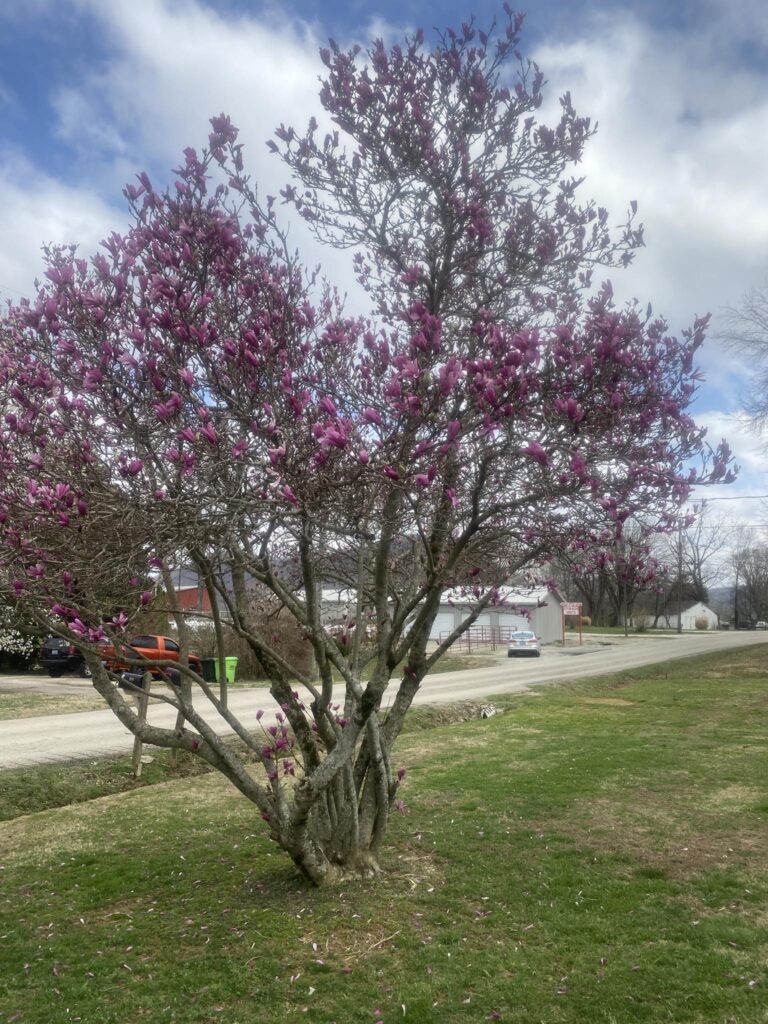
What Is the Ann Magnolia Tree?
The Ann magnolia, Magnolia × ‘Ann’, is a deciduous hybrid ornamental tree and one of the eight cultivars in the celebrated Little Girl Series. This series was developed at the U.S. National Arboretum in Washington, D.C. during the 1950s and 1960s by botanists Francis de Vos and William Kosar.
The Little Girl Series was created with a specific purpose: to produce compact, cold-hardy magnolias that bloom later in spring, reducing the risk of frost damage to the flowers. Ann is a hybrid cross between Magnolia liliiflora ‘Nigra’ and Magnolia stellata ‘Rosea’ — a parentage that directly shapes its size, form, and overall character.
Ann is best known for its deep reddish-purple to violet flowers that appear in mid to late spring, usually before the leaves fully emerge. It is widely planted across North America and parts of Europe for its compact form, reliable flowering, and strong cold hardiness.
But perhaps its most defining characteristic — the one that distinguishes it from larger magnolias — is its manageable, predictable size.
Ann Magnolia Tree Size at Maturity
Let’s start with the numbers that matter most.
Height
A mature Ann magnolia tree typically reaches a height of 8 to 10 feet. Some specimens in exceptionally fertile soil with consistent care have been recorded at up to 12 feet, but this represents the upper end of the range rather than the norm.
For planning purposes, 8 to 10 feet is the reliable target height. This is roughly the height of a single-storey roofline — tall enough to be a meaningful presence in the garden, but short enough to fit comfortably beneath eaves, power lines, and low-hanging canopies.
To put it in context, a standard saucer magnolia (Magnolia × soulangeana) can reach 20 to 25 feet at maturity. A southern magnolia (Magnolia grandiflora) can tower at 60 to 80 feet. The Ann magnolia, by comparison, is genuinely small.
Width (Canopy Spread)
The canopy spread of a mature Ann magnolia is roughly equal to its height — typically 8 to 10 feet wide. The tree develops a rounded, broadly upright silhouette that becomes denser with age.
This near-equal height-to-width ratio gives the tree a compact, almost symmetrical shape that fits neatly into formal and informal landscapes alike.
Important planning note: Always account for the full mature spread, not just the height, when choosing a planting location. A tree that grows 10 feet wide needs to be planted at least 5 feet from any fence, wall, or structure — and ideally more, to allow for comfortable air circulation and maintenance access.
Growth Rate
The Ann magnolia is classified as a slow to moderate grower. Under average growing conditions, it adds roughly 6 to 12 inches of new growth per year.
In highly fertile, well-irrigated soil with full sun, growth can push toward the higher end of this range. In poorer soils or shadier positions, expect slower progress.
This modest growth rate is actually one of the tree’s practical advantages. It means the tree remains in proportion with its surroundings for a long time and does not quickly outgrow tight planting spots the way faster-growing trees do.
Years to Maturity
Given its growth rate, an Ann magnolia typically takes 15 to 20 years to reach its full mature size. It will, however, begin flowering reliably within the first 2 to 4 years after planting — which is far sooner than many trees begin producing significant ornamental displays.
This combination of early flowering and slow overall growth makes it an excellent choice for gardeners who want visual rewards quickly without committing to a tree that will eventually dominate the space.
Ann Magnolia Root System: Size and Behaviour
Understanding the root system is just as important as knowing the above-ground size — especially for anyone planting near a foundation, paved surface, driveway, or utility line.
Root Spread
The roots of an Ann magnolia generally spread 1.5 to 2 times the width of the canopy at maturity. For a tree with a 10-foot canopy spread, you can expect the root system to extend 15 to 20 feet outward from the base of the trunk in all directions, though the bulk of the feeder roots will be concentrated within the canopy drip line.
Root Depth
Ann magnolia roots tend to be relatively shallow and wide-spreading rather than deep. The majority of the active root mass sits within the top 12 to 18 inches of soil. This is typical for the species and is why magnolias in general are sensitive to soil compaction, drought, and root disturbance.
Are the Roots Invasive?
This is a question I hear often, and the honest answer is: Ann magnolia roots are not considered invasive in the way that willows, poplars, or silver maples are. They do not aggressively seek out pipes or crack foundations under normal circumstances.
However, the roots are fleshy and brittle, which means they do not respond well to damage during construction or landscaping work nearby. They also dislike being disturbed once the tree is established — which is why transplanting a mature Ann magnolia is risky business.
Recommended minimum planting distances:
- From a building foundation: at least 6 to 8 feet, ideally 10 feet
- From paved surfaces, driveways, and walkways: at least 4 to 6 feet
- From underground utilities: check with your local utility company before planting
- From other trees: at least 10 feet, to allow both canopies to develop without crowding
Ann Magnolia Size vs Other Magnolia Cultivars
To fully appreciate the Ann magnolia’s compact dimensions, it helps to compare it against some of the other commonly planted magnolias.
Ann vs Jane Magnolia
The Jane magnolia is the cultivar most frequently compared to Ann, as both are part of the Little Girl Series. Jane grows slightly larger — typically reaching 10 to 15 feet in height compared to Ann’s 8 to 10 feet. Jane also tends to have a slightly more open, upright form, while Ann is denser and more rounded.
If space is genuinely tight, Ann is the more conservative choice. If you have a little more room and want slightly more vertical presence, Jane is worth considering.
Ann vs Betty Magnolia
Betty is another Little Girl cultivar. It reaches a similar height to Ann — roughly 10 to 15 feet — but tends to produce larger flowers. Betty’s size advantage means Ann is still the better fit for the most compact spaces.
Ann vs Saucer Magnolia (M. × soulangeana)
The classic saucer magnolia reaches 20 to 25 feet tall with a similar spread. It is beautiful, but it is a fundamentally different scale. Ann is roughly half the size of a saucer magnolia at maturity and therefore far more suitable for small residential gardens.
Ann vs Star Magnolia (M. stellata)
Interestingly, the star magnolia — one of Ann’s parent species — grows to a similar size range: typically 15 to 20 feet tall. Ann is actually more compact than one of its own parents, reflecting the success of the Little Girl breeding programme.
Ann vs Southern Magnolia (M. grandiflora)
There is really no comparison here. The southern magnolia is a massive tree by any standard — 40 to 80 feet tall in many landscapes. Ann is, by contrast, a small garden-scale tree. They occupy entirely different roles in the landscape.
What Influences the Size of an Ann Magnolia?
The mature dimensions described above represent typical growth under average conditions. Several factors can influence how large — or how compact — your individual tree actually grows.
Sunlight
Full sun produces the best growth and the most abundant flowering. Ann magnolias planted in full sun (6 or more hours of direct sunlight per day) will typically grow more vigorously and develop a fuller canopy than those grown in partial or heavy shade.
In deep shade, growth slows considerably, and the tree may develop a leggier, less attractive form as it stretches toward the light.
Soil Quality and Fertility
Rich, well-amended soil encourages stronger growth. Trees planted in heavy clay, compacted soils, or very sandy, nutrient-poor ground will grow more slowly and may never reach their full potential size or flowering density.
Ideal soil conditions: moist, well-draining, slightly acidic (pH 5.5 to 6.5), rich in organic matter.
Watering and Irrigation
Consistent, adequate moisture — particularly during the first two to three years after planting — has a direct impact on how quickly and robustly an Ann magnolia establishes and grows. Drought stress during establishment stunts growth and can set the tree back significantly.
Once established, Ann magnolias are more resilient, but they still benefit from supplemental watering during extended dry periods.
Climate and USDA Zone
Ann magnolia is hardy in USDA Zones 4 through 8. Within this range, trees in the warmer zones (7 and 8) tend to grow slightly faster and larger than those in the colder zones (4 and 5), where the shorter growing season limits annual growth.
Pruning Practices
Regular pruning keeps the tree slightly more compact and controlled. Left entirely unpruned, the tree will reach its natural upper size limit over time. Thoughtful, light pruning after each flowering season helps maintain a desired size and shape without compromising next year’s flower buds.
Ann Magnolia Size in Small Garden and Urban Landscapes
One of the reasons the Ann magnolia has become so popular is precisely because of its size. It fits into landscape situations where most trees simply cannot go.
Small Residential Gardens
In gardens where total area is limited — think urban townhouse plots, terraced gardens, and small suburban backyards — the Ann magnolia is one of the few trees that delivers genuine ornamental impact without eventually taking over.
A mature specimen of 8 to 10 feet with an equally wide canopy is visible and beautiful from most vantage points in a small garden, while still leaving plenty of open space around it.
Foundation Planting
Ann magnolia is commonly used as a foundation planting — placed near the corners or along the front of a house to soften the transition between architecture and garden. Its compact height makes it ideal for this role, provided it is planted at least 6 to 8 feet from the structure.
Avoid planting directly beneath the eaves where dripping water and reflected heat can stress the tree.
Narrow Borders and Side Gardens
The tree’s relatively narrow mature spread — roughly equal to its height — makes it suitable for narrow planting strips along fences, walls, and pathways where wider-canopied trees would be impractical.
Container Growing
Ann magnolia can be grown in large containers or raised planters, which effectively limits its size further. This makes it a viable option for balconies, rooftop gardens, and paved courtyards where in-ground planting is not possible.
Container-grown specimens require more frequent watering and regular fertilization, and they should be repotted every few years as the root system fills the pot.
Planting the Ann Magnolia: Size-Informed Best Practices
Knowing the tree’s mature size should directly inform how and where you plant it.
Choosing the Right Location
Before digging a single hole, map out the full mature footprint of the tree — both its canopy spread and the likely root zone. Confirm that:
- No structures, walls, or fences are within 6 to 8 feet
- No paved surfaces are within 4 to 6 feet
- No other trees or large shrubs will crowd the canopy within 10 feet
- The site receives at least 6 hours of direct sun daily
Planting Depth
One of the most common planting errors with magnolias is planting too deep. The root flare — the point where the trunk widens and transitions to roots — must be at or very slightly above the surrounding soil surface. Burying the root flare promotes rot, disease, and long-term decline.
Dig the hole no deeper than the root ball, but two to three times wider. This encourages lateral root spread and helps the tree establish quickly.
Mulching Around the Root Zone
Apply a 3- to 4-inch layer of organic mulch (such as shredded bark or wood chips) over the root zone after planting, extending it out to the canopy drip line if possible. Keep the mulch at least 3 to 4 inches away from the trunk.
Mulch significantly helps with moisture retention, temperature regulation, and weed suppression — all of which support healthy root and canopy development.
Pruning to Manage Size
Ann magnolia requires very little pruning under normal circumstances. Its naturally compact growth habit does most of the work for you.
However, if the tree is growing in a space where even modest size creep is a concern, light annual pruning immediately after flowering can keep it within a specific size range without causing harm.
Key pruning rules:
- Never prune in late summer or autumn — the tree sets next year’s flower buds after the current season’s bloom, and autumn pruning removes them.
- Remove dead, damaged, or crossing branches as needed at any time.
- Avoid removing more than one-third of the canopy in a single season.
- Always use clean, sharp tools and make cuts just outside the branch collar.
Seasonal Size Changes: What to Expect Through the Year
Ann magnolia is a deciduous tree, which means it loses its leaves in autumn and remains bare through winter. This seasonal change affects how the tree reads in the landscape.
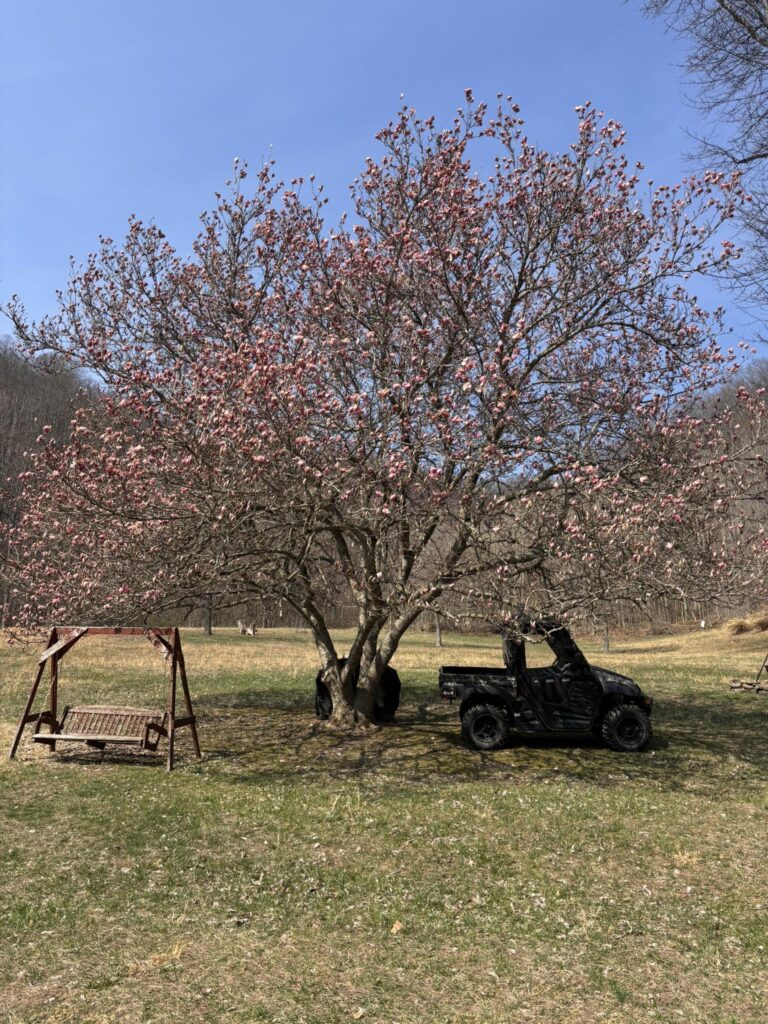
Winter: The tree appears smaller than it does in full leaf — bare branches reveal the true skeletal structure. The tree’s compact form remains visible and can still be attractive in a winter garden.
Spring: The tree’s most dramatic season. Flowers appear on bare branches, creating a striking display before the foliage emerges. The visual footprint of the tree expands as leaves unfurl.
Summer: In full leaf, the tree looks its largest and most substantial. The dense, rounded canopy creates useful shade around its base and reads as a full, complete garden specimen.
Autumn: Foliage turns yellow to yellow-brown before dropping. The tree gradually reveals its winter silhouette again. The leaf litter is manageable given the tree’s compact size.
Suggested For You:
15 Beautiful Trees With White Bark: Perfect Picks for Garden and Landscape Settings
10 Beautiful Trees with Yellow Leaves in Fall
15 Stunning Trees with Red Leaves Year-Round
Jane vs Ann Magnolia Tree: Comparisons + Which One to Choose for Your Garden?
20 Common Magnolia Tree Problems: Brown Leaves, Diseases, Pests, and What to Do About Them
Final Thoughts
The Ann magnolia is, above all else, a tree defined by its scale. It was bred to be compact. It was designed to fit where other magnolias cannot. And for the right planting location, it delivers one of the most beautiful spring displays available in the small ornamental tree category.
At 8 to 10 feet tall and equally wide at maturity, it fits comfortably into small gardens, beside foundations, along pathways, and in containers. Its slow to moderate growth rate means it takes its time reaching those dimensions — rewarding you with early flowers along the way.
Understanding its size before you plant is the single most important thing you can do to ensure it thrives in your landscape for decades. Give it enough room. Plant it at the right depth. Mulch generously. Water consistently in its early years.
Do those things, and the Ann magnolia will grow into exactly the tree it was always meant to be — a compact, graceful, and breathtaking addition to any garden that is lucky enough to have one.
References
- United States National Arboretum – Little Girl Magnolia Hybrids: Development and Characteristics https://www.usna.usda.gov/Gardens/collections/magnolia.html
- NC State Extension – Magnolia × ‘Ann’ Plant Profile https://plants.ces.ncsu.edu/plants/magnolia-ann/
- University of Florida IFAS Extension – Magnolias for Florida Landscapes https://edis.ifas.ufl.edu/publication/ST381
- Penn State Extension – Selecting and Planting Magnolias in the Home Landscape https://extension.psu.edu/magnolias-for-the-landscape
- Missouri Botanical Garden – Magnolia × ‘Ann’ Plant Finder https://www.missouribotanicalgarden.org/PlantFinder/PlantFinderDetails.aspx?taxonid=277913

Tim M Dave is a gardening expert with a passion for houseplants, particularly cacti and succulents. With a degree in plant biology from the University of California, Berkeley, he has vast experience in gardening. Over the years, he has cultivated a vast collection of desert plants and learned a great deal about how to grow and care for these unique companions.