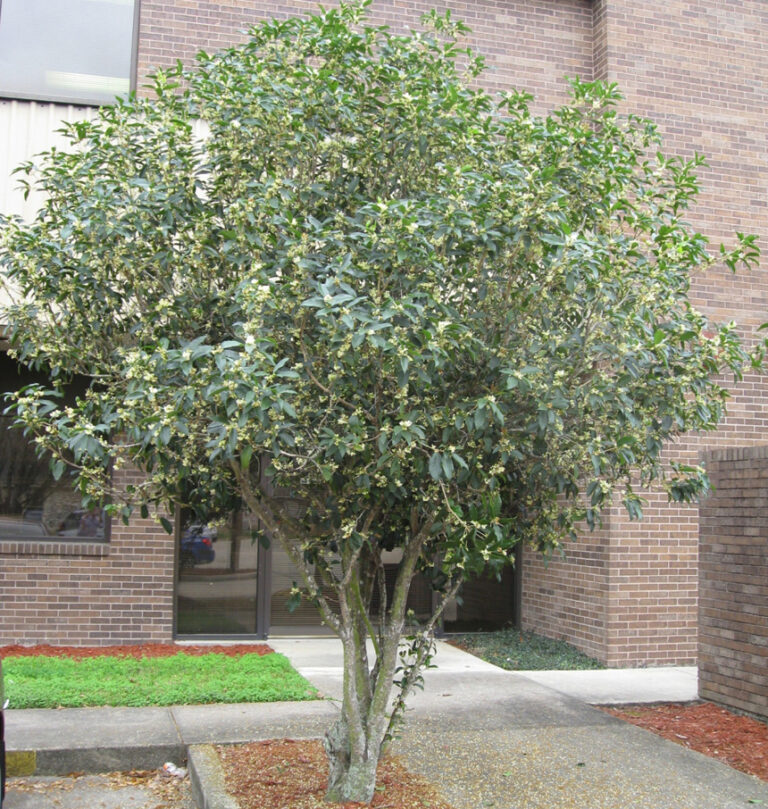
Understanding American Yellowwood Tree: Size, Growth Rate, Problems, and Cultivation
The American yellowwood, Cladrastis kentukea, is a medium-sized, deciduous tree belonging to the legume family (Fabaceae). Its common name comes from the striking yellow colour of its freshly cut heartwood — known for producing yellow dye.
The genus name Cladrastis comes from the Greek words klados (branch) and thraustos (brittle), a reference to the tree’s relatively fragile branch structure. The species name kentukea refers to Kentucky, one of the states where it was first scientifically documented.
You may also come across the older scientific synonym Cladrastis lutea, which is still used in some older texts and databases. Both names refer to the same species.
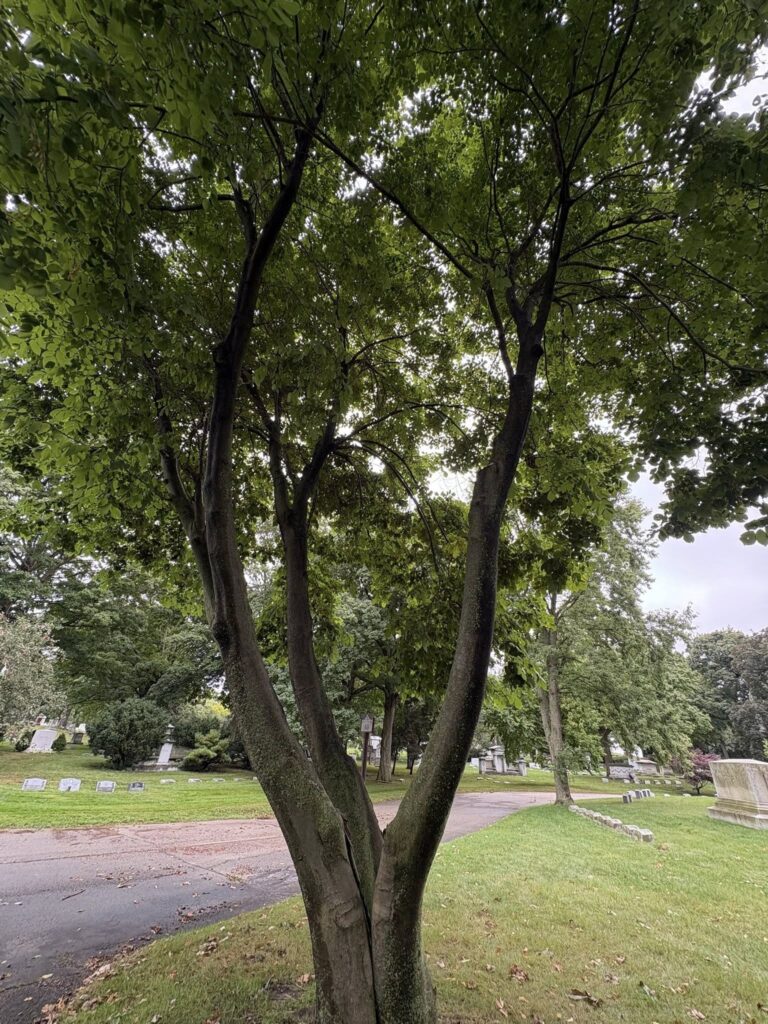
In terms of appearance, this tree is graceful without being showy in an overwhelming way. Its smooth, grey bark resembles that of the American beech. Its leaves are bright, fresh green in summer, turning clear yellow in autumn.
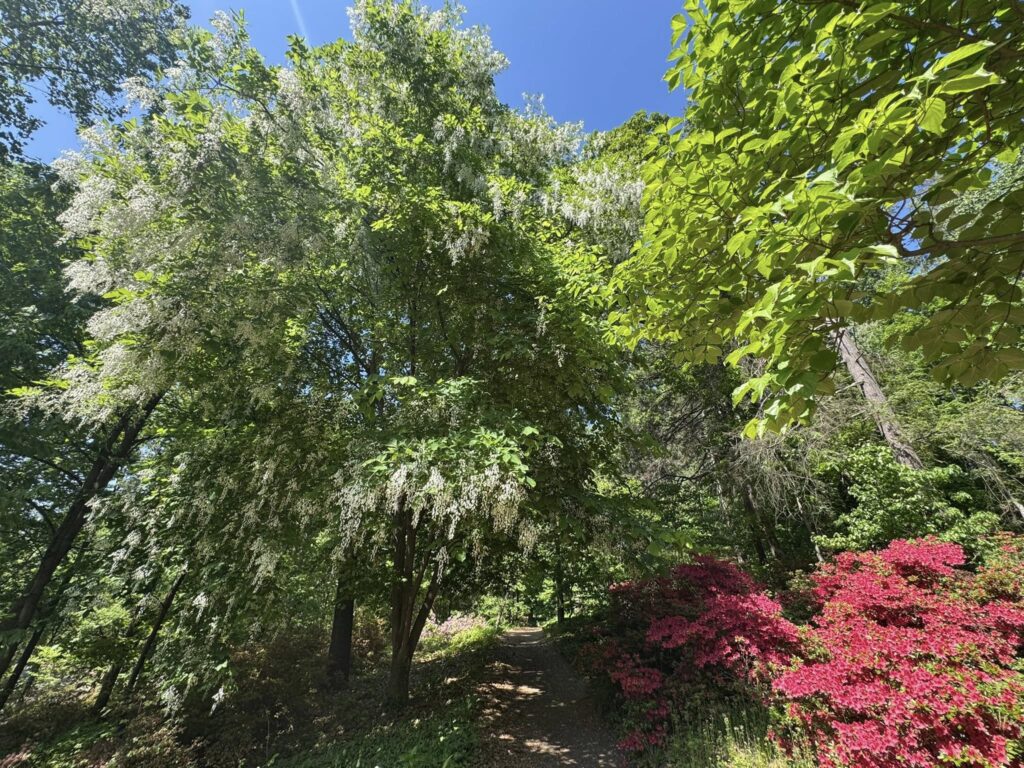
And in late spring, it produces spectacular, drooping panicles of fragrant white flowers that are reminiscent of wisteria in their elegant hang.
It is the kind of tree that earns admiration in every season.
| Common Name | American Yellowwood |
| Scientific Name | Cladrastis kentukea (also listed as C. lutea) |
| Family | Fabaceae (Legume family) |
| Native Range | Southeastern and south-central United States |
| Mature Height | 9–15 metres (30–50 feet) |
| Mature Spread | 9–12 metres (30–40 feet) |
| Growth Rate | Slow to moderate (30–60 cm per year) |
| Lifespan | 50–100+ years |
| Flower Colour | White (occasionally pale pink) |
| Bloom Time | Late May to early June |
| Foliage | Bright green, pinnate leaves; yellow autumn colour |
| Bark | Smooth, grey, beech-like |
| Soil Preference | Well-drained, loamy to rocky; slightly alkaline tolerant |
| Sun Requirements | Full sun to light partial shade |
| USDA Hardiness Zones | 4–8 |
| Wildlife Value | Bees, butterflies, and other pollinators |
| Toxicity | Seeds and bark reported mildly toxic if ingested |
| Conservation Status | Vulnerable in parts of native range |
Native Range and Natural Habitat
The American yellowwood has a naturally restricted and somewhat fragmented native range, which is part of why it remains relatively uncommon even among those familiar with North American trees.
It is native primarily to the southern Appalachian Mountains and surrounding areas, with natural populations found in:
- Kentucky
- Tennessee
- North Carolina
- Virginia
- Arkansas
- Missouri
- Indiana
- Alabama
- Georgia
Within this range, the yellowwood typically grows in rocky, wooded slopes, bluffs, and stream edges — particularly on calcareous (limestone-derived) soils. It is often found on steep hillsides and at the edges of forest openings where it receives adequate light.
This preference for rocky, well-drained ground in sheltered valleys explains much of its cultivation requirements. The tree is naturally adapted to sites where drainage is excellent but where some protection from harsh winds exists.
It is not a tree of deep forest interiors. In the wild, it tends to occupy woodland edges and partially open positions — a clue that it does well in cultivation when given reasonable light.
Physical Description in Detail
Trunk and Bark
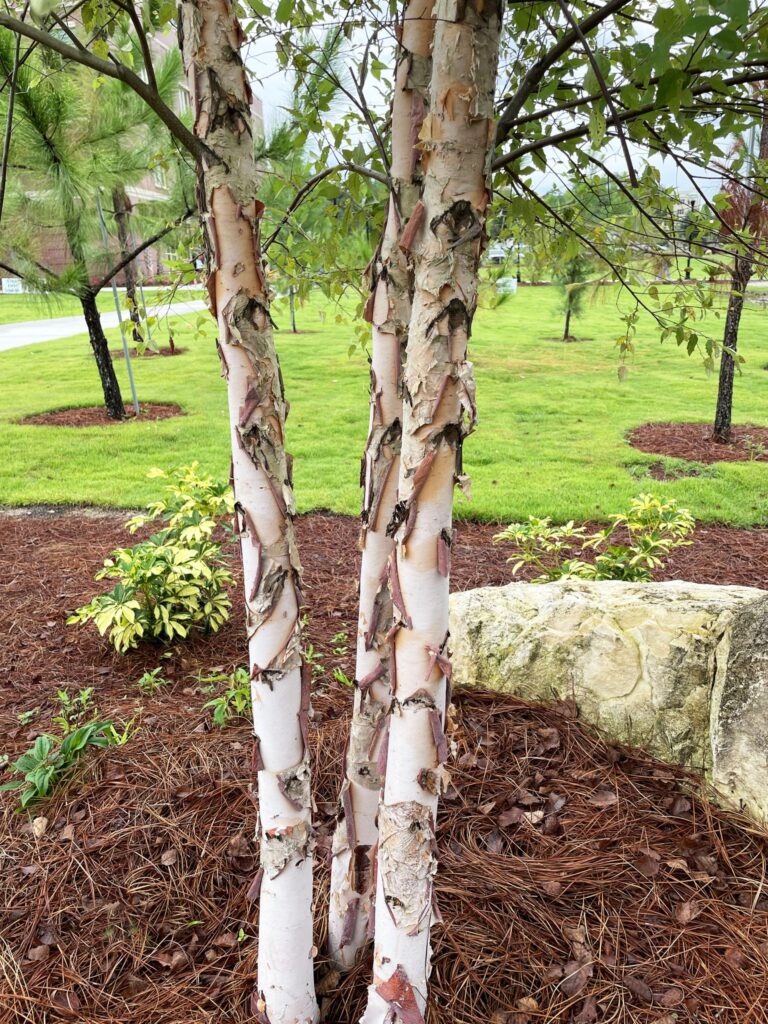
One of the most immediately distinctive features of the American yellowwood is its smooth, grey, muscle-like bark, which closely resembles that of the beech tree. Unlike many trees whose bark becomes deeply furrowed with age, the yellowwood’s bark remains relatively smooth even on mature specimens.
When the heartwood is freshly cut or split, it reveals a vivid, butter-yellow interior — the source of its common name and its historical use as a dye source.
The trunk is generally single and upright in young trees, though mature specimens often develop a broad, rounded crown with multiple ascending limbs.
These major branches are the fragile elements that give the genus its name — they can split at the union point under ice load or storm damage, which is worth keeping in mind when siting the tree.
Leaves
The leaves are pinnately compound, meaning each leaf is made up of multiple leaflets arranged along a central stalk. Each leaf typically has 7–11 alternately arranged, ovate leaflets, each around 5–8 cm long.
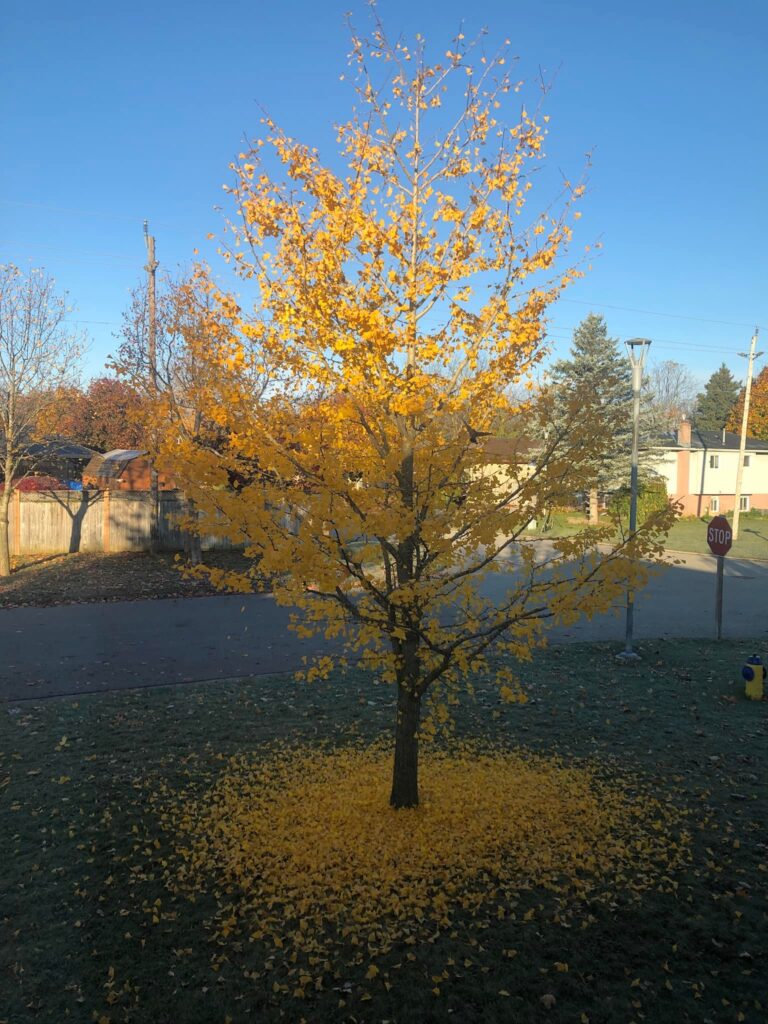
In spring, as the leaves emerge, they have a delicate yellow-green colour that deepens to a rich, bright green through summer. In autumn, the foliage turns a warm, clear yellow before falling — providing season-end interest that is clean and appealing without the drama of, say, a sugar maple.
One unusual feature of the leaves: they wrap around the buds at the base, enclosing the bud entirely within the swollen base of the leaf stalk (petiole). This is a distinctive botanical characteristic that helps with winter identification.
Flowers
The flowers are, without question, the tree’s most celebrated feature. They appear in large, pendant panicles up to 30–40 cm long, typically in late May to early June, just as the new leaves are expanding.
Each individual flower is white, pea-shaped, and approximately 2.5 cm long. The overall effect of the flowering tree is breathtaking — the hanging clusters of white bloom cover the entire canopy, and the flowers carry a sweet, pleasant fragrance.
It is worth noting that the yellowwood does not flower every year with equal vigour. Heavy flowering tends to occur every two to three years, with lighter or absent flowering in between. This is a normal characteristic of the species, not a sign of poor health.
A pink-flowered cultivar, Cladrastis kentukea ‘Rosea’, has been selected and is occasionally available in specialist nurseries. It shares all the other characteristics of the species but offers soft pink blooms instead of white.
Fruit
After flowering, the tree produces flat, thin seed pods (legumes) that are 5–10 cm long and contain several seeds. The pods hang from the branches through summer and into autumn, turning from green to brown as they ripen.
The seeds are reported to be mildly toxic if consumed in significant quantity, so the tree should be planted with some care in areas where young children or animals might be tempted to ingest plant material.
Growing American Yellowwood: Cultivation Guide
The American yellowwood is a surprisingly adaptable tree once you understand its basic preferences. It does not demand particularly rich soil, and it tolerates a range of conditions that would stress less resilient species.
Soil
The tree performs best in well-drained loamy to rocky soils, ideally with a neutral to slightly alkaline pH. Its natural habitat on limestone-derived soils reflects this preference — and interestingly, it is one of the few native North American trees that genuinely tolerates alkaline soil conditions. This makes it valuable in areas where many acid-loving trees struggle.
That said, it also grows well in neutral, slightly acidic soils. The key requirement is drainage. Wet, waterlogged soils are the main growing condition to avoid — these lead to root stress, poor growth, and vulnerability to disease.
Light
The American yellowwood grows best in full sun, which promotes the most vigorous flowering and the best crown development. It will tolerate light partial shade but may produce fewer flowers and a more open, less symmetrical canopy.
When selecting a planting position, choose a spot that receives at least 6 hours of direct sunlight daily. South-facing or west-facing aspects in temperate gardens tend to work well.
Water
Established yellowwood trees are moderately drought-tolerant, though they appreciate supplemental watering during extended dry periods. Young trees, however, need consistent moisture during their first two to three growing seasons while their root systems are developing.
Avoid overhead irrigation where possible — the large flower clusters and the tree’s canopy structure can retain moisture in a way that encourages fungal issues if the foliage is repeatedly wet in warm conditions.
Temperature and Hardiness
The American yellowwood is hardy across USDA zones 4 through 8, meaning it tolerates winter temperatures as low as approximately −35°C (−30°F) in zone 4 conditions. This is a wider cold tolerance than many people realise, making it suitable for much of the eastern United States and comparable temperate climates elsewhere.
It is less suited to areas with very hot, humid summers or to regions west of the Rocky Mountains, where the climate diverges significantly from its native range.
Fertilisation
In most garden soils, little to no fertilisation is required. Like other members of the legume family, the yellowwood has the ability to fix atmospheric nitrogen through associations with soil bacteria — a characteristic that reduces its need for nitrogen supplementation.
If the tree shows signs of poor vigour or pale foliage in genuinely poor soil, a light application of a balanced, slow-release fertiliser in early spring is appropriate. Avoid high-nitrogen feeds that promote excessive, soft growth.
Pruning
Pruning the American yellowwood requires careful timing. This tree is a heavy “bleeder” — it loses significant amounts of sap if pruned in late winter or early spring when the vascular system is under pressure ahead of the growing season.
The correct time to prune is in summer (after flowering) or in late autumn, once the tree has fully entered dormancy. Even then, keep pruning to a minimum. The tree’s natural form is beautiful and does not need heavy intervention.
When pruning is necessary — to remove crossing branches or to correct structural issues — address co-dominant leaders and narrow branch angles in young trees. These weak unions are prone to splitting in storms, so early corrective pruning is far preferable to managing storm damage later.
Always sterilise pruning tools between cuts to reduce disease transmission risk.
Wildlife and Ecological Value
The American yellowwood provides genuine ecological benefit to the environments in which it grows. Its flowers are an important resource for pollinators.
Honeybees are particularly attracted to the flowers, and the tree can produce a notable honey crop in areas where large specimens flower heavily. Bumblebees and various native bee species also visit the flowers regularly.
Butterflies, particularly swallowtail species, use the flowers as a nectar source. Some literature also documents the use of this tree as a larval host for certain moth species.
As a legume, the yellowwood’s root system plays a role in soil nitrogen cycling, making it beneficial to surrounding soil ecology. Its fallen leaves decompose to produce a nutrient-rich leaf litter.
Given its relatively small native population size and fragmented range, planting yellowwood in cultivation also contributes to the broader conservation of this species. It is not currently listed as federally threatened, but some state-level assessments in parts of its native range identify it as rare or vulnerable.
Historical and Cultural Uses
The most direct historical use of the American yellowwood was as a source of yellow dye. Early settlers and Indigenous communities used the bright yellow heartwood to dye wool, fabric, and other materials. The intensity of the colour it produced made it a valued raw material before synthetic dyes became widely available.
The wood itself is fine-grained, strong, and attractive, though the tree has never been harvested commercially on any significant scale — partly due to its rarity in the wild, and partly because the trunks rarely grow large enough to be economically valuable for timber.
There are also references in historical sources to gunstocks being made from yellowwood timber, prized for its combination of strength and visual appeal.
Today, its value is almost entirely ornamental and ecological. In this role, it arguably delivers far more than it ever could as a dye plant or timber source.
Landscape Uses and Garden Value
The American yellowwood is primarily used as a specimen tree in landscape design — a tree planted for its individual beauty rather than as part of a mass planting or windbreak.
It is well-suited to:
- Residential gardens with medium to large yards — the mature spread of up to 12 metres means it needs space, but it is not an overwhelming tree in the way that a mature oak or beech can be.
- Parks and public spaces — its ornamental value, non-invasive root system, and manageable size make it a good civic tree where larger species would be impractical.
- Street tree planting — its tolerance of alkaline and somewhat compacted soils, combined with its moderate size, makes it a candidate for street or boulevard planting, though its brittle branches require thoughtful placement away from areas of frequent storm damage.
- Naturalistic or native planting schemes — as a genuine North American native, it fits naturally into wildlife gardens and ecologically minded planting designs.
The tree combines well with spring-flowering understory plants beneath its canopy, and its summer shade, while not as dense as some trees, is pleasant and dappled.
Common Problems and How to Manage Them
The American yellowwood is generally a robust, low-maintenance tree with relatively few serious pest or disease problems. However, there are a handful of issues to be aware of.
Verticillium wilt (Verticillium spp.) is occasionally reported on yellowwood, as with many members of the legume family. Symptoms include sudden wilting and dieback of individual branches. There is no cure; affected branches should be removed, and the tree’s vigour supported through good cultural practices.
Powdery mildew may appear on the foliage in warm, dry summers, particularly where air circulation is poor. It is rarely serious enough to threaten the tree’s health and can usually be managed by improving site airflow and avoiding wet foliage conditions.
Storm damage remains the most significant structural concern. The brittle branch unions of mature yellowwoods are vulnerable to splitting under ice load or wind. Careful formative pruning in youth reduces this risk considerably.
Trunk borers are occasionally reported but are not a primary pest of this species.
Overall, the American yellowwood’s problem list is notably shorter than that of many ornamental trees, which makes it a refreshingly low-maintenance choice for patient gardeners.
How to Propagate American Yellowwood
The American yellowwood can be propagated from seed or from root cuttings.
From seed: Collect ripe pods in autumn and extract the seeds. The seed coat is hard and requires scarification (light sanding or nicking with a knife) followed by cold stratification at around 4°C for 60–90 days to break dormancy. After stratification, sow in a well-drained seed compost and provide warmth for germination.
From root cuttings: The tree produces root suckers naturally, and root cuttings taken in late winter can be rooted successfully. This is a reliable method for maintaining the characteristics of named cultivars.
Grafting is the method used commercially for cultivars such as ‘Rosea’, where the scion is grafted onto seedling rootstock.
Final Thoughts
The American yellowwood deserves far wider recognition than it currently receives. It is beautiful in flower, handsome in leaf, interesting in bark, and genuinely valuable to wildlife. It asks for very little in return — reasonable drainage, adequate light, and the occasional corrective pruning.
For anyone in search of a medium-sized native tree with four-season interest, low maintenance requirements, and ecological credibility, the American yellowwood belongs firmly on the shortlist.
If you have not yet seen one in full bloom, I would strongly encourage you to find one. There are few spring sights in North American horticulture that rival it.
References
- University of Florida IFAS Extension — Cladrastis kentukea: American Yellowwood https://edis.ifas.ufl.edu/publication/ST158
- North Carolina State University Extension — Cladrastis kentukea Plant Profile https://plants.ces.ncsu.edu/plants/cladrastis-kentukea/
- Missouri Botanical Garden — Cladrastis kentukea Plant Finder https://www.missouribotanicalgarden.org/PlantFinder/PlantFinderDetails.aspx?kempercode=a833
- United States Department of Agriculture (USDA) — PLANTS Database: Cladrastis kentukea https://plants.usda.gov/plant-profile/CLKE

Tim M Dave is a gardening expert with a passion for houseplants, particularly cacti and succulents. With a degree in plant biology from the University of California, Berkeley, he has vast experience in gardening. Over the years, he has cultivated a vast collection of desert plants and learned a great deal about how to grow and care for these unique companions.