Understanding American Paper Birch (Betula papyrifera): Identification, Uses, Problems and Full Cultivation Details
There is something quietly arresting about a stand of paper birch trees in winter. The white bark glows against grey skies, and the thin branches trace delicate lines above the snow.
I remember the first time I walked through a birch forest in northern Michigan — the silence, the pale trunks, the soft rustle of dried leaves. It felt like stepping into a painting. That memory is exactly why Betula papyrifera, the American paper birch, deserves the careful attention this article gives it.
Whether you are a homeowner wanting to plant one, a student researching native trees, or simply a curious reader — this guide covers everything you need to know about the American Paper Birch.
But before we dive in, let’s have a brief look into the life of this magnificent plant:
| Scientific name | Betula papyrifera |
| Common names | Paper birch, white birch, canoe birch |
| Family | Betulaceae |
| Native range | Northern and central North America |
| Hardiness zones | USDA Zones 2–6 |
| Mature height | 50–70 feet |
| Bark | White, peeling in papery layers |
| Leaf color (fall) | Bright yellow |
| Sun requirement | Full sun |
| Soil preference | Well-drained, slightly acidic |
| Lifespan | 80–140 years in natural settings |
| Wildlife value | Extremely high (400+ insect species) |
What Is the American Paper Birch?
The American paper birch (Betula papyrifera), also called the white birch, canoe birch, or silver birch, is a medium to large deciduous tree native to North America. It belongs to the family Betulaceae and is one of the most widely distributed tree species on the continent.
Its defining feature is its striking white, papery bark that peels naturally in thin, horizontal sheets. This characteristic makes it instantly recognizable and sets it apart from other birch species. Few trees have captured the imagination of naturalists, artists, and Indigenous communities the way this one has.
Geographic Range and Natural Habitat
The paper birch has one of the broadest natural ranges of any North American tree. It grows from Newfoundland and Labrador in the east all the way to British Columbia and Alaska in the west, and extends southward through the Great Lakes region, New England, and the Appalachian Mountains as far as North Carolina.
Key geographic regions where it thrives include:
- The boreal forests of Canada, where it forms vast, continuous woodlands
- The Great Lakes states of Michigan, Wisconsin, and Minnesota
- New England states, particularly Vermont, Maine, and New Hampshire
- The Rocky Mountain foothills in Montana and Idaho
- Parts of Alaska, making it one of the few hardwoods adapted to subarctic conditions
The paper birch is a pioneer species. It is one of the first trees to colonize disturbed or burned land, playing a critical ecological role in forest regeneration. It grows best in cool, moist climates and prefers well-drained, sandy or loamy soils.
Note: This tree does poorly in compacted, waterlogged, or heavily alkaline ground.
In terms of elevation, it can be found from sea level up to 4,000 feet in mountain regions, making it exceptionally adaptable.
Physical Description and Identifying Features
Bark
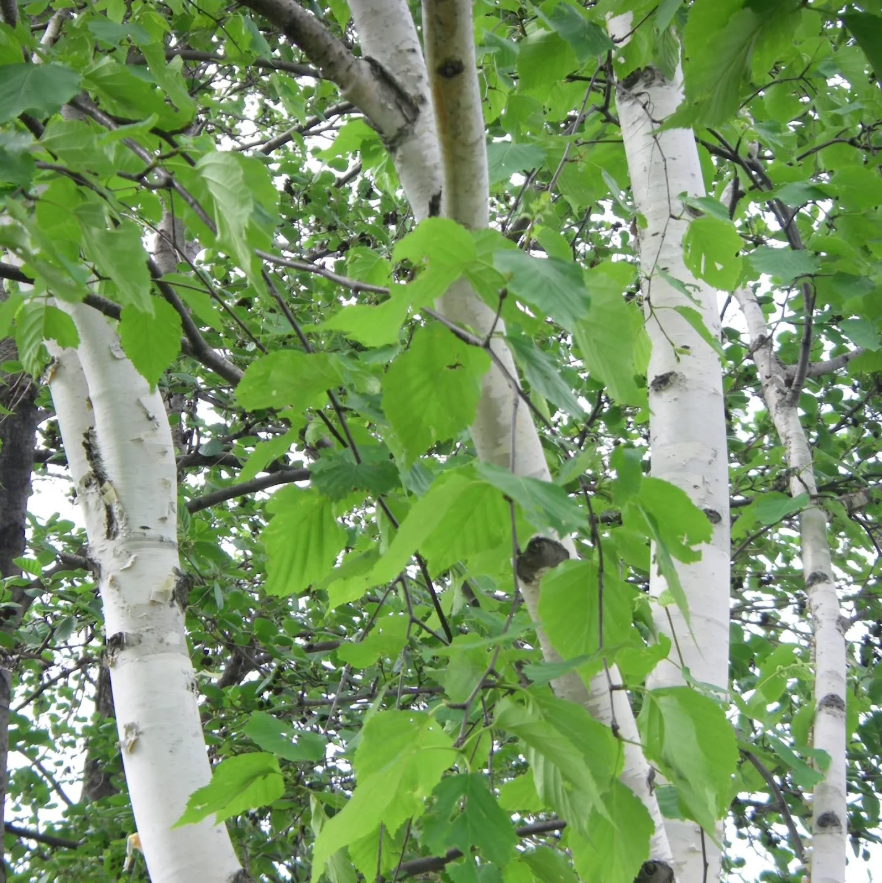
The most iconic feature is the chalk-white to cream-colored bark that peels in thin, papery layers. In young trees, the bark may appear reddish-brown. As the tree matures, it transitions to that familiar white. The outer bark is marked with dark, horizontal lenticels — small lines that allow gas exchange through the bark’s surface.
Important note: Never peel the bark from a living tree. Removing the bark exposes the inner cambium layer, which can kill the tree or leave it permanently disfigured. The shedding you observe is natural, not an invitation.
Leaves
The leaves are ovate to triangular, measuring 2 to 4 inches long, with doubly serrated edges. They are bright green on top and paler underneath, turning a rich, warm yellow in autumn. The fall color display of a paper birch grove is one of the great seasonal spectacles in northern forests.
Height and Form
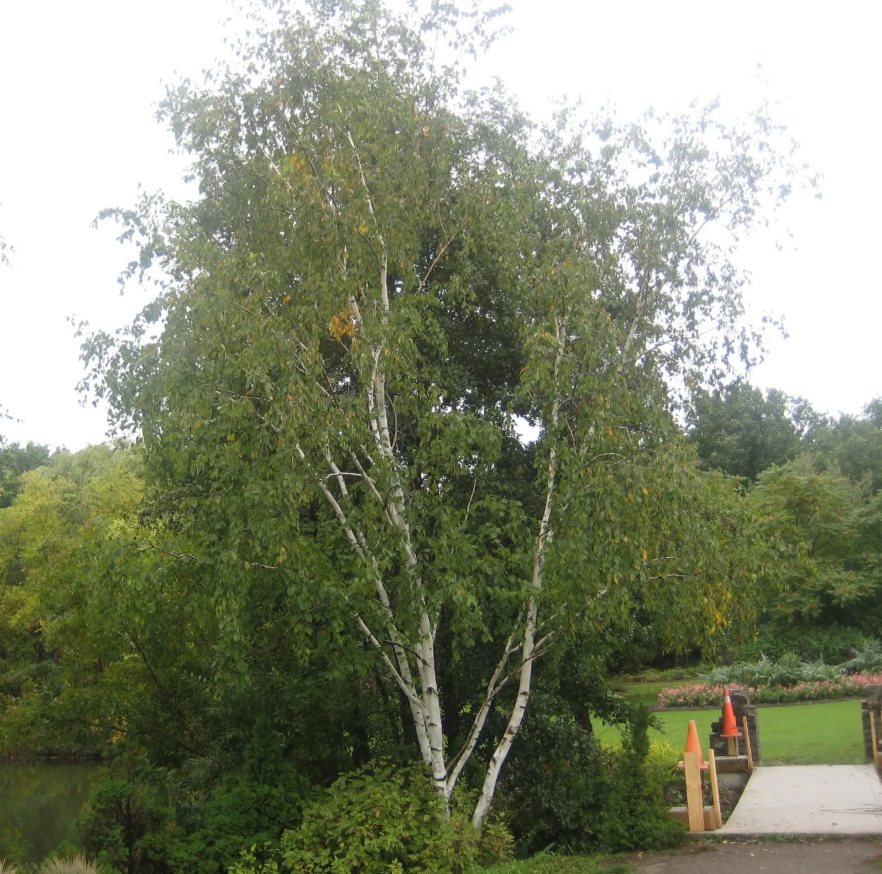
A mature paper birch typically stands 50 to 70 feet tall, though exceptional specimens can reach 90 feet. The trunk is usually straight and slender, with a spread of 25 to 40 feet at the canopy. The tree grows in a single-trunk or multi-stem form, the latter being especially common and aesthetically popular in landscaping.
Flowers and Fruit
Paper birch is monoecious — meaning it carries both male and female flowers on the same tree. The male catkins are long, pendulous, and appear in late spring, typically measuring 3 to 4 inches.
On the other hand, the female catkins are shorter and upright, maturing into small, cylindrical fruiting structures called strobiles. Each strobile contains hundreds of tiny winged seeds called samaras, which are dispersed by wind.
Root System
The roots are shallow and wide-spreading, which is why paper birch trees are sensitive to soil compaction, drought, and heat reflected from pavement. Do not plant them in confined urban spaces with poor soil volume.
Ecological Importance
The paper birch is far more than a beautiful tree. It is a keystone species in northern forest ecosystems.
Wildlife Habitat
Over 400 species of insects are associated with birch trees in North America. This makes birch one of the most ecologically connected trees on the continent, second only to oaks in insect diversity support.
- Birds: Yellow warblers, redpolls, and chickadees feed on birch catkins and seeds. Woodpeckers, particularly the yellow-bellied sapsucker, drill sap wells in birch bark to feed on sap.
- Mammals: Moose browse heavily on birch twigs and bark in winter. Beaver use birch extensively for dam construction and food caching. White-tailed deer and snowshoe hare also feed on the bark and young shoots.
- Insects and pollinators: Birch leaves support the larvae of several moth and butterfly species, including the mourning cloak butterfly (Nymphalis antiopa).
Forest Succession
As a fast-growing pioneer species, the paper birch is critical in forest recovery after fire, logging, or windthrow. It shades out competing grasses and shrubs, creating conditions for shade-tolerant species like sugar maple, beech, and hemlock to establish beneath it. In this way, birch essentially builds the forest for the trees that follow.
Carbon Sequestration
Paper birch plays a modest but real role in carbon storage. Its high growth rate means it absorbs carbon quickly in its early years. In boreal regions, birch forests contribute significantly to continental carbon cycling.
Cultural and Historical Significance
Few trees have a deeper relationship with human culture in North America than the paper birch.
Indigenous Uses
For thousands of years, Indigenous peoples across the continent relied on paper birch for survival. The Anishinaabe (Ojibwe), Haudenosaunee (Iroquois), Cree, and dozens of other nations used birch bark for an extraordinary range of purposes:
- Canoe construction: The bark was harvested in large sheets, stitched with spruce root, and sealed with pine pitch to make lightweight, waterproof canoes — the birch bark canoe remains one of the most elegant examples of Indigenous engineering.
- Shelter: Bark panels covered wigwams and temporary shelters.
- Containers and cookware: Birch bark was folded and stitched into baskets, bowls, and even cooking vessels.
- Medicine: Inner bark was used to treat fevers, coughs, and skin infections. Birch sap was consumed as a tonic.
- Writing material: Thin sheets of bark served as paper for messages and records.
This relationship between people and birch is thousands of years old and represents one of the most intimate human-tree partnerships in the natural world.
Colonial and Modern Uses
European settlers adopted many Indigenous uses of birch. The wood was used for furniture, spools, wooden ware, and flooring. Birch tar, extracted from the bark, was used as an adhesive and preservative.
Today, birch sap is tapped in spring, much like maple sap, and consumed as a refreshing drink or reduced to birch syrup. In Scandinavia and parts of Russia, birch sap beverages have been popular for centuries — and this tradition has recently gained renewed interest in North America as a functional wellness drink.
Growing Conditions and Landscape Use
Sun and Soil Requirements
Paper birch demands full sun — at least 6 hours of direct sunlight daily. It is not a shade-tolerant tree in its early growth stages. It performs best in USDA Hardiness Zones 2 through 6, which aligns with cool-temperate and northern climates.
Soil should be well-drained, slightly acidic (pH 5.0–6.5), and rich in organic matter. Sandy loam soils are ideal. Avoid planting in heavy clay or poorly drained areas.
Watering and Temperature
Paper birch is cold-hardy, tolerating temperatures well below freezing. However, it does not handle heat and drought well. In hot, dry summers, the tree becomes stressed, making it more vulnerable to pests and diseases. Consistent soil moisture is important, especially in the first few years after planting.
Spacing and Planting
When planting paper birch:
- Allow at least 20 feet between trees for multi-stem groupings
- Do not plant near pavement, driveways, or building foundations where roots may be compressed
- Plant in fall or early spring for best establishment
- Mulch generously around the base to retain moisture and regulate soil temperature — but keep mulch away from the trunk itself
Landscape Appeal
Paper birch is a premier ornamental tree in northern landscapes. Its year-round visual interest — spring catkins, summer green foliage, spectacular fall color, and brilliant winter bark — makes it one of the most valued native trees for gardens and parks.
Multi-stem forms are particularly popular for their sculptural quality against winter skies or beside water features.
Common Pests and Diseases
Paper birch is unfortunately susceptible to several serious threats, particularly in areas where the climate is warming.
Bronze Birch Borer (Agrilus anxius)
This is the most destructive pest of paper birch in North America. The larvae tunnel beneath the bark, disrupting the flow of water and nutrients. Infestations are often fatal within a few years. The risk increases significantly in heat-stressed or drought-stressed trees.
Prevention tip: Keep trees well-watered and never plant paper birch in hot, sunny, or dry locations unsuitable to its natural range.
Birch Leafminer (Fenusa pusilla)
This small sawfly larvae mine through birch leaves, causing brown, papery blotches. While rarely fatal, heavy infestations weaken trees over time, especially if combined with other stresses.
Birch Dieback and Fungal Diseases
Marssonina leaf spot, powdery mildew, and root rot can all affect paper birch, particularly in poorly drained soils or humid conditions. Canker fungi can attack stressed trees and girdle branches.
The best defense is always proper site selection and good cultural care — a vigorous, well-sited paper birch has strong natural defenses.
Paper Birch vs. Other Birch Species
North America has several birch species, and it is easy to confuse them. Here is how to distinguish Betula papyrifera from its relatives:
| Feature | Paper Birch (B. papyrifera) | River Birch (B. nigra) | Gray Birch (B. populifolia) |
| Bark color | White, peeling | Reddish-brown, shaggy | Chalky white, non-peeling |
| Preferred habitat | Cool, upland soils | Wet riverbanks, floodplains | Disturbed, dry, poor soils |
| Leaf shape | Ovate, doubly serrated | Triangular, less serrated | Triangular, sharply serrated |
| Heat tolerance | Low | High | Moderate |
| Hardiness zones | 2–6 | 4–9 | 3–6 |
The river birch is a better choice for warmer, wetter climates in the southeast. Gray birch is a smaller, scrubby tree better suited to poor, dry, or disturbed soils.
Conservation Status and Climate Concerns
The American paper birch is currently listed as Least Concern by conservation authorities. Its natural range is vast and populations are generally stable.
However, climate change poses a growing threat. As temperatures rise, the southern range of paper birch is contracting. The tree is dying back across much of the Great Lakes region and New England at lower elevations, retreating northward.
Studies project that the paper birch range will shift significantly northward and upward in elevation over the coming decades.
The boreal forests of Canada and Alaska, where the tree is still widespread and healthy, will become its primary stronghold. This makes conservation of northern forest ecosystems critically important for the long-term survival of this species.
Why You Should Plant American Paper Birch
If you live within its natural range, planting a paper birch is one of the most rewarding decisions a gardener or landowner can make.
- It supports native wildlife at every level of the food web
- It beautifies the landscape in every season
- It connects your land to centuries of natural and cultural history
- It grows relatively quickly, reaching significant size within a decade
- It thrives without excessive inputs when planted in the right location
Plant it in a cool, well-drained spot with full sun and adequate moisture. Give it room to grow. Then watch it become the living center of your landscape — and an anchor for the wildlife community around you.
Final Thoughts
The American paper birch is not simply a tree. It is a living piece of North American natural and cultural heritage. It has sheltered animals, sustained Indigenous civilizations, inspired poets and painters, and anchored some of the most beautiful landscapes on the continent for millennia.
To plant one is to participate in that long story. To protect its remaining wild stands is to preserve something irreplaceable — a quiet, elegant, white-barked presence that belongs to these northern lands as much as the wolf or the loon.
Take care of your birch trees. They are worth every effort.
References
- University of Michigan — Native Plant Database: Betula papyrifera https://michiganflora.net/species.aspx?id=567
- USDA Forest Service — Silvics of North America: Betula papyrifera Marsh. (Paper Birch) https://www.srs.fs.usda.gov/pubs/misc/ag_654/volume_2/betula/papyrifera.htm
- Cornell University — Arnot Teaching and Research Forest: Birch Species Cornell https://www.fs.usda.gov/database/feis/plants/tree/betpap/all.html
- University of Vermont Extension — Planting and Caring for Birch Trees in the Northeast https://extension.uvm.edu/articles/gardening/trees-and-shrubs
- Natural Resources Canada — Canadian Forest Service: Paper Birch (Betula papyrifera) https://tidcf.nrcan.gc.ca/en/trees/factsheet/32

Tim M Dave is a gardening expert with a passion for houseplants, particularly cacti and succulents. With a degree in plant biology from the University of California, Berkeley, he has vast experience in gardening. Over the years, he has cultivated a vast collection of desert plants and learned a great deal about how to grow and care for these unique companions.