Acer Palmatum Bloodgood Growth Rate: How Fast Does a Bloodgood Japanese Maple Grow?
If you have ever stood before a Bloodgood Japanese maple and quietly admired its deep burgundy leaves catching the afternoon light, you already understand why so many gardeners are drawn to this tree. But admiration alone does not answer the practical question every new owner asks almost immediately: How fast will this tree actually grow?
The answer varies. Growth rate depends on soil quality, climate, pruning habits, watering routines, and the age of the tree itself. This guide covers all of those factors in detail, so you can set realistic expectations and give your Bloodgood the conditions it needs to thrive.
What Is the Bloodgood Japanese Maple?
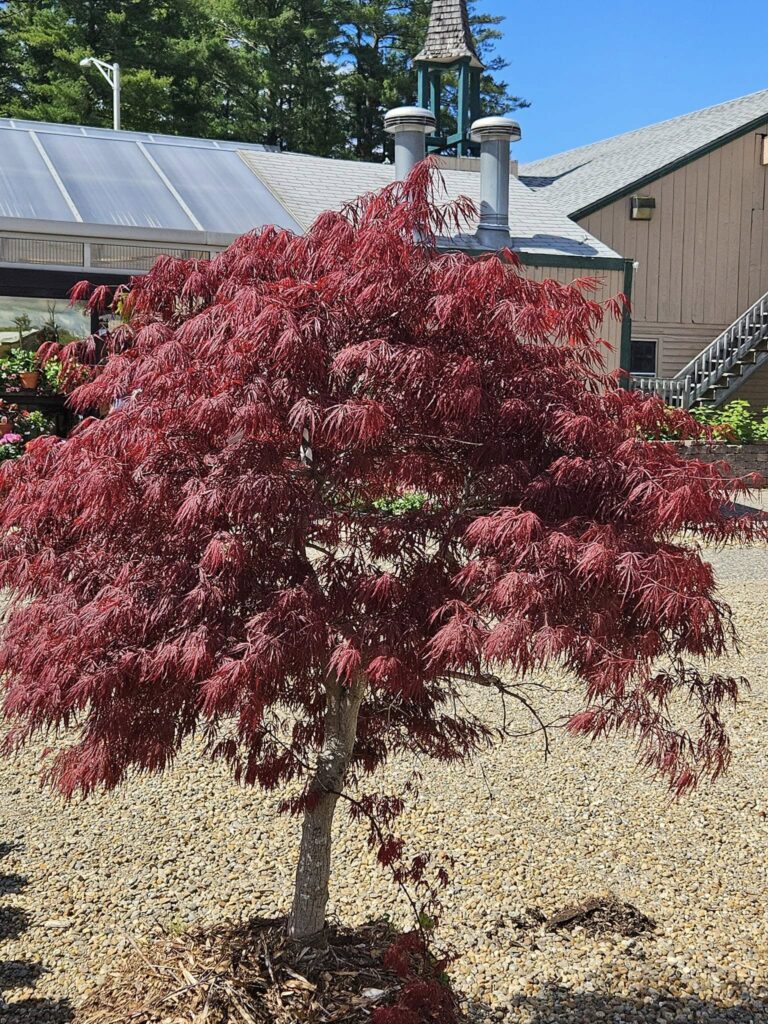
Before discussing growth rate, it helps to understand exactly what kind of tree you are working with. Acer palmatum ‘Bloodgood’ is one of the most popular cultivars of Japanese maple in the world. It is known for its striking deep red to purple-black foliage that holds its color through most of the summer — something many other red-leaf maples fail to do.
The tree produces small reddish flowers in spring, followed by winged seeds (samaras) in autumn. In fall, the leaves transition to a vivid crimson before dropping. Even in winter, the tree’s silhouette — its layered branching structure — makes it a focal point in any garden.
It is classified as a small ornamental tree or large shrub, typically reaching 15 to 25 feet in height and 15 to 20 feet in width at full maturity. In terms of hardiness, it performs best in USDA Hardiness Zones 5 through 8, tolerating winter lows down to around -20°F (-29°C) with proper protection.
The Bloodgood Japanese Maple Growth Rate: The Core Answer
The Bloodgood Japanese maple is considered a slow to moderate grower. On average, it adds approximately 1 to 2 feet (30 to 60 cm) of new growth per year under good growing conditions.
To put that into perspective, compare it to a silver maple, which can grow 3 to 7 feet per year, or a weeping willow, which grows even faster. The Bloodgood is not a tree you plant and see tower over your fence in five years. It is a long-term investment in beauty.
That said, young Bloodgood trees — especially those in their first three to five years after transplanting — may grow more slowly, sometimes adding less than 12 inches per year while their root systems establish. Once roots are settled and the tree feels secure in its location, growth often picks up toward the higher end of that 1–2 foot range.
Here is a general timeline you can expect:
| Age of Tree | Approximate Height |
| 1–2 years (newly planted) | 2–4 feet |
| 5 years | 5–8 feet |
| 10 years | 8–12 feet |
| 15 years | 12–18 feet |
| Mature (20–30+ years) | 15–25 feet |
These are approximations. A tree planted in rich, well-draining soil in a climate that suits it perfectly could move faster. One planted in compacted clay, heavy shade, or a region with harsh temperature swings may take considerably longer.
Factors That Directly Influence Growth Rate
Understanding what drives — or limits — growth is the most practical part of owning a Bloodgood maple. Let me walk through each factor honestly.
1. Soil Quality and Drainage
Soil is the single most important factor controlling how fast your Bloodgood grows. Japanese maples in general, and the Bloodgood cultivar specifically, prefer slightly acidic, well-draining, loamy soil with a pH between 5.5 and 6.5.
In heavy clay soils, water pools around the roots. This leads to root rot and stunted growth — sometimes so severe that the tree appears to stop growing entirely. In sandy soil, nutrients and water drain away too quickly, leaving the roots perpetually stressed.
If your native soil is not ideal, amending it before planting pays off significantly. Mixing in compost, aged bark, or perlite improves both drainage and nutrient availability. Raised beds or mounded planting areas are also effective solutions for gardeners dealing with poorly draining ground.
2. Sunlight Conditions
The Bloodgood performs best in full sun to partial shade. It can handle 6 or more hours of direct sunlight in cooler climates, but in regions with intense summer heat (such as much of the southern United States), afternoon shade is strongly recommended to prevent leaf scorch.
Interestingly, while more sun can promote more vigorous growth, it also causes more water stress in hot climates. A tree in dappled light in Zone 8 may actually outperform one in full sun in the same zone, because the shaded tree is not spending energy dealing with heat stress.
In deep shade — less than 3 hours of direct sunlight — the Bloodgood grows more slowly and may lose some of its characteristic leaf color, shifting toward a murky green-red rather than the deep burgundy it is prized for.
3. Watering Practices
Consistent moisture is key, especially during the first two years after planting. A newly transplanted Bloodgood has a limited root system and depends on regular watering to establish itself. During dry periods in the growing season, water deeply once or twice a week rather than shallow, frequent watering.
Once established — generally after two to three growing seasons — the Bloodgood develops reasonable drought tolerance. However, extended dry periods in summer will still slow growth and may cause leaf drop.
Overwatering is just as damaging as underwatering. Roots sitting in waterlogged soil for extended periods will rot, and a tree with compromised roots simply cannot grow at a normal rate.
Mulching around the base of the tree — keeping mulch 2 to 3 inches away from the trunk — helps retain soil moisture, moderate soil temperature, and reduce competition from weeds.
4. Fertilization
Japanese maples respond well to light, balanced fertilization, but they are sensitive to over-fertilization. Applying too much nitrogen causes rapid, weak growth that is more susceptible to wind damage, frost damage, and disease.
A slow-release balanced fertilizer (such as a 10-10-10 or a formula designed specifically for trees and shrubs) applied once in early spring is typically sufficient. Avoid fertilizing in late summer or early autumn, as this stimulates new tender growth that will not harden in time for winter frost.
Some experienced growers prefer not to fertilize at all after the first few years, relying instead on well-composted mulch to slowly feed the soil. This approach is less risky and produces steady, healthy growth.
5. Climate and Temperature
The Bloodgood is cold-hardy to Zone 5, but late spring frosts are a significant threat. New growth that emerges in early spring is tender and can be killed back by a late freeze. When this happens, the tree must spend energy producing a second flush of growth, which slows its overall progress for that season.
In very hot climates (Zone 9 and above), the Bloodgood struggles to maintain its deep foliage color and may experience chronic heat stress. In these regions, it often grows more slowly, requires more water, and may have a shorter lifespan.
The ideal climate for rapid, healthy Bloodgood growth is a temperate one — regions with cool winters, moderate summers, and reliable rainfall or irrigation. Parts of the Pacific Northwest, the upper Midwest, and the Mid-Atlantic United States are particularly well-suited.
6. Root Space and Competition
A tree planted in open ground with adequate room for root spread will almost always grow faster than one planted in a confined space — such as a container or a heavily compacted urban planting strip — where roots have limited room to expand.
Root competition from nearby trees, shrubs, or turf grass can also slow growth. Keeping a clear, mulched circle of at least 3 to 4 feet in diameter around the base of a young Bloodgood eliminates much of this competition.
Growing a Bloodgood Japanese Maple in a Container
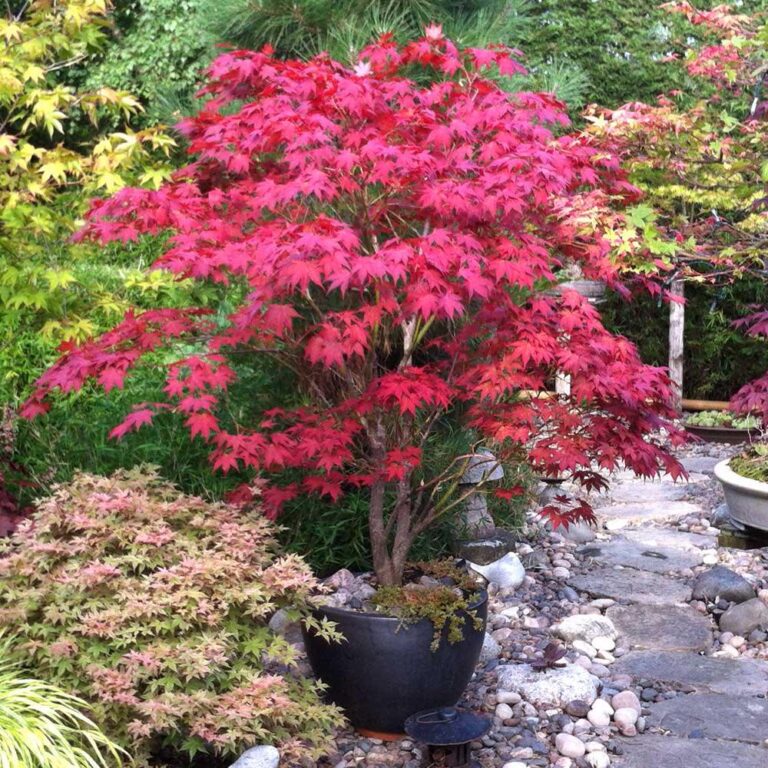
Many gardeners choose to grow Bloodgood Japanese maples in pots or containers, either on patios, balconies, or as moveable focal points in the garden. This is entirely possible, but it does have implications for growth rate.
Container-grown Bloodgoods grow more slowly than those planted in the ground — often by a significant margin. The restricted root space limits the amount of water and nutrients the tree can access. In a container, annual growth of 6 to 12 inches is more realistic than the 1 to 2 feet possible in open ground.
Container growing also requires more attentive watering, since pots dry out much faster than garden soil. In hot climates, containers may need watering every day during peak summer heat.
On the positive side, container growing allows you to move the tree to sheltered locations in winter — a significant advantage in Zone 5 or colder areas where root damage from frozen soil is a risk.
How to Maximize the Growth Rate of Your Bloodgood
If you want your Bloodgood to grow as quickly as possible while staying healthy, here are the most effective steps:
Site selection matters more than any other single decision. Choose a location with the right light levels for your climate, protected from strong winds, and well away from structures that radiate heat (such as south-facing walls in hot climates).
Improve the soil before planting, not after. Once a tree is in the ground, amending the soil around it is difficult. Dig a wide, shallow planting hole — two to three times the width of the root ball but only as deep — and mix generous amounts of organic matter into the backfill.
Water consistently during establishment. The first two growing seasons are critical. A tree that experiences severe water stress during this period may never fully recover its growth momentum.
Mulch faithfully. A 3-inch layer of organic mulch over the root zone conserves moisture, moderates soil temperature, and slowly feeds the soil as it breaks down.
Protect from late frosts. If your area experiences unpredictable late spring freezes, keep a supply of frost cloth or burlap on hand to cover the tree on nights when temperatures are forecast to drop below 28°F (-2°C) after growth has begun.
Prune correctly and sparingly. The Bloodgood’s natural form is one of its greatest assets. Prune only to remove dead, damaged, or crossing branches. Avoid heavy pruning, which stresses the tree and removes the foliage needed for photosynthesis and energy production.
Common Problems That Slow Growth
Even well-cared-for Bloodgood maples can experience setbacks. Being able to identify the cause of slowed growth helps you intervene before permanent damage occurs.
Verticillium wilt is a soil-borne fungal disease that affects Japanese maples. It causes branches to wilt and die suddenly, and there is no cure. Preventive measures — including avoiding soil previously used to grow tomatoes, potatoes, or other susceptible crops — are the best defense.
Root rot from Phytophthora is common in poorly drained soils. Symptoms include general decline, yellowing leaves, and stunted growth. Improving drainage and reducing irrigation frequency are the primary treatments.
Aphids and scale insects can weaken the tree by sucking sap from stems and leaves. A healthy, vigorously growing tree can usually tolerate minor infestations, but heavy pest pressure slows growth and can cause branch dieback. Insecticidal soap or horticultural oil are effective treatments for most infestations.
Leaf scorch from heat, drought, or chemical fertilizer burn causes browning at leaf edges and premature leaf drop. While it rarely kills an established tree, it does reduce the photosynthetic capacity of the tree and will slow its growth for the remainder of that season.
Bloodgood Japanese Maple vs. Other Japanese Maple Cultivars: How Do They Compare?
It is worth noting that not all Japanese maple cultivars grow at the same rate as the Bloodgood. Comparing them helps set appropriate expectations.
The Bloodgood is among the faster-growing red-leaf Japanese maple cultivars, which is one reason it is so widely recommended. By contrast, weeping forms such as ‘Crimson Queen’ or ‘Tamukeyama’ tend to grow even more slowly — often less than 12 inches per year — because their pendant branching structure limits their overall energy efficiency.
Upright green-leaf cultivars like ‘Osakazuki’ or the species form Acer palmatum often grow at a rate comparable to or slightly faster than the Bloodgood, particularly in ideal conditions.
If rapid coverage or screening is your primary goal, the Bloodgood will serve you better than most ornamental Japanese maple alternatives, though it still requires patience compared to faster-growing trees.
Is the Bloodgood Japanese Maple Worth the Wait?
Speaking from personal admiration for this tree, I would say without hesitation: yes. I have watched a Bloodgood planted near a garden entrance transform from a 4-foot sapling into a graceful, 12-foot specimen over roughly a decade. That transformation was gradual, but each passing season brought noticeable change — and the tree’s presence in the landscape became more commanding with every year.
The slow growth is part of what makes the Bloodgood so structurally sound and long-lived. Fast-growing trees often have weak wood, shallow roots, and shorter lifespans. The Bloodgood’s measured pace produces dense, strong branching and a deep root system. A well-sited Bloodgood Japanese maple can live for 100 years or more, becoming a true generational feature in any garden.
That is a kind of patience that rewards itself.
References
- University of Florida IFAS Extension — Acer palmatum ‘Bloodgood’ https://edis.ifas.ufl.edu/publication/ST031
- North Carolina State University Extension — Japanese Maple (Acer palmatum) https://plants.ces.ncsu.edu/plants/acer-palmatum/
- Penn State Extension — Selecting Landscape Trees https://extension.psu.edu/selecting-landscape-trees
- University of California Agriculture and Natural Resources — Japanese Maple in the Landscape https://ucanr.edu/sites/scmg/files/30917.pdf
- Oregon State University Extension Service — Growing Japanese Maples in Pacific Northwest Gardens https://catalog.extension.oregonstate.edu/em9148

Tim M Dave is a gardening expert with a passion for houseplants, particularly cacti and succulents. With a degree in plant biology from the University of California, Berkeley, he has vast experience in gardening. Over the years, he has cultivated a vast collection of desert plants and learned a great deal about how to grow and care for these unique companions.